yabusame
archery from a galloping horse
流鏑馬(やぶさめ)
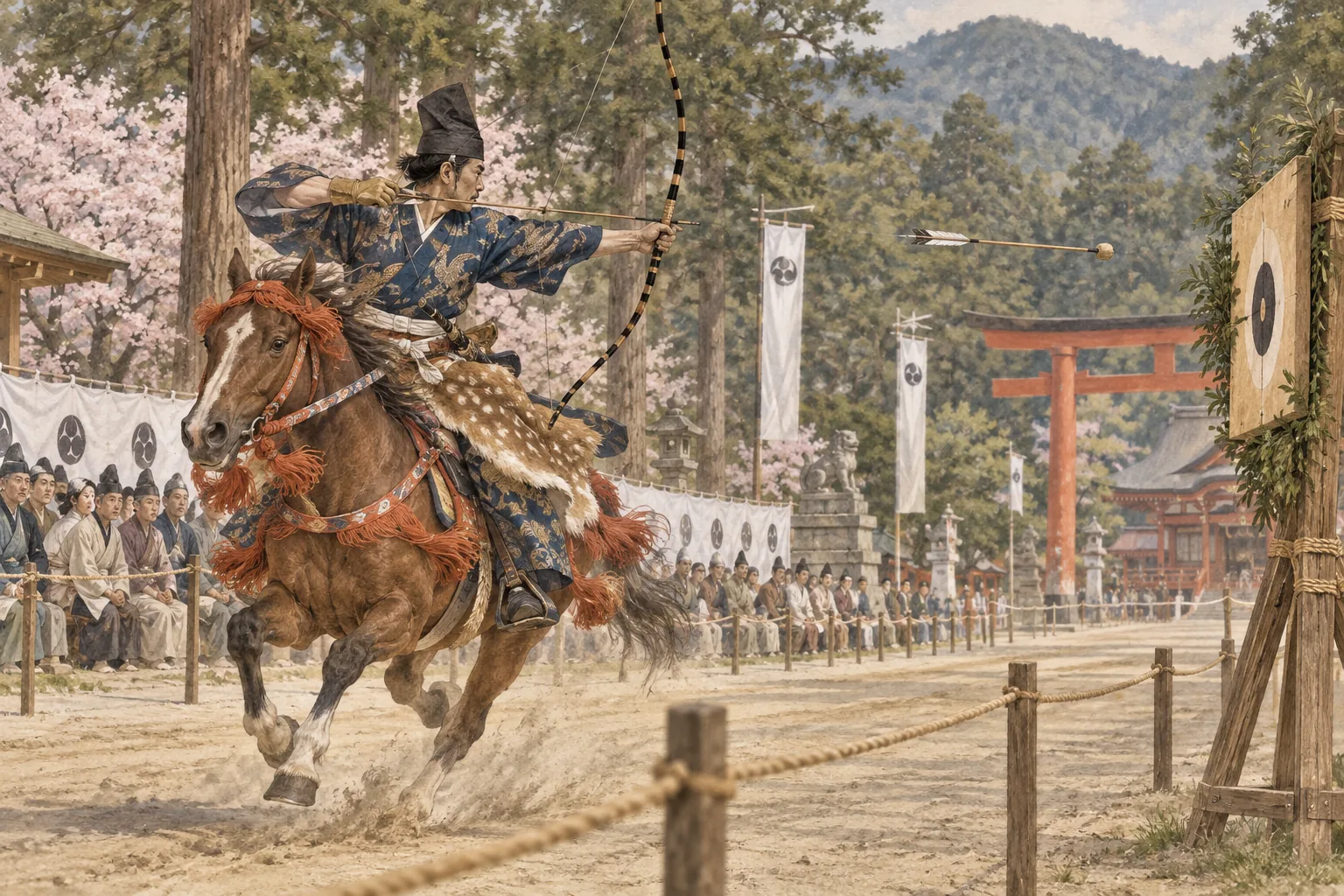
In one line
The shortest answer that works
Yabusame is shooting three targets from a galloping horse, performed as a rite at shrines.
流鏑馬は、走る馬の上から三つの的を射るもので、神社に奉納する神事として行われます。
In 30 seconds
The standard explanation
In yabusame an archer rides at full gallop down a straight course and shoots three square targets in turn, dropping the reins to draw. It is performed at shrines as an offering rather than as a competition, the riders wear hunting dress of the Kamakura period, and the arrows have blunt turnip-shaped heads that whistle in flight.
流鏑馬では、射手が直線の馬場を全速で駆けながら、三つの四角い的を順に射ます。弓を引くあいだ手綱は放します。競技ではなく神社への奉納として行われ、射手は鎌倉時代の狩装束をまとい、矢には鏑と呼ぶ蕪形の頭が付いていて、飛ぶときに音が鳴ります。
As a short speech
A full paragraph you can read aloud
Yabusame looks like a sport and is not one. An archer rides a course of a couple of hundred meters at full gallop, and at three points along it there is a square wooden target on a post. He must drop the reins, draw, shoot, and be ready again within a few seconds, controlling the horse with his legs alone.
The arrows are blunt, with a hollow turnip-shaped head that whistles as it flies and shatters the target board with a crack the crowd waits for. The dress is Kamakura-period hunting costume, down to the deerskin chaps and the woven hat.
All of this is done as an offering to a shrine, so there is no winner, and a rider who misses simply rides on. The best known performances are at Tsurugaoka Hachimangu in Kamakura, where the record of it goes back to 1187, and at shrines in Kyoto and Shizuoka. Get there early; the course is roped and the good places fill up.
流鏑馬は競技のように見えて、競技ではありません。射手は二百メートルほどの馬場を全速で駆け、その途中三か所に立てられた板の的を射ます。手綱を放し、弓を引き、射て、また次に備える。この間は数秒で、馬は脚だけで御します。
矢の先は鋭くありません。中が空洞の蕪の形をした鏑が付いていて、飛ぶときに音が鳴り、板を割る音を観客が待ちます。装束は鎌倉時代の狩の姿で、鹿革の行縢も編笠もそのままです。これらはすべて神社への奉納として行われるので、勝者はいません。
外した射手は、そのまま駆け抜けます。よく知られるのは鎌倉の鶴岡八幡宮で、1187年の記録があります。京都や静岡の神社でも行われます。行くなら早めに。馬場には縄が張られ、見やすい場所はすぐ埋まります。
Questions people actually ask
And how to answer them.
Is it a competition?
No. It is dedicated to the deity of the shrine, so there is no ranking and no prize. Hitting all three is honorable and missing is not penalized, though the crowd certainly notices.
競いません。神社の神に奉納するもので、順位も賞もありません。三つとも当てるのは名誉ですが、外しても罰はありません。もっとも、観客はよく見ています。
How is it different from kyudo?
Kyudo is standing archery practiced as a discipline with a long, precise form. Yabusame is mounted, fast and public, and it descends from battlefield and hunting training rather than from a meditative art.
弓道は立って射る稽古で、長く正確な所作を重んじます。流鏑馬は馬上で、速く、人前で行うものです。静かな修養の芸というより、戦と狩の訓練から来ています。
When and where can I see it?
Mostly in spring and autumn at shrine festivals. Kamakura holds it in April and September, and there are performances in Kyoto, Shizuoka and Aomori. Check the shrine's own site, since dates move with the festival calendar.
多くは春と秋の祭りに合わせて行われます。鎌倉では四月と九月、ほかに京都、静岡、青森などでも行われます。日程は祭りに合わせて動くので、神社の案内を確かめてください。
Phrases you can use
- He lets go of the reins to shoot.射るときは手綱を放します。
- There are three targets along the course.馬場に的が三つ立っています。
- The arrow whistles as it flies.矢は飛ぶときに音が鳴ります。
- It is an offering, not a contest.競技ではなく奉納です。
- The costume is from the Kamakura period.装束は鎌倉時代のものです。
Words you need
- mounted archery流鏑馬
- riding course馬場
- target board的
- whistling arrowhead鏑
- shrine offering奉納
Watch
From YouTubeBackground (Japanese)
流鏑馬は、直線の馬場を駆けながら三つの的を射る騎射の神事です。矢の先には中空の鏑を付け、飛ぶときに音が鳴ります。装束は鎌倉時代の狩装束で、綾藺笠をかぶり、鹿革の行縢を着けます。鶴岡八幡宮では、1187年に源頼朝が行わせたという記録が吾妻鏡にあり、今も春と秋に奉納されています。武士の騎射の稽古としては、ほかに犬追物や笠懸があり、あわせて騎射三物と呼ばれました。現在は流鏑馬だけが広く残っています。