gyoji
the referee who judges a sumo bout
行司(ぎょうじ)
In one line
The shortest answer that works
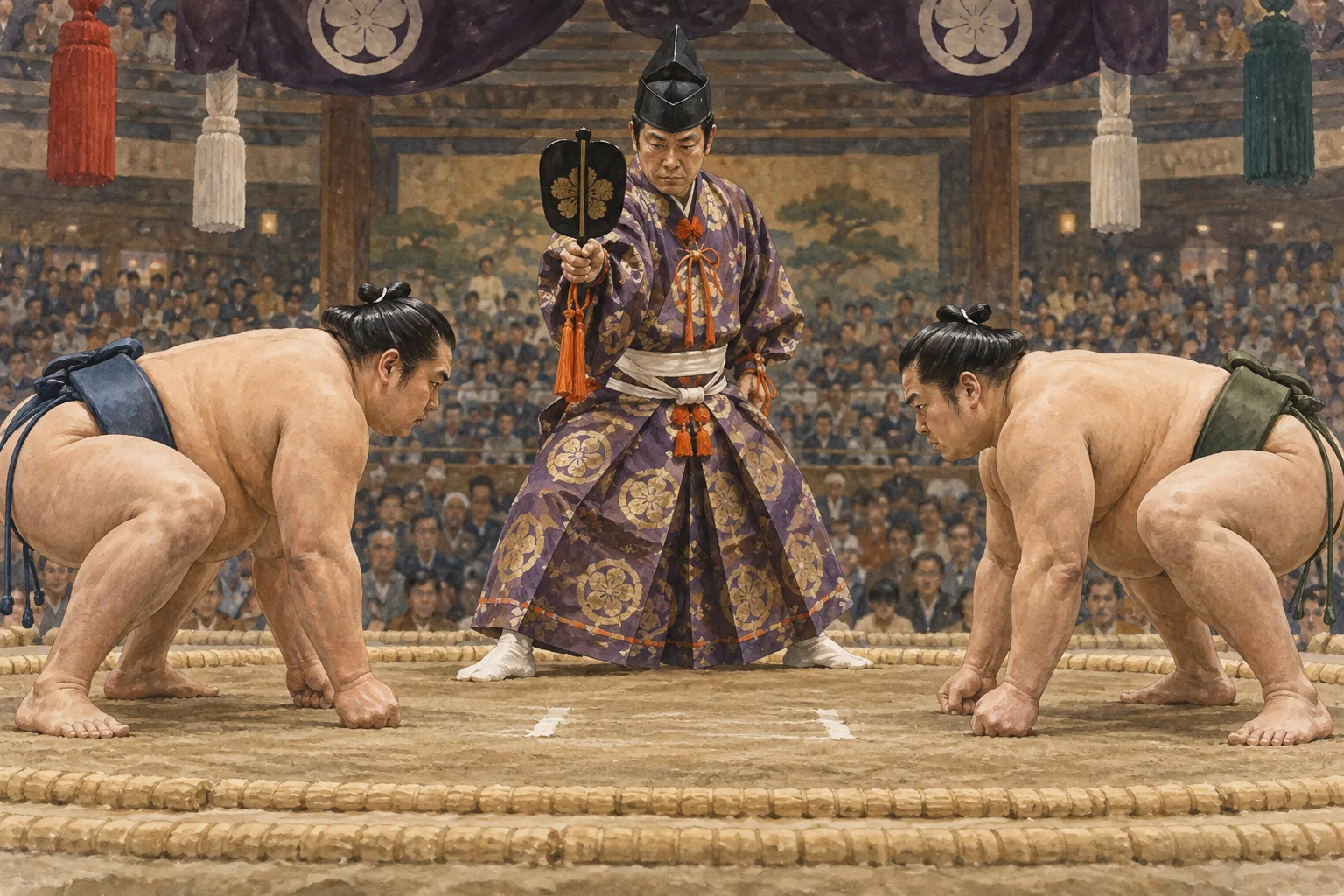
A gyoji is the sumo referee who calls the match and points a fan toward the winner.
行司とは、取組を裁き、軍配で勝者を示す大相撲の審判のことです。
In 30 seconds
The standard explanation
A gyoji is the referee inside the sumo ring, dressed in flowing robes modeled on the formal wear of medieval samurai. He calls the bout, keeps both wrestlers moving toward the charge, and points his fan, the gunbai, at the winner the instant it's decided. His rank shows in the color of that fan's tassel and the pattern of his kimono, and only the very top rank, tate-gyoji, carries a short sword at the waist during regular bouts.
行司とは、土俵の中で取組を裁く審判で、鎌倉・室町時代の武家の礼装(直垂)にならった衣装をまとっています。取組の進行を促し、勝負が決まった瞬間に軍配という扇を勝者に向けます。階級は軍配の房の色や着物の柄で示され、ふだんの取組で腰に短刀を帯びるのは、最高位の立行司だけです。
As a short speech
A full paragraph you can read aloud
A gyoji is the referee who runs a sumo bout from inside the ring, and he looks nothing like a referee in any other sport: his robes are modeled on the formal wear of medieval samurai, and he points a fan called a gunbai at the winner the moment a bout ends. What surprises most visitors is the short sword at his waist.
One theory traces it to the age of warlords, when samurai sometimes refereed the sumo matches their lords loved to watch. By the Edo period, the sword had come to symbolize a gyoji's readiness to take full responsibility for a wrong call. No referee has ever actually been made to prove it, and today a disputed call can simply be reviewed by the ringside judges.
行司とは、土俵の中で取組を裁く審判で、ほかの競技の審判とはまったく違う姿をしています。装束は鎌倉・室町時代の武家の礼装にならったもので、取組が決まった瞬間には軍配という扇を勝者に向けます。
多くの人が驚くのが、腰に差した短刀です。一説には、戦国時代に相撲好きの武将の前で、家臣の武士が行司を務めたことに由来するとされます。
江戸時代になると、この刀は「差し違えたときにはすべての責任を負う」という覚悟を象徴するものになったとされます。実際に責任を取らされた行司はいませんし、今日、判定に疑問があれば、土俵下の審判委員が話し合って見直すだけです。
Questions people actually ask
And how to answer them.
Why does the referee carry a knife?
It's a short sword, not used in the match itself. One account traces it to samurai who once served as referees for sumo-loving warlords, and by the Edo period it had become a symbol of the gyoji's readiness to take responsibility for a wrong call — though no referee has ever actually been made to answer for one that way.
あれはナイフではなく短刀で、取組で実際に使うものではありません。ある説では、相撲好きの武将に仕えていた武士が行司を務めていたことに由来するとされ、江戸時代には「差し違えの責任を負う覚悟」の象徴になったとされます。ただし、実際にその責任を取らされた行司はいません。
Can the referee's call be overturned?
Yes. Five judges sit around the ring, and if any of them disagrees with the gyoji's call, they can stop the next bout and hold a mono-ii, a brief conference to review what happened, sometimes using video, before confirming or reversing the decision.
はい。土俵の周りには5人の審判委員が座っており、そのうちの誰かが行司の判定に異議があれば、次の取組の前に「もの言い」という短い協議を開き、映像を使うこともありながら、判定を確定させたり覆したりします。
How do I tell a referee's rank?
By the color of the tassel hanging from his fan and the pattern woven into his kimono — both change as a gyoji is promoted, with the most senior rank, tate-gyoji, wearing a purple or purple-and-white cord and carrying the short sword.
軍配から下がる房の色と、着物に織り込まれた柄で見分けます。どちらも昇格するごとに変わり、最高位の立行司は紫または紫白の房をつけ、短刀を帯びています。
A common misunderstanding
MYTHThe referee's short sword means he might really be expected to commit ritual suicide over a bad call.
FACTIt's symbolic, tied to an Edo-period idea of taking full responsibility, not an active rule; no gyoji has ever actually done this, and today a disputed call is simply reviewed by the ringside judges.
Phrases you can use
- The gyoji pointed his fan toward the wrestler on the east side.行司は東方の力士に軍配を上げました。
- That was close — I think they'll call a mono-ii.際どい勝負でしたね、もの言いがつきそうです。
- You can tell his rank from the tassel on his fan.軍配の房を見れば、行司の階級がわかりますよ。
- Only the top-ranked referee wears the sword.短刀を差しているのは最高位の行司だけです。
- His voice carries the rhythm of the whole match.行司の声が、取組全体のリズムを作っています。
Words you need
- referee's fan軍配
- top-ranked referee立行司
- review conferenceもの言い
- ringside judge審判委員
- tassel房
Watch
From YouTubeBackground (Japanese)
行司の名跡は代々受け継がれる名前で、何代も続く由緒ある名を襲名することもある。軍配の房の色は階級ごとに細かく決まっており、下位は黒や青、十両格は青白、幕内格は紅白、三役格は朱、最高位の立行司は紫(木村庄之助)または紫白(式守伊之助)の房を用いる。行司も力士と同じように番付に名前が載る存在で、単なる裏方ではない。定年のない力士と違い、行司には65歳の定年がある。行司の人数は協会内で定員が決まっており、空きが出たときに新しく採用される仕組みになっている。