sumo
Japanese wrestling with Shinto roots, often called the national sport
相撲(すもう)
In one line
The shortest answer that works
Sumo is a wrestling sport with deep Shinto roots, where bouts last seconds but the ritual takes minutes.
相撲は神道に深く根ざした格闘技で、取組は数秒ですが、その前の儀式に数分かけます。
In 30 seconds
The standard explanation
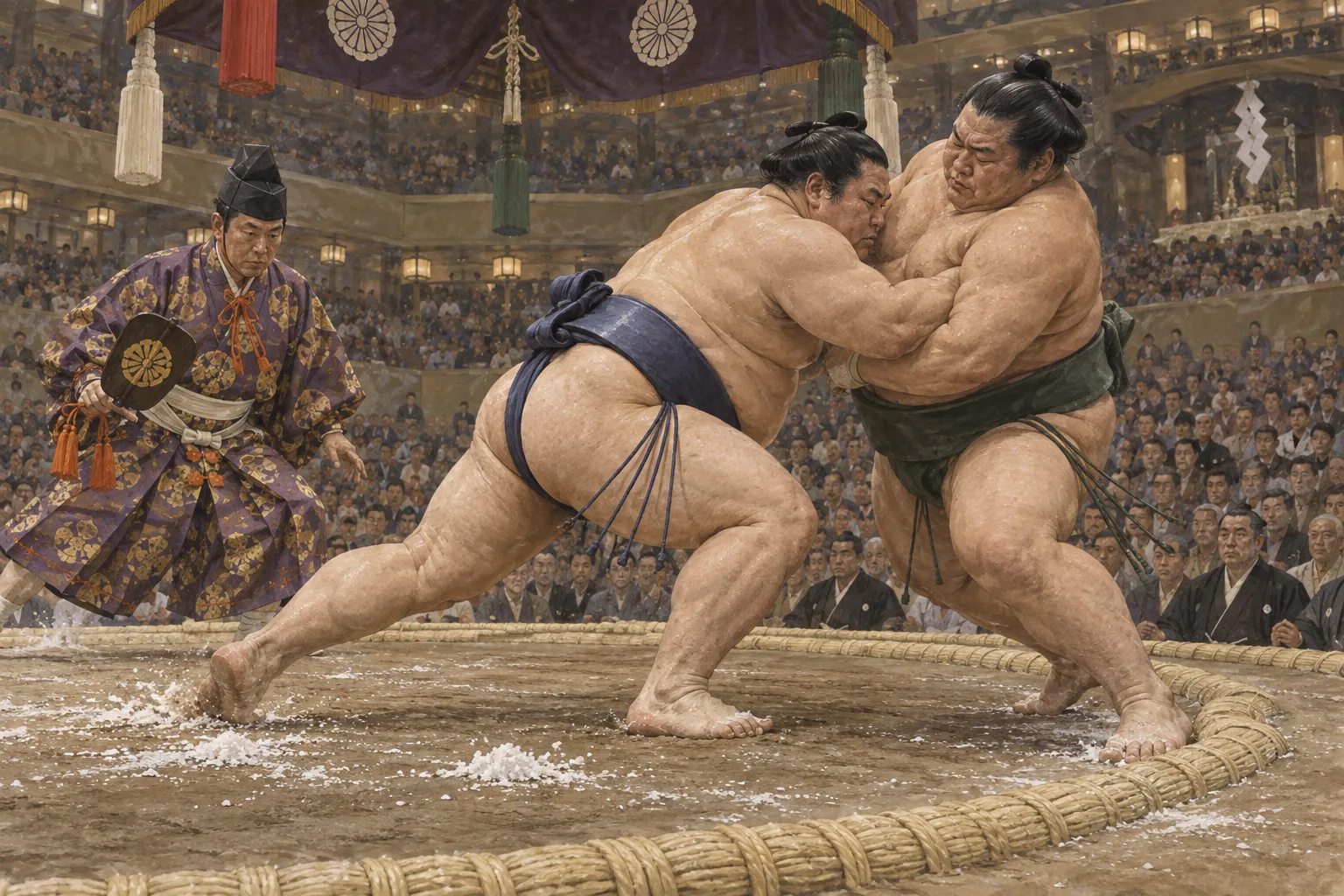
In sumo, two wrestlers try to push each other out of a circular ring or make any part of the body other than the soles touch the ground. Bouts often last only a few seconds. Around that is a long ritual: salt thrown to purify the ring, stamping to drive out evil, and a referee dressed as a Shinto priest. Six tournaments are held each year, fifteen days each.
相撲は、二人の力士が土俵の外へ押し出すか、足の裏以外を地面につけさせることを競います。取組はわずか数秒で終わることも多くあります。その周りに長い儀式があります。土俵を清める塩、邪気を払う四股、そして神職の装束をまとった行司。年6場所、各15日間行われます。
As a short speech
A full paragraph you can read aloud
Sumo looks like a simple wrestling match, but most of what you see is not the fight. Two wrestlers try to force each other out of a straw circle or make the other touch the ground with anything but the soles of the feet, and that part is often over in five seconds. What takes the time is the ritual around it.
The wrestlers throw salt to purify the ring, stamp their feet to drive out evil spirits, and squat facing each other several times before finally starting. The roof hanging over the ring is modeled on a Shinto shrine, and the referee wears the clothing of a Shinto priest.
This is because sumo has roots in rituals offered to the gods for a good harvest, and it has never fully separated from them. Six tournaments are held each year, each lasting fifteen days. Tickets can sell out quickly, so it pays to book early, but even the cheaper upper seats give you a perfectly good view.
相撲は単純な取っ組み合いに見えますが、目に映るものの大半は勝負そのものではありません。二人の力士が、相手を俵の外へ出すか、足の裏以外を土につけさせることを競います。その部分は5秒で終わることも多いです。
時間をかけるのは周りの儀式です。土俵を清める塩をまき、四股を踏んで邪を払い、何度も蹲踞して向かい合ってから、ようやく立ちます。土俵の上の屋根は神社を模しており、行司は神職の装束をまといます。
相撲には豊作を祈って神に捧げる神事という源流があり、そこから完全には離れていないからです。年6場所、各15日間行われます。券はすぐに売り切れることがあるので早めの予約がおすすめですが、上のほうの安い席でも十分楽しめます。
Questions people actually ask
And how to answer them.
Why do they throw salt?
To purify the ring. Salt is used for purification throughout Shinto, and the same idea appears at the entrance of restaurants and after funerals. Only wrestlers in the top divisions do it.
土俵を清めるためです。塩による清めは神道全般で使われ、店先の盛り塩や葬儀のあとの清め塩も同じ発想です。塩をまくのは上位の力士だけです。
Can women enter the ring?
No, and this is a live controversy. The association maintains the ring as a sacred space under traditional rules. The issue drew wide criticism in 2018 when women giving first aid to a collapsed man were asked to leave the ring.
上がれません。これは現在も議論のある問題です。協会は土俵を伝統的な決まりに基づく神聖な場としています。2018年、倒れた人を救護していた女性が土俵から降りるよう求められ、広く批判を集めました。
Do they really eat that stew?
Chanko-nabe, yes, in very large quantities, along with rice and beer, and traditionally they eat after training and then sleep, which is part of how they gain weight. Retired wrestlers often open chanko restaurants.
ちゃんこ鍋を大量に食べます。ご飯とビールも一緒で、伝統的には稽古のあとに食べてから寝ます。それが体を大きくする方法の一部です。引退した力士がちゃんこ店を開くことも多いです。
A common misunderstanding
MYTHSumo wrestlers are just very fat men pushing each other.
FACTThey are elite athletes with extremely high muscle mass, and training includes flexibility work that would defeat most people. The size is a deliberate strategy within a sport with no weight classes.
Phrases you can use
- The bout itself often lasts only a few seconds.取組そのものは数秒で終わることも多いです。
- The salt is to purify the ring.塩は土俵を清めるためです。
- The roof above the ring is modeled on a shrine.土俵の上の屋根は神社を模しています。
- There are six tournaments a year, fifteen days each.年に6場所、それぞれ15日間です。
- Even the cheap seats at the back have a good view.後ろの安い席でも十分よく見えますよ。
Words you need
- wrestler力士
- ring土俵
- bout / match取組
- purify清める
- tournament場所、大会
Watch
From YouTubeBackground (Japanese)
大相撲は年6場所(1月・5月・9月=東京、3月=大阪、7月=名古屋、11月=福岡)、各15日間。最高位は横綱で、その地位は降格がなく、成績不振なら引退するしかない。決まり手は日本相撲協会が2000年に82手と定め、翌2001年1月場所から用いている。これに、勇み足など技によらない「非技」5つを加えた87通りで勝敗が記録される。土俵の直径は4.55メートル(15尺)。土俵に女性が上がれない慣習をめぐっては、2018年に京都府舞鶴市での巡業中、倒れた市長を救護しようとした女性看護師に対し「土俵から降りてください」という場内アナウンスが流れ、大きな批判を呼んだ。力士の体重に上限はなく、体重無差別で争う点が近代スポーツとしては珍しい。