judo
the martial art that became an Olympic sport
柔道(じゅうどう)
In one line
The shortest answer that works
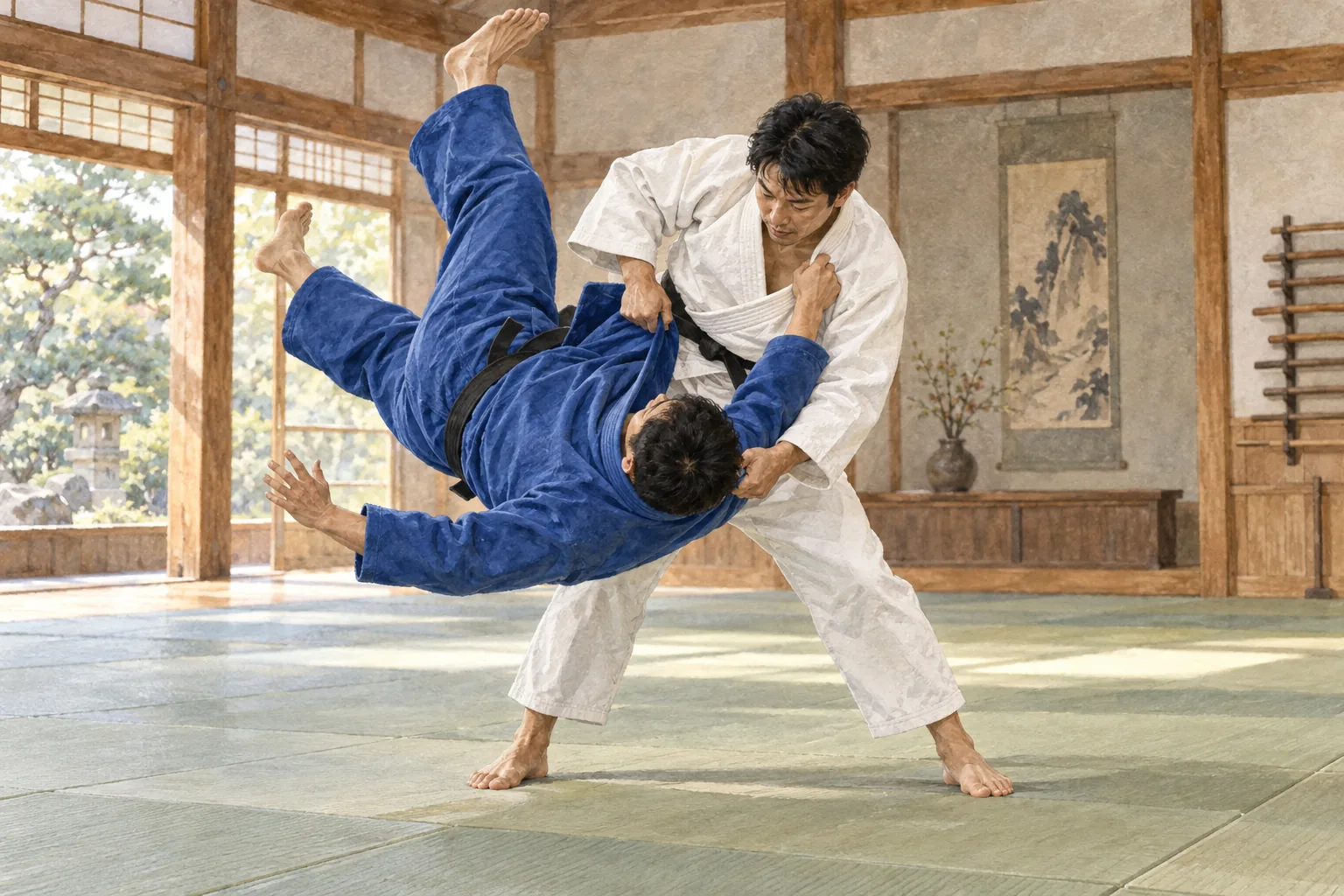
Judo is a martial art built on using an opponent's force against them, and it was designed as education.
柔道は、相手の力を利用する武道で、もともと教育として設計されたものです。
In 30 seconds
The standard explanation
Judo was created by Jigoro Kano in 1882 from older jujutsu techniques, with the dangerous parts removed so that it could be practiced safely at full effort. The aim is to throw, pin or submit an opponent. Kano intended it as physical and moral education, not only combat, and it became the first Asian sport in the Olympics.
柔道は1882年、嘉納治五郎が古来の柔術の技から危険なものを除き、全力で安全に稽古できるように作りました。相手を投げる、抑え込む、極めることを競います。嘉納はこれを戦いの術ではなく心身の教育として構想し、のちにアジア発の競技として初めてオリンピック種目になりました。
As a short speech
A full paragraph you can read aloud
Judo was created in 1882 by a schoolteacher named Jigoro Kano. He took the throwing and grappling techniques of older jujutsu schools, removed the strikes and the most dangerous joint attacks, which made free practice risky, and built a system in which two people could train at full intensity without injuring each other.
That decision is why judo spread worldwide. The principle he taught is that yielding overcomes force: rather than meeting a push, you take the opponent's balance and let their own movement carry them down. But Kano was a teacher first.
He wrote that the point of judo was the development of the person, expressed in two mottos, maximum efficiency with minimum effort, and mutual welfare and benefit. Judo entered the Olympics in Tokyo in 1964, the first sport from Asia to do so, and today the majority of the world's judoka are outside Japan.
柔道は1882年、嘉納治五郎という教育者が作りました。彼は古い柔術諸流派の投げと組みの技を取り、自由に稽古するには危険すぎる当て身や関節技の一部を外し、二人が全力で組んでも互いを傷つけずに稽古できる体系を組み立てました。
この判断こそが、柔道が世界に広まった理由です。彼が説いた原理は「柔よく剛を制す」。押してくる力に力で応じるのではなく、相手の重心を崩し、その動きのまま倒すのです。しかし嘉納はまず教育者でした。
柔道の目的は人間の育成にあると書き、それを二つの言葉に表しました。「精力善用」と「自他共栄」です。柔道は1964年の東京大会でオリンピック種目になりました。アジア発の競技としては初めてです。今日では、世界の柔道人口の大半は日本の外にいます。
Questions people actually ask
And how to answer them.
What's the difference from jujutsu?
Jujutsu is the older family of battlefield-derived techniques. Judo is one system built from them, with the most dangerous techniques removed so that free sparring is possible. Brazilian jiu-jitsu descends from judo ground technique.
柔術は戦場由来の古い技法の総称です。柔道はそこから危険な技を外し、自由に組み合う稽古を可能にした一つの体系です。ブラジリアン柔術は柔道の寝技の系統から派生しました。
Why is the uniform white?
The traditional judogi is white for simplicity and cleanliness. Blue was introduced for international competition so that judges and spectators can tell the two competitors apart, and it caused some resistance in Japan.
伝統的な柔道着は、簡素さと清潔さから白です。青は国際大会で審判と観客が二人を見分けやすいよう導入されたもので、日本では抵抗もありました。
Is it compulsory at school?
Martial arts became a required part of junior high physical education in 2012, and schools usually choose among judo, kendo and sumo, though other budo are also allowed. Safety in school judo has been a serious debate after a number of head injuries.
2012年から中学校の体育で武道が必修となり、柔道・剣道・相撲などから学校が選びます。頭部の事故が相次いだことから、学校柔道の安全は真剣な議論の対象です。
Phrases you can use
- The idea is to use the opponent's force, not resist it.相手の力に逆らわず、利用するという考え方です。
- It was designed as education, not just fighting.戦いの術ではなく、教育として作られました。
- You bow before and after every practice.稽古の前後に必ず礼をします。
- It became an Olympic sport in 1964.1964年にオリンピック種目になりました。
- Most judoka in the world are outside Japan now.今では世界の柔道人口の大半は日本の外にいます。
Words you need
- martial art武道、武術
- throw (verb)投げる
- grappling組み技
- belt / rank帯、段位
- yield受け流す、譲る
Watch
From YouTubeBackground (Japanese)
嘉納治五郎は1882年、東京・下谷の永昌寺に講道館を開いた。当初の門人はわずか9人だったとされる。彼は東京高等師範学校の校長を務めた教育者でもあり、のちにアジア初の国際オリンピック委員会委員となった。柔道の理念は「精力善用(心身の力を最も有効に使う)」「自他共栄(互いに助け合って栄える)」の二語で表される。段位を示す黒帯の制度は嘉納が考案したもので、その後多くの武道・格闘技に広まった。1964年東京オリンピックで正式種目となり、女子柔道は1992年バルセロナ大会から正式種目となった。