kyudo
Japanese archery
弓道(きゅうどう)
In one line
The shortest answer that works
Kyudo is Japanese archery, where the form of the shot matters as much as whether it hits.
弓道は日本の弓術で、当たったかどうかと同じくらい、射の形が問われます。
In 30 seconds
The standard explanation
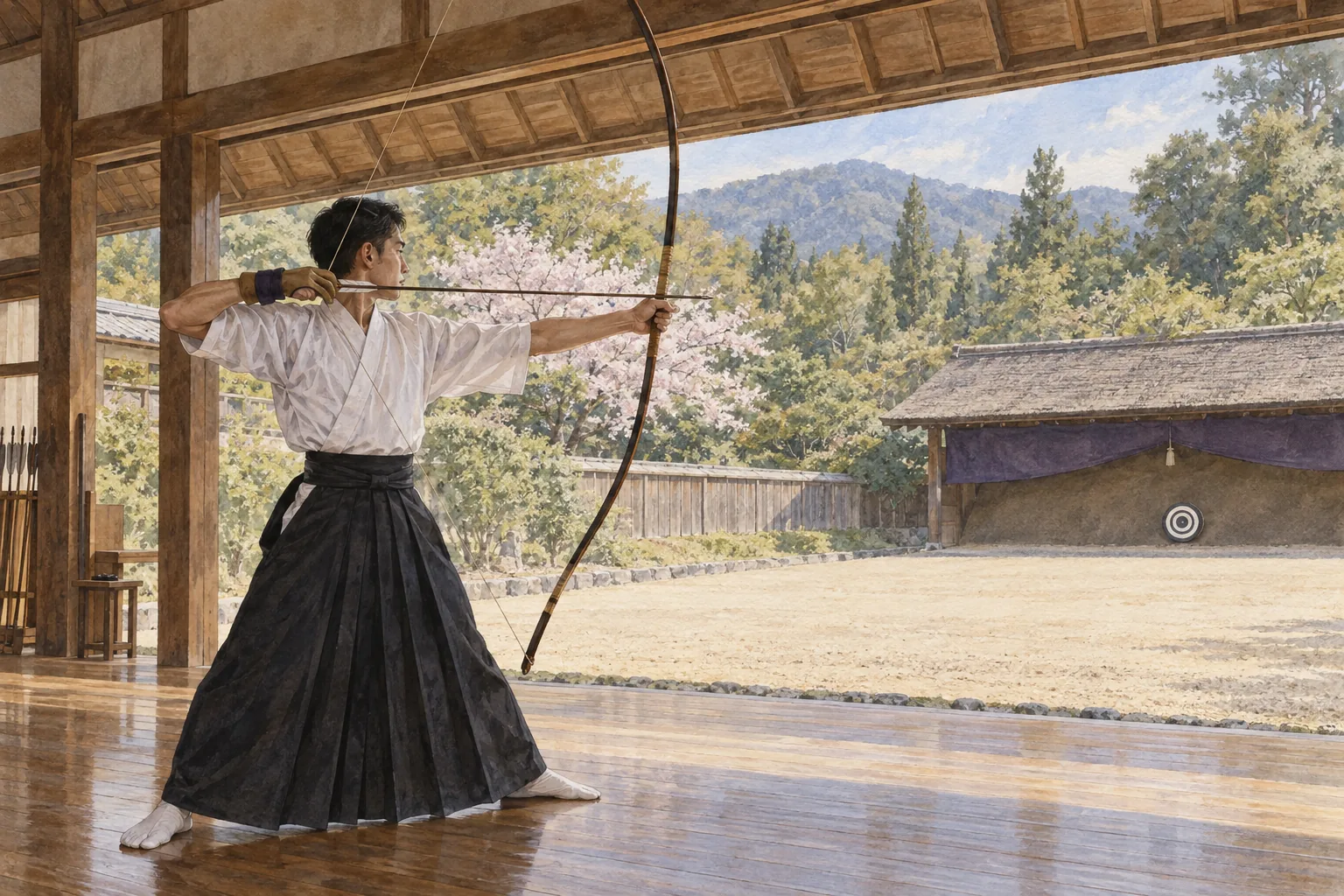
Kyudo uses an asymmetric bow over two meters long, traditionally made of bamboo, gripped about a third of the way up. The shot follows eight prescribed stages from stance to release to the moment after. Hitting the target matters, but so does the correctness of the form, and in the higher grades judges assess both. Practice halls are silent except for the string.
弓道では、長さ2メートルを超える左右非対称の弓(伝統的には竹製)を、下から三分の一あたりで握ります。射は、足踏みから離れ、残心まで八つの段階に沿って進みます。的に中ることは重要ですが、射形の正しさも問われ、上位の審査では両方が見られます。道場は弦の音以外、静かです。
As a short speech
A full paragraph you can read aloud
Kyudo is Japanese archery, and the bow itself tells you a lot. It is over two meters long, traditionally made of laminated bamboo, though many people now use fiberglass, and it is asymmetric: you grip it about a third of the way up rather than in the middle, a shape that is very rare among the world's bows.
The shot is broken into eight stages, from setting the feet, through drawing, to the release and the stillness that follows it. Every stage has a correct form. Beginners often spend weeks or even months without shooting at a target at all, working on posture and on drawing a rubber trainer.
People often say that in kyudo hitting the target is not the point, and that needs qualifying: in competition, hits are counted. But in grading examinations, the quality of the form is judged alongside the result, and a hit achieved with poor form is worth little. The idea is that if the form is truly correct, the arrow will go where it should.
弓道は日本の弓術で、弓そのものが多くを語っています。長さは2メートルを超え、伝統的には竹を貼り合わせて作られますが、今はグラスファイバー製を使う人も多くいます。そして左右非対称で、真ん中ではなく、下から三分の一あたりを握ります。
この形は世界の弓でもきわめて珍しいものです。射は八つの段階に分かれます。足踏みから、引き分け、離れ、そしてそのあとの静止まで。どの段階にも正しい形があります。初心者は何週間も、ときには何か月も的を射ず、姿勢の稽古とゴム弓の引き分けに費やします。
弓道では当てることが目的ではない、とよく言われますが、これは補足が要ります。競技では的中数を数えます。ただし審査では、結果と並んで射形の質が見られ、形の悪い中りはほとんど評価されません。形が本当に正しければ、矢はあるべきところへ行く、という考え方です。
Questions people actually ask
And how to answer them.
So does hitting the target count or not?
It counts. In competition, hits decide the result. In grading for rank, form and hits are assessed together, and this is where the saying about form comes from.
数えます。競技では的中数で決まります。段位の審査では射形と的中の両方が見られ、形についての言い回しはそこから来ています。
Why is the bow gripped off-center?
Several explanations are given, including shooting from horseback and the properties of the bamboo used. The asymmetric form is very old and its exact origin is not settled.
馬上での取り回しや、使う竹の性質など複数の説明があります。この非対称の形はきわめて古く、由来は確定していません。
Can a beginner try it?
Yes, but expect to start with posture and a rubber trainer rather than a real bow. Some dojo and cultural centers run short experience sessions for visitors.
できますが、実際の弓ではなく姿勢とゴム弓から始まると思ってください。訪日客向けの体験を行う道場や文化施設もあります。
Phrases you can use
- The bow is over two meters long.弓の長さは2メートルを超えます。
- You grip it a third of the way up, not in the middle.真ん中ではなく、下から三分の一を握ります。
- The shot has eight prescribed stages.射には八つの段階があります。
- Beginners often don't shoot at a target for weeks.初心者は何週間も的を射ないことがよくあります。
- The form is judged as well as the hit.的中だけでなく、射形も見られます。
Words you need
- archery弓術、弓道
- bow (weapon)弓
- arrow矢
- draw (a bow)引き分ける
- release離れ
Watch
From YouTubeBackground (Japanese)
和弓は長さ約221センチ(七尺三寸)が標準で、握りが中央より下にある「上長下短」の非対称形。これは世界の弓のなかでも珍しい構造である。射法八節は、足踏み・胴造り・弓構え・打起し・引分け・会・離れ・残心の八段階。全日本弓道連盟の段位は初段から十段まであり、九段・十段は審査ではなく推薦で授与される。京都・三十三間堂の「通し矢」は江戸時代に行われた長時間の射技競技で、現在はこれにちなみ、新成人らが参加する「大的全国大会」が毎年1月に開かれている。なお流鏑馬(やぶさめ)は馬上から射る神事で、弓道とは系統が異なる。