zanshin
staying alert and ready in the instant after a technique lands
残心(ざんしん)
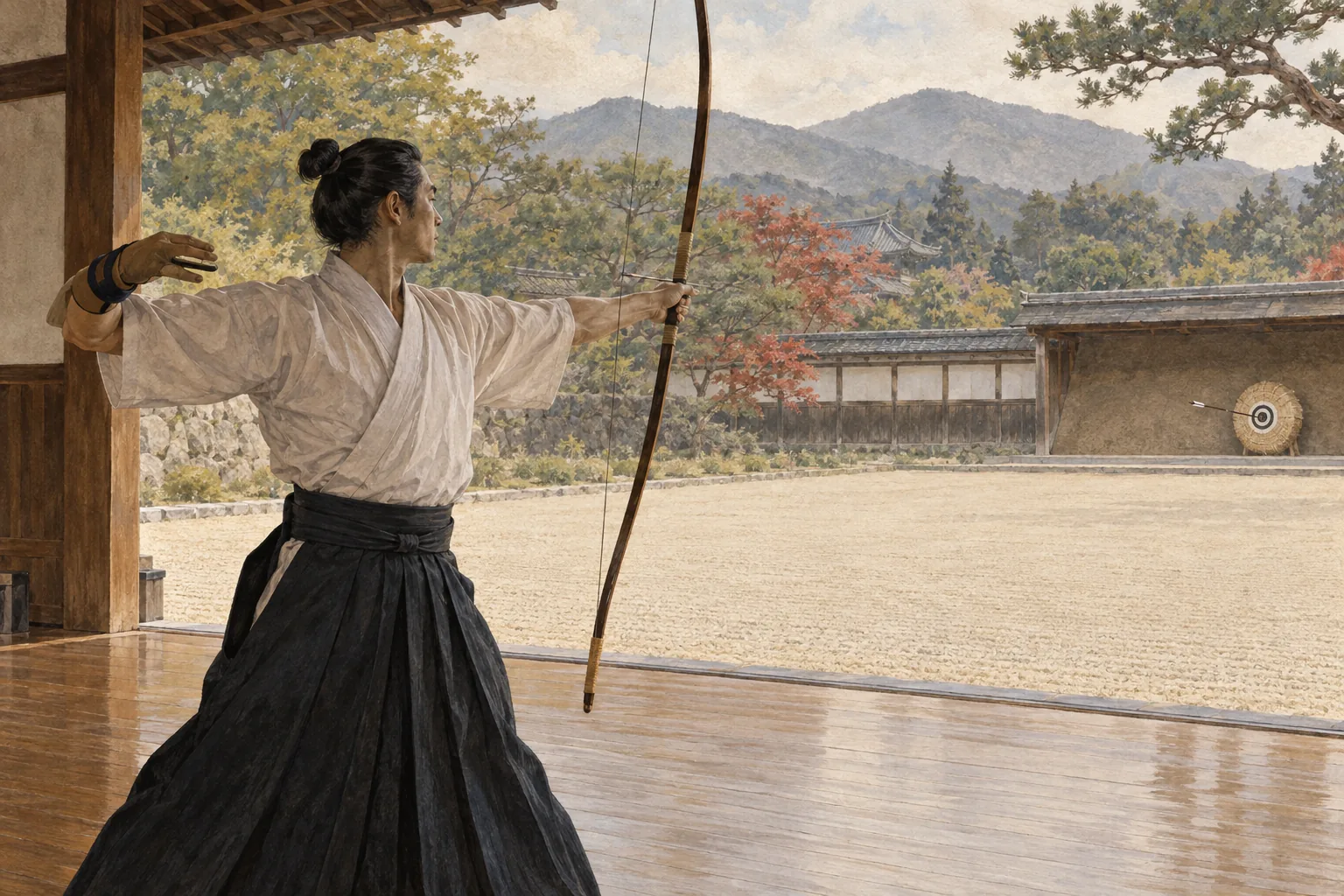
In one line
The shortest answer that works
Zanshin is the state of remaining alert and ready immediately after a technique, not relaxing the instant it lands.
残心とは、技が決まった直後も油断せず、構えと注意を保ち続ける心身の状態のことです。
In 30 seconds
The standard explanation
Zanshin refers to the awareness a practitioner keeps for a moment after landing a strike, throw or cut, rather than relaxing or turning away as soon as the technique appears to succeed. In kendo and karate, a point can be disallowed if the attacker drops their guard immediately afterward, since a real opponent might not actually be finished. The idea reaches beyond fighting, too, showing up in archery, tea ceremony and calligraphy as the moment of composed attention that follows an action, not just precedes it.
残心とは、打突や投げ、斬撃が決まったあとも一瞬だけ、気を緩めたり相手から目をそらしたりせずに保つ意識のことです。剣道や空手では、打突が決まった直後に油断すると、たとえ技自体は正確でも一本と認められないことがあります。実際の相手が本当に終わっているとは限らないからです。この考え方は武道だけにとどまらず、弓道や茶道、書道でも、動作の前だけでなく、動作のあとに続く落ち着いた注意の瞬間として現れます。
As a short speech
A full paragraph you can read aloud
Zanshin is easy to misunderstand as simply staying tense, but it describes something more specific: the alert, composed state a practitioner is expected to hold in the instant right after a technique, rather than relaxing the moment it looks successful. In kendo, a strike that would otherwise score a point can be waved off if the attacker turns away or drops their guard immediately afterward, because a real opponent isn't guaranteed to be finished just because one strike landed, and dropping zanshin at that moment is treated as carelessness rather than confidence.
Karate grading pays attention to the same thing at the end of a kata, watching whether a student's final posture still carries composed readiness or simply collapses in relief that the sequence is over. The idea extends past combat sports entirely: in kyudo, archery, zanshin describes the stillness held after the arrow is released, and in tea ceremony it can describe the quiet attentiveness the host keeps even after the guests have left, treating the moment right after an action as no less important than the action itself.
残心は、単に緊張し続けることだと誤解されがちですが、実際にはもっと具体的なことを指しています。技が成功したように見えた瞬間に気を緩めるのではなく、その直後の一瞬に保つべき、落ち着いた油断のない状態のことです。剣道では、それ自体は一本になりそうな打突でも、打った側が直後に相手から顔をそらしたり構えを崩したりすると無効になることがあります。
一発の技が決まったからといって、本当の相手が終わっているとは限らないからで、その瞬間に残心を失うことは、自信の表れではなく油断として扱われます。空手の型の審査でも同じ点が見られており、型の最後の構えに、まだ落ち着いた備えが残っているか、それとも終わった安心感でただ崩れてしまっているかが見られています。
この考え方は格闘技を超えて広がっており、弓道では矢を放ったあとに保つ静止の姿勢を残心(あるいは残身)と呼び、茶道では客を見送ったあとも亭主が保つ静かな心配りを表すことがあります。動作そのものと同じくらい、動作のすぐあとの瞬間を大切にする考え方です。
Questions people actually ask
And how to answer them.
Why would a technically correct hit not count as a point?
If the attacker relaxes or turns away immediately after landing it, referees can judge that zanshin was missing, which reads as an incomplete or careless technique rather than a decisive, controlled one, even if the strike itself was clean.
打った直後に気を緩めたり相手から顔をそらしたりすると、審判は残心が欠けていると判定できます。打突自体が正確でも、決定的で制御された技ではなく、未完成で油断のある技と受け取られてしまうのです。
Is zanshin only about physical posture?
Mostly it's about attention and readiness, not just posture, though posture is the visible part a referee or instructor can actually judge; the underlying idea is staying mentally present rather than switching off right after acting.
主に意識と備えの問題であり、構えだけの話ではありません。ただし構えは、審判や指導者が実際に見て判断できる目に見える部分です。根底にある考え方は、動作の直後に気持ちを切ってしまうのではなく、心をその場にとどめ続けることです。
Does this concept only apply to combat sports?
No, it shows up in kyudo archery as the stillness held after releasing an arrow, and versions of the same idea appear in tea ceremony and calligraphy, wherever a tradition values the moment right after an action as much as the action itself.
いいえ、弓道では矢を放ったあとに保つ静止の姿勢として現れますし、茶道や書道にも似た考え方があります。動作そのものと同じくらい、そのすぐあとの瞬間を大切にする伝統であれば、どこにでも見られます。
Phrases you can use
- You dropped your zanshin too early.残心を解くのが早すぎます。
- Hold your posture after the strike.打った後も構えを崩さないで。
- That point didn't count because of poor zanshin.残心が甘かったので一本になりませんでした。
- Stay alert even after you think you've won the point.決まったと思った後も油断しないで。
- Zanshin matters as much as the technique itself.残心は技そのものと同じくらい大切です。
Words you need
- remaining awareness残心
- to drop one's guard構えを崩す
- composed readiness落ち着いた備え
- archery弓道
- to let one's guard down油断する
Watch
From YouTubeBackground (Japanese)
残心は剣道の一本の成立条件の一つとされ、打突後に油断したり相手に背を向けたりすると、たとえ技が正確でも一本と認められないことがある。空手の型の審査でも、最後の構えに気の緩みがないかが評価の対象になる。弓道では矢を放った後の静止した姿勢そのものを残心(または残身)と呼び、結果の的中よりもその姿勢の美しさが重んじられることもある。武道以外でも茶道など、動作の後の心の持ちようを表す言葉として使われることがある。