kendo
Japanese fencing with bamboo swords
剣道(けんどう)
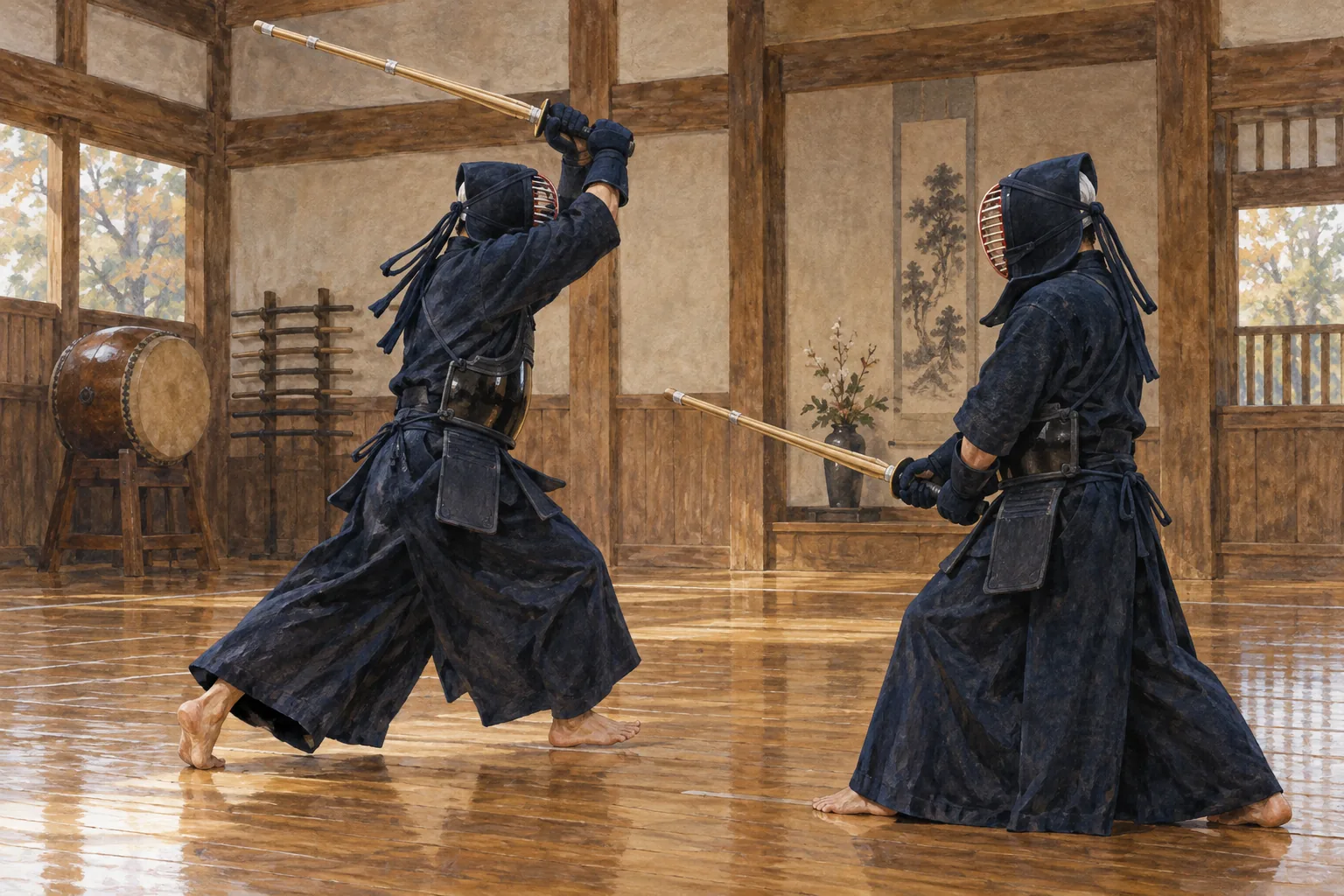
In one line
The shortest answer that works
Kendo is Japanese fencing with bamboo swords, where a point requires the right strike, spirit and posture together.
剣道は竹刀を使う日本の剣術で、正しい打突・気迫・姿勢がそろって初めて一本になります。
In 30 seconds
The standard explanation
Kendo uses a bamboo sword and protective armor covering the head, torso, hands and throat. Points are scored by striking four specified targets. A strike only counts if it combines correct technique, strong spirit shown by shouting the target name, and good posture and follow-through. Practice is loud, and the floor is bare wood.
剣道は竹刀を使い、頭・胴・手・喉を守る防具をつけて行います。決められた四つの部位を打つと一本になります。正しい打ち方、打った部位を叫ぶ気迫、そして姿勢と残心がそろって初めて有効になります。稽古は大きな声が飛び交い、床は板張りです。
As a short speech
A full paragraph you can read aloud
Kendo is Japanese fencing, practiced with a bamboo sword and armor that covers the head, throat, torso and hands. There are only four valid targets: the head, the wrists, the torso and a thrust to the throat. What surprises people watching for the first time is the noise. Practitioners shout constantly, and this is not excitement; it is required.
A strike only counts as a point if three things happen at the same moment, expressed as ki-ken-tai-ichi, spirit, sword and body as one. You must call the target you are striking, land the strike correctly with the right part of the blade, and move through with control afterwards, which is called zanshin, remaining awareness.
A technically perfect hit without the shout or without the follow-through is not a point. Many Japanese people tried kendo in school PE or clubs, and anyone who has worn the armor never forgets its smell.
剣道は日本の剣術で、竹刀と、頭・喉・胴・手を覆う防具をつけて行います。有効な部位は四つだけです。面、小手、胴、そして喉への突き。初めて見る人が驚くのは音です。稽古中ずっと声を出しますが、これは興奮ではなく、必要だからです。
打突が一本になるのは、三つが同じ瞬間にそろったときだけで、これを「気剣体の一致」と言います。打つ部位を声に出し、竹刀の正しい部分で正確に打ち、打ったあとも崩れずに構えを保つ。
この最後のものを残心と言います。技術的に完璧な打ちでも、声がなければ、残心がなければ一本になりません。学校の体育や部活で剣道を経験した日本人は多く、一度でも防具をつけた人は、あのにおいを忘れられません。
Questions people actually ask
And how to answer them.
Why do they shout?
The shout, kiai, declares the target and expresses committed spirit. A judge will not award a point for a technically clean strike delivered silently, because the spirit element is missing.
気合といい、打つ部位を宣言し、気迫を表します。無言で技術的にきれいに打っても、審判は一本を取りません。気の要素が欠けているからです。
Does it hurt?
Through the armor, not much. What hurts is being struck where the armor is thin, and the bare feet on a wooden floor. Blisters are the standard beginner complaint.
防具の上からなら、それほどではありません。痛いのは防具の薄いところを打たれたときと、板の床の素足です。初心者の定番の悩みはまめです。
Is it like Olympic fencing?
Only superficially. The targets, the weapon and the scoring philosophy are different, and kendo has deliberately stayed outside the Olympics, partly to protect its character as a budo rather than a sport.
表面的にだけ似ています。部位も得物も、点の考え方も違います。剣道は、競技ではなく武道としての性格を守るためもあって、意図的にオリンピックの外にとどまっています。
Phrases you can use
- There are only four valid targets.有効な部位は四つだけです。
- You have to shout the target as you strike.打つときに部位を声に出します。
- Spirit, sword and body have to move as one.気剣体が一致していなければなりません。
- You bow to your opponent before and after.相手には前後に礼をします。
- Everyone trains barefoot on a wooden floor.板張りの床を、みんな裸足で稽古します。
Words you need
- bamboo sword竹刀
- armor / protective gear防具
- strike (noun)打突
- opponent相手
- follow-through / awareness残心
Watch
From YouTubeBackground (Japanese)
剣道の有効打突は、全日本剣道連盟の規則で「充実した気勢、適正な姿勢をもって、竹刀の打突部で打突部位を刃筋正しく打突し、残心あるもの」と定義されている。部位は面・小手・胴・突きの四つで、突きは安全上の理由から中学生以下では認められていない。防具は面・小手・胴・垂の四点。竹刀の長さと重さは年齢・性別ごとに規定がある。段位は初段から八段まであり、八段審査の合格率は1%を下回る年がほとんどで、近年はおおむね0.6〜1.1%で推移している。受審資格は七段取得後10年以上かつ46歳以上で、日本で最も難しい試験のひとつと呼ばれることがある。2012年から中学校の体育で武道が必修となり、剣道はその選択肢のひとつになっている。