seiza and mokuso
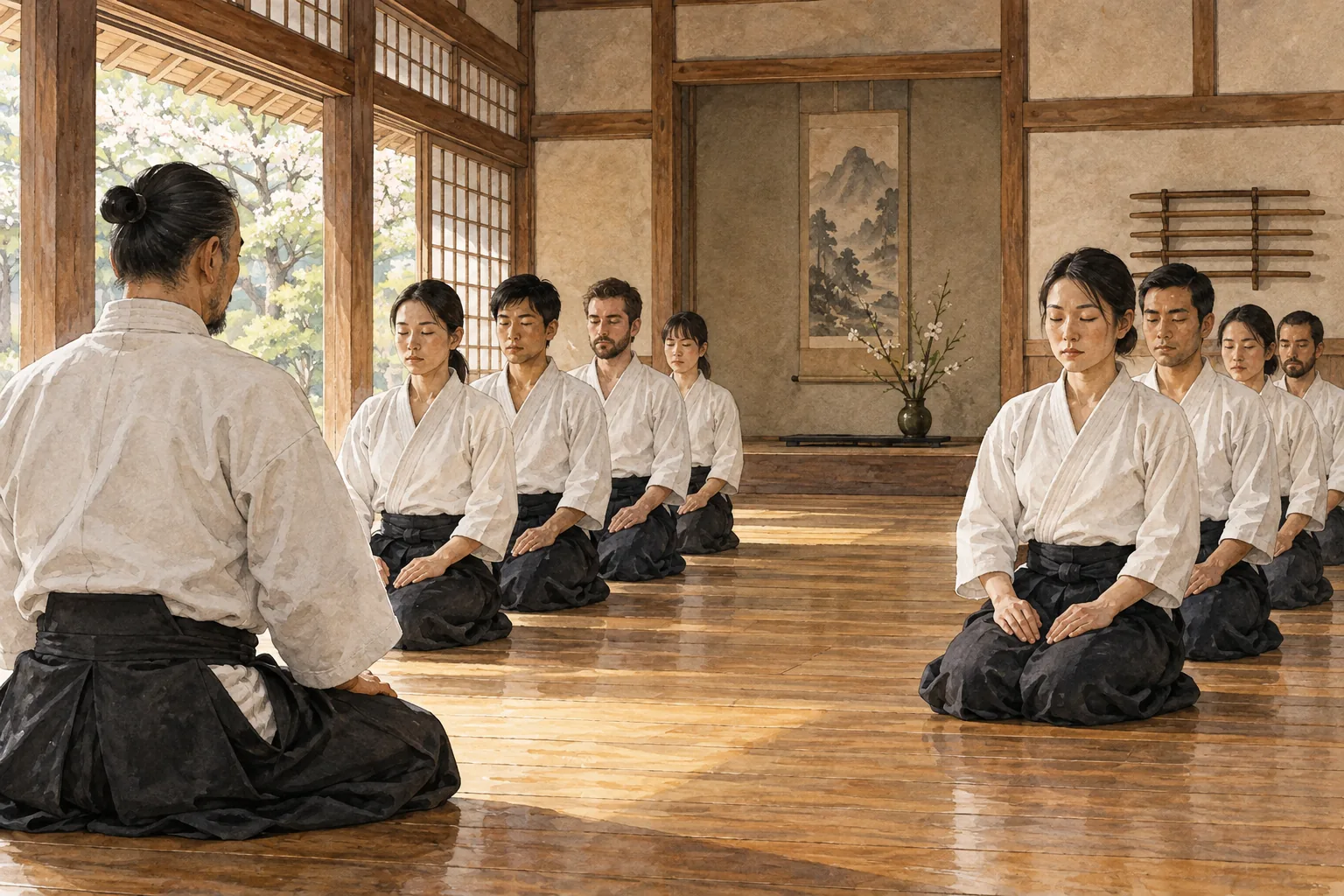
kneeling and the short silent sitting at the start and end of practice
正座と黙想(せいざともくそう)
In one line
The shortest answer that works
Before and after practice, everyone kneels in seiza and sits in silence for a minute.
稽古の始めと終わりに、全員が正座して一分ほど黙って座ります。
In 30 seconds
The standard explanation
In most Japanese martial arts, practice opens and closes with everyone kneeling in a line and sitting silently for a short time, eyes closed. It is called mokuso. It is not meditation in a religious sense; it is a switch, marking the moment when ordinary life stops and practice begins, and the moment it ends.
日本の武道の多くでは、稽古の始めと終わりに全員が一列に正座し、目を閉じて短いあいだ黙って座ります。これを黙想といいます。宗教的な瞑想ではありません。ふだんの生活が止まって稽古が始まる瞬間、そして終わる瞬間を区切る、切り替えの合図です。
As a short speech
A full paragraph you can read aloud
If you visit a dojo you will see everyone line up, kneel in seiza and close their eyes for perhaps thirty seconds to a minute before anything else happens. That is mokuso, silent sitting.
People sometimes assume it is Zen meditation, and while the idea of quiet sitting is often linked to Zen, in a modern dojo it is mainly a boundary. On one side of it you were a student or an office worker; on the other side you are practicing. At the end, the same sitting turns the switch back.
Seiza itself, kneeling with the feet under you, is uncomfortable for most beginners and your legs will go numb. That is normal and nobody thinks less of you for shifting. If you visit as a guest, the safest thing is to sit cross-legged at the side rather than try to hold a posture you cannot hold.
道場を訪ねると、何をするより先に、全員が並んで正座し、30秒から1分ほど目を閉じます。これが黙想です。禅の瞑想だと思われることがありますし、静かに座るという考え方は禅と結びつけて語られることも多いのですが、いまの道場では主に境目としての意味があります。
こちら側にいたときのあなたは学生や会社員で、向こう側では稽古をしている。終わりには、同じ座り方がその切り替えを戻します。正座そのもの、足を下に折って座る形は、初めての人にはつらく、足はしびれます。
ふつうのことで、姿勢を崩したからといって誰も軽んじません。見学で訪れるなら、保てない姿勢を無理に保つより、端であぐらをかいて座るのがいちばん安全です。
Questions people actually ask
And how to answer them.
My legs go numb in seiza. What do I do?
Shift your weight, or sit cross-legged if you are a guest. When standing up, come up slowly and put a hand down if you need to; people fall over because they stand too fast, not because they are weak.
体重をずらすか、見学なら足を崩してください。立つときはゆっくりで、必要なら手をついて構いません。倒れるのは弱いからではなく、速く立とうとするからです。
Is mokuso religious?
Not in practice. The idea of quiet sitting is often linked to Zen, but nobody is asked to believe anything. Foreign students and students of any faith take part without conflict.
実際にはそうではありません。静かに座るという考え方は禅と結びつけて語られますが、何かを信じるよう求められることはありません。外国から来た人も、どんな信仰の人も、そのまま加わっています。
What am I supposed to think about?
Nothing in particular. Teachers usually say to settle your breathing and let the day drop away before practice, and to look back over the practice afterward. Trying hard to empty your mind is not the point.
特に決まりはありません。先生はたいてい、稽古の前は呼吸を落ち着けて一日を手放すこと、終わりには稽古を振り返ることを言います。無心になろうと力むことが目的ではありません。
A common misunderstanding
MYTHMokuso is a deep meditation practice that martial artists spend years mastering.
FACTIn a normal dojo it lasts under a minute and functions as a start and stop signal. It is often linked to Zen, but few dojos treat it as religious training.
Phrases you can use
- We sit in silence before and after practice.稽古の前と後に、黙って座ります。
- It's a switch, not a religious practice.宗教の行ではなく、切り替えです。
- Sit cross-legged if seiza hurts.正座がつらければ、足を崩してください。
- Stand up slowly — your legs will be numb.ゆっくり立ってください。足がしびれています。
- Everyone's legs go numb at first.初めは誰でもしびれます。
Words you need
- to kneel正座する
- pins and needles, numbnessしびれ
- training hall道場
- to line up整列する
- to bow from kneeling座礼する
Watch
From YouTubeBackground (Japanese)
正座がいまのような正式な座り方になったのは江戸時代以降で、それ以前はあぐらや立て膝も広く使われていた。武道で稽古の前後に行う黙想は、明治以降に学校教育の中で整えられた形式だという見方がある。剣道や柔道では「黙想」と呼ぶことが多いが、団体や流派によっては「静座」などと呼ぶこともある。正座で足がしびれるのは、体重で血管や神経が圧迫されるためで、立ち上がるときに転ぶ事故が多いため、ゆっくり立つよう指導される。