seiza
sitting on your heels
正座(せいざ)
In one line
The shortest answer that works
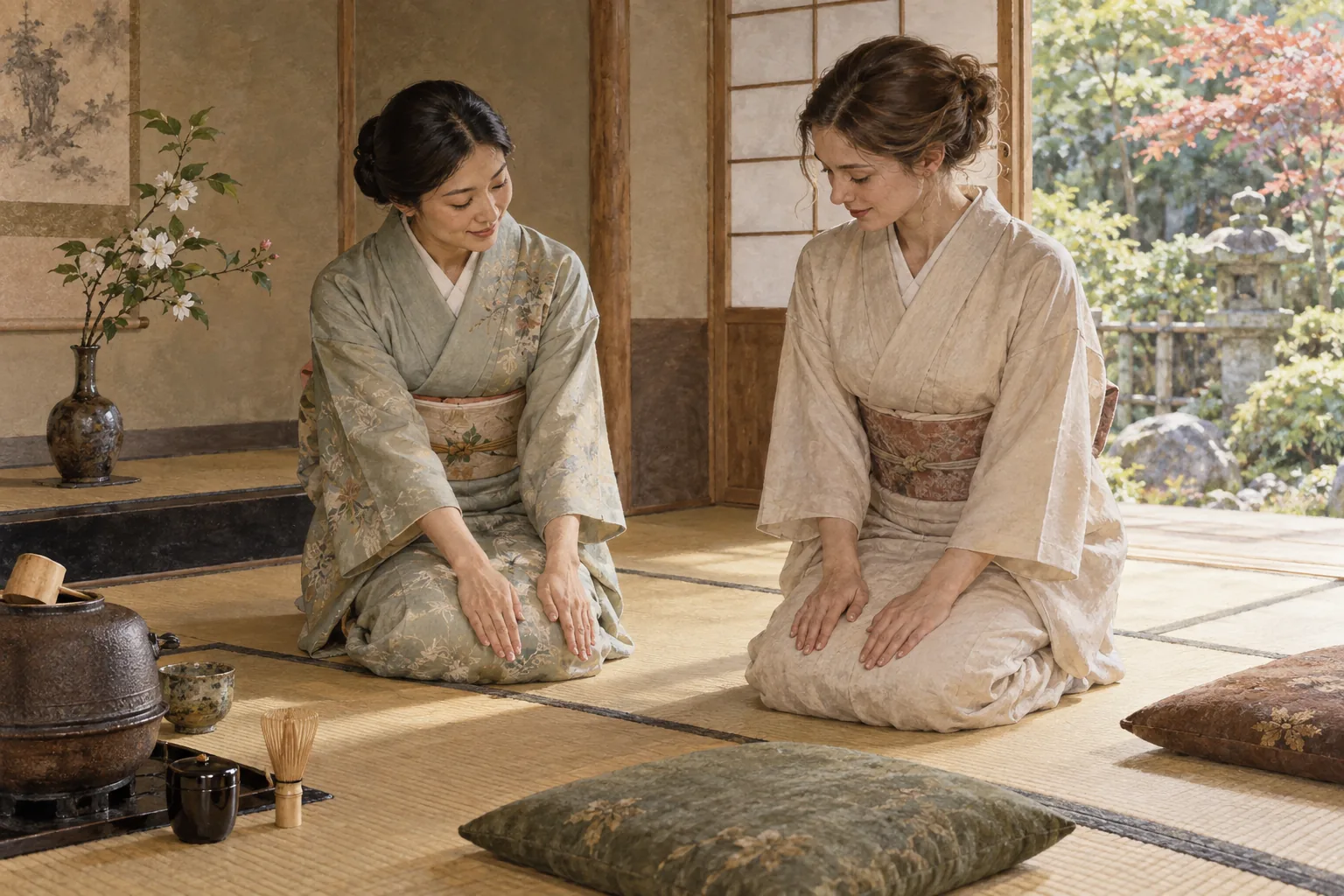
Seiza is kneeling with your legs folded under you, the formal way to sit on the floor in Japan.
正座とは、足を折りたたんで座る、日本で床に座るときの正式な姿勢です。
In 30 seconds
The standard explanation
In seiza you kneel with your shins flat on the floor and sit back on your heels, back straight. It is the formal sitting posture for tatami rooms, tea ceremony, martial arts and funerals. Japanese people's legs go numb in it too, usually within ten to fifteen minutes, and shifting position when told to is entirely normal.
正座では、すねを床につけてひざまずき、かかとの上に腰を下ろして背筋を伸ばします。和室、茶道、武道、葬儀での正式な座り方です。日本人でも足はしびれます。たいてい10〜15分で来ますし、崩してよいと言われたら崩すのが普通です。
As a short speech
A full paragraph you can read aloud
Seiza is the formal way of sitting on the floor in Japan: you kneel, fold your legs under you, sit back on your heels and keep your back straight. You will meet it in a tatami room, at a tea ceremony, in kendo or kyudo, and at funerals.
The thing visitors most want to know is whether it hurts, and the honest answer is yes. Japanese people's legs go numb too, usually within ten or fifteen minutes, and there is a standard phrase a host uses to release everyone: ashi o kuzushite kudasai, please relax your legs. When you hear it, take it.
Older people often cannot do seiza at all, and formal venues increasingly provide low stools that let you kneel without putting weight on your ankles. It is also newer than people assume. Sitting cross-legged or with one knee up was normal for most of Japanese history, and seiza became the standard formal posture relatively late.
正座は日本で床に座るときの正式な姿勢です。ひざまずき、足を体の下に折りたたみ、かかとの上に腰を下ろし、背筋を伸ばします。和室、茶事、剣道や弓道、葬儀で出会います。
外国の方がいちばん知りたいのは痛いかどうかで、正直な答えは、痛いです。日本人でも足はしびれます。たいてい10分か15分で来ます。そして、その場を解くための決まった言葉があります。「足を崩してください」。言われたら、崩してください。
年配の方には正座がまったくできない人も多く、正式な会場でも、足首に体重をかけずにひざまずける低い椅子を用意することが増えています。歴史も思われているより新しく、日本の歴史の大部分では、胡座やたて膝が普通でした。正座が正式な姿勢として定着したのは、比較的あとのことです。
Questions people actually ask
And how to answer them.
Are Japanese people used to it?
Less than you would think. Most people's legs go numb in ten to fifteen minutes, and many younger people rarely sit this way at all. Nobody expects a visitor to hold it.
思われているほどではありません。多くの人は10〜15分でしびれますし、若い世代はそもそもめったに正座しません。訪日の方に耐えることは期待されていません。
What do I do when my legs go numb?
Say something. A host will immediately tell you to relax your legs, and shifting to sitting sideways is completely acceptable once permission is given.
言ってください。すぐに「足を崩してください」と言ってもらえます。許しが出たら、横座りに崩して構いません。
How do I stand up afterwards?
Slowly. Tuck your toes under first, rise onto your knees, then stand. Standing straight up on numb legs is how people fall over, and it happens to Japanese people too.
ゆっくり立ちます。まずつま先を立て、膝立ちになってから立ち上がります。しびれた足でいきなり立つと転びます。日本人もやります。
A common misunderstanding
MYTHSeiza is an ancient Japanese way of sitting that everyone finds comfortable.
FACTCross-legged and one-knee-up postures were normal for most of Japanese history, and seiza became the formal standard relatively late. It is uncomfortable for Japanese people too.
Phrases you can use
- Please relax your legs.足を崩してください。
- My legs have gone numb.足がしびれました。
- Japanese people find it painful too.日本人もつらいです。
- Stand up slowly — you'll fall over otherwise.ゆっくり立ってください。でないと転びます。
- There are small stools you can use.正座用の小さな椅子もあります。
Words you need
- kneelひざまずく
- go numbしびれる
- posture姿勢
- formal setting改まった場
- cross-legged胡座をかいた
Watch
From YouTubeBackground (Japanese)
絵巻物や古い記録では、胡座(あぐら)や立て膝で座る姿が多く描かれており、正座が広く正式な座法とされたのは近世以降と考えられている。茶の湯の作法や、江戸幕府の礼法の整備を通じて定着したという説が知られるが、時期や経緯については諸説ある。「正座」という語自体が一般化したのは明治以降とされ、それ以前は「端座」「危座」などと呼ばれた。足のしびれは、膝を折ることで下肢の神経と血流が圧迫されて起こる。近年は法事や式典でも椅子席を用意する例が増え、正座用の補助椅子も広く市販されている。