zazen
seated Zen meditation
座禅(ざぜん)
In one line
The shortest answer that works
Zazen is seated Zen meditation: you sit still with a straight back and attend to posture and breath.
座禅とは、背筋を伸ばして静かに座り、姿勢と呼吸に心を向ける禅の瞑想です。
In 30 seconds
The standard explanation
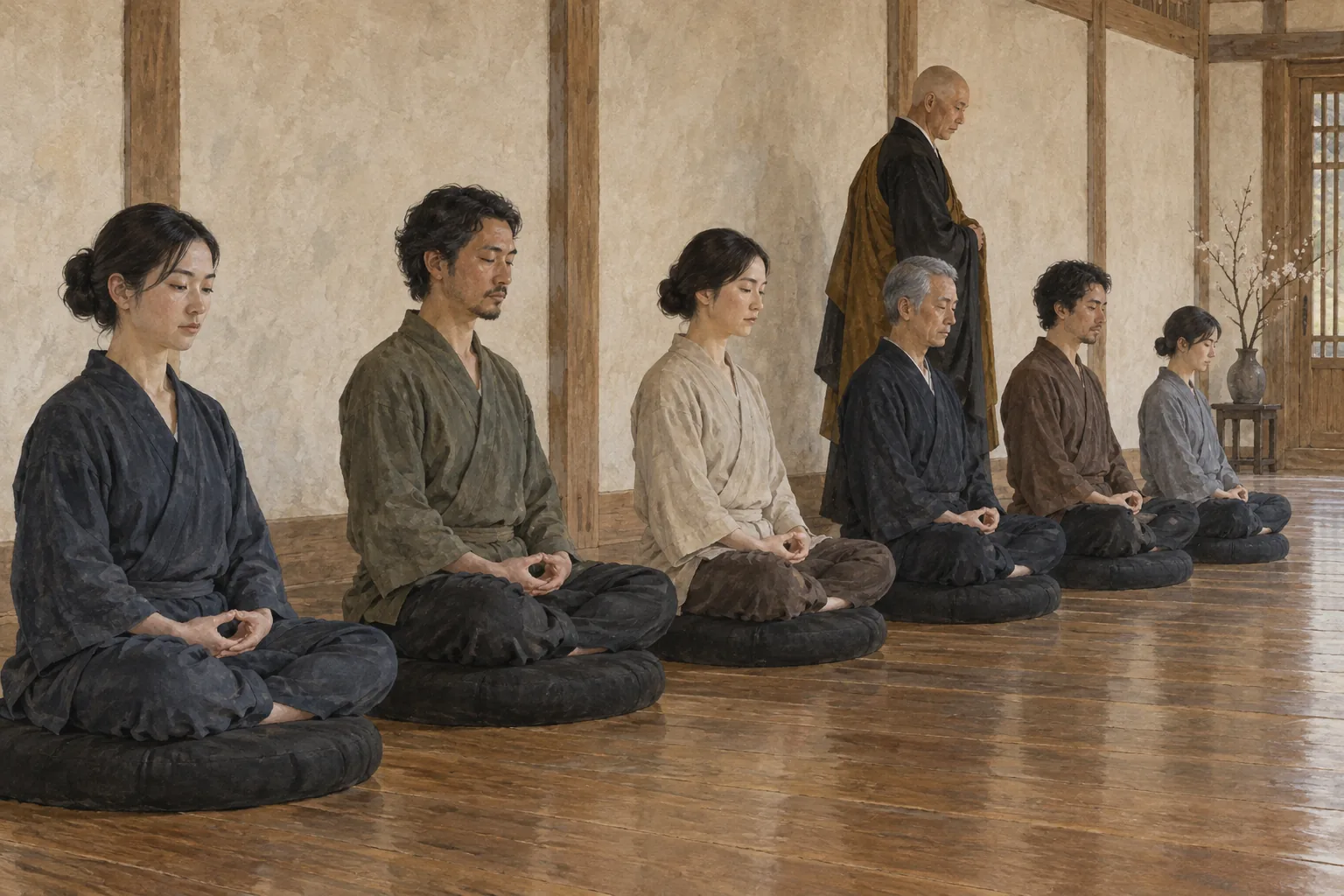
In zazen you sit cross-legged on a cushion with a straight back, eyes half open, and simply sit. In the Soto school you face a wall and do not pursue any goal; the sitting itself is the practice. Many temples run sessions open to the public, often early in the morning, and no experience or belief is required to join.
座禅では、座蒲の上に足を組んで背筋を伸ばして座り、目を半分開けて、ただ座ります。曹洞宗では壁に向かって座り、何かを目指しません。座ることそのものが実践です。多くの寺が一般向けの座禅会を、たいてい早朝に開いており、経験も信仰も必要ありません。
As a short speech
A full paragraph you can read aloud
Zazen is the seated meditation at the center of Zen Buddhism, and the first thing to correct is the idea that you are trying to empty your mind. In the Soto school, which is the one most visitors encounter, you are not trying to achieve anything at all.
You sit cross-legged on a round cushion, straighten your spine, keep your eyes half open looking down at the floor, breathe, and sit. Thoughts arrive; you let them go and return to the breath. The sitting is not a means to enlightenment. The sitting is the practice.
Sessions at temples usually last two rounds of twenty or thirty minutes with a short walk between them. And yes, there is a monk with a flat wooden stick. If your posture slips or you ask for it by bowing, you are struck on the shoulder. It is not punishment, it wakes you up, and it stings less than it looks.
座禅は禅宗の中心にある坐る瞑想ですが、まず直したいのは「心を空にしようとする」という誤解です。訪日の方が触れることが多い曹洞宗では、何かを達成しようとしません。丸い座蒲の上に足を組んで座り、背筋を伸ばし、目を半分開けて床を見て、呼吸し、座ります。
考えは浮かびます。それを手放し、呼吸に戻ります。座ることは悟りへの手段ではありません。座ることが実践そのものです。寺の座禅会はふつう20〜30分を二回、あいだに歩く時間をはさみます。
そして、そうです。平たい木の棒を持った僧がいます。姿勢が崩れたとき、あるいは自分から礼をして頼んだとき、肩を打たれます。罰ではなく、目を覚ますためのもので、見た目ほど痛くありません。
Questions people actually ask
And how to answer them.
Does the stick hurt?
It stings and makes a loud crack, but it is not meant to injure. In most temples you request it by bowing, so it is not done to you without consent.
ぴりっとして大きな音がしますが、傷つけるためのものではありません。多くの寺では自分から合掌して頼む形なので、勝手に打たれることはありません。
What if I can't sit cross-legged?
Say so. Many temples will offer a chair or let you kneel instead, and older Japanese participants often use them too.
伝えてください。多くの寺は椅子や正座の姿勢を用意していますし、年配の日本人の参加者もよく使っています。
Do I have to be Buddhist?
No. Public sessions are open to anyone, with no requirement to believe anything. Many participants are there for the same reasons people elsewhere do mindfulness.
必要ありません。一般向けの座禅会は誰でも参加でき、何かを信じることも求められません。他国でマインドフルネスをする人と同じ理由で来ている参加者も多くいます。
A common misunderstanding
MYTHZazen means emptying your mind and stopping all thought.
FACTIn the Soto tradition you are not pursuing any state, including an empty mind. Thoughts come and go; you return to the posture and the breath and keep sitting.
Phrases you can use
- Keep your back straight and your eyes half open.背筋を伸ばし、目を半分開けておきます。
- You're not trying to achieve anything.何かを達成しようとするものではありません。
- The stick is to wake you up, not to punish you.棒は罰ではなく、目を覚ますためのものです。
- Tell them if you can't sit cross-legged.足が組めない場合は伝えてください。
- Anyone can join, whatever they believe.信仰に関係なく、誰でも参加できます。
Words you need
- meditation瞑想
- posture姿勢
- cross-legged足を組んで
- enlightenment悟り
- monastery修行道場、僧院
Watch
From YouTubeBackground (Japanese)
禅宗は鎌倉時代に中国から伝わり、栄西が臨済宗を、道元が曹洞宗を開いた。曹洞宗では、座ること自体が悟りの現れであるとする「只管打坐(しかんたざ)」を説く。壁に向かって座るのが曹洞宗、堂の中央を向いて座るのが臨済宗という違いがある。肩を打つ棒は曹洞宗では「警策(きょうさく)」、臨済宗では「警策(けいさく)」と読みが異なる。受けるかどうかは基本的に本人の合図による。福井県の永平寺、神奈川県の總持寺が曹洞宗の大本山で、いずれも一般向けの参禅体験を受け付けている。英語の Zen はこの「禅」の日本語読みが世界に広まったものである。