takuhatsu
the walking alms round of a Buddhist monk
托鉢(たくはつ)
In one line
The shortest answer that works
Takuhatsu is the practice of Buddhist monks walking through town chanting sutras to receive alms, treated as training rather than begging.
托鉢とは、僧侶が経を唱えながら街を歩き、施しを受ける修行のことで、物乞いとは区別されます。
In 30 seconds
The standard explanation
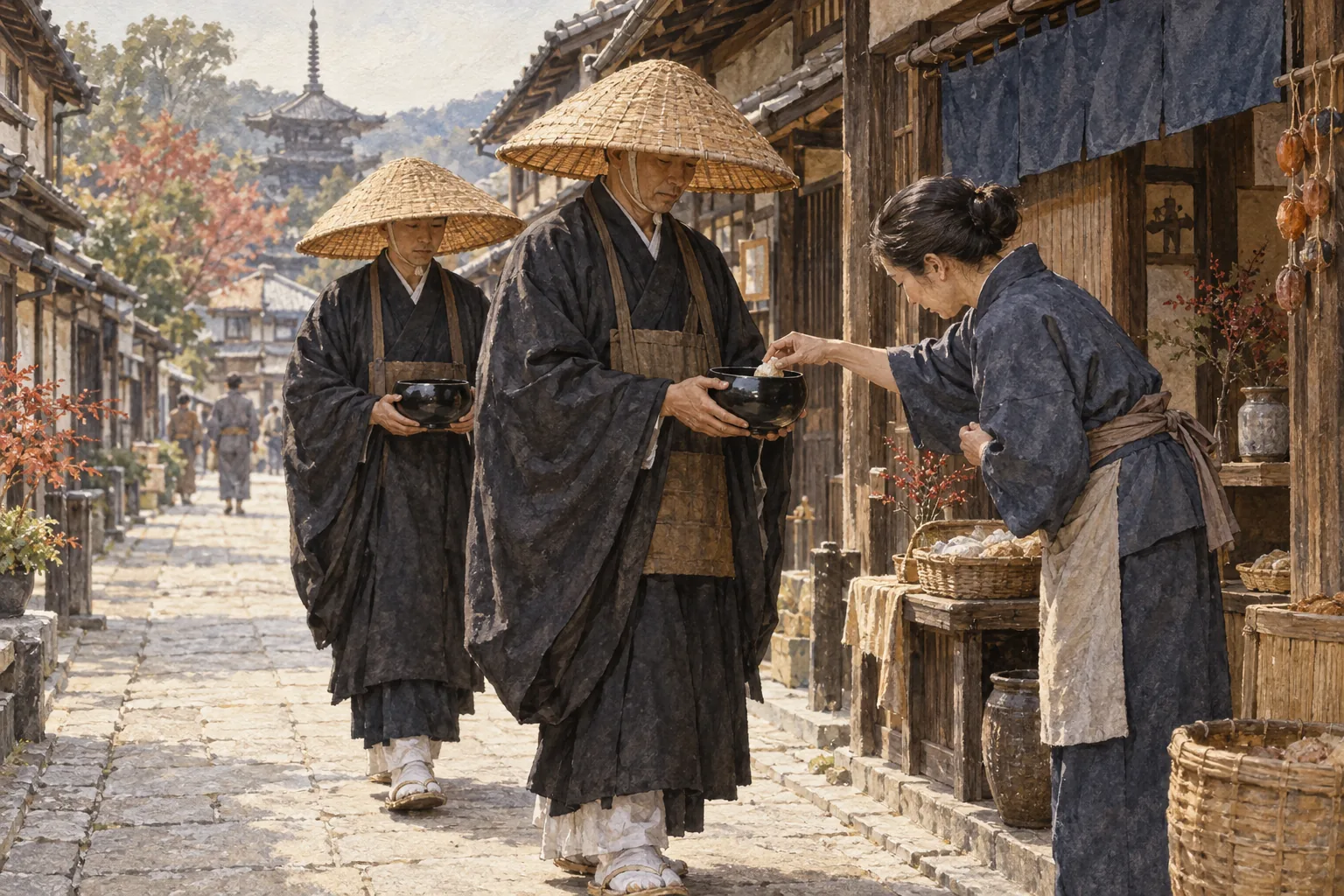
Takuhatsu is the traditional practice of Buddhist monks, especially those training at Zen temples, walking through towns in straw sandals and wide woven hats, chanting sutras while carrying a bowl to receive donations of rice, coins or food. Within Buddhist teaching it is understood as training for the monk rather than a plea for charity: accepting whatever is given without preference, and answering with a bow rather than words, is itself part of the discipline. It's less common as an everyday sight today than it once was, but organized takuhatsu walks still take place, particularly around New Year and certain temple events.
托鉢とは、特に禅宗の寺で修行する僧侶が、わらじと編笠を身につけて町を歩き、経を唱えながら鉢を持って米や小銭、食べ物の施しを受ける伝統的な修行です。仏教の教えでは、これは一般の人から取り立てる慈善行為ではなく、僧侶自身の修行として理解されており、与えられたものを好き嫌いせず受け取り、言葉で頼むのではなく一礼で感謝を示すこと自体が修行の一部とされます。かつてほど日常の光景ではなくなっていますが、正月や特定の寺の行事の時期には、今も組織立った托鉢が行われています。
As a short speech
A full paragraph you can read aloud
If you see a monk standing quietly on a street corner in straw sandals and a deep woven hat, chanting softly with a bowl held out, that is takuhatsu, and it is worth understanding why it looks the way it does. This isn't begging in the ordinary sense; within Buddhist training, especially in the Zen tradition, it's framed as a discipline for the monk, not a request from the public.
The monk is taught to accept whatever is offered, whether it's a coin, a handful of rice, or nothing at all, without showing preference or disappointment, and to thank the giver with a bow rather than words, since the exchange is considered spiritually valuable for both sides: the giver builds merit by giving, and the monk practices humility and non-attachment by receiving without judgment. The custom has become rarer as a daily street scene in modern cities, but it hasn't disappeared. Organized group takuhatsu walks, especially from temples with strict training programs, still happen regularly, and individual monks sometimes still walk alone during specific seasonal periods.
わらじと深い編笠を身につけた僧侶が街角に静かに立ち、鉢を差し出しながら小さな声で経を唱えているのを見かけたら、それが托鉢です。なぜそのような形をしているのか知っておく価値があります。これは一般的な意味での物乞いではありません。仏教の修行、特に禅の伝統の中では、これは一般の人への要求ではなく、僧侶自身のための修行として位置づけられています。
僧侶は、硬貨であれ米一握りであれ、何もなくても、好き嫌いや落胆を見せずに、与えられたものを何でも受け取るよう教えられ、与えた人には言葉ではなく一礼で感謝を示します。というのも、この施しのやり取りは双方にとって精神的な価値があるとされるからです。
施す側は施すことで功徳を積み、僧侶は判断せずに受け取ることで謙虚さと執着のなさを実践します。この習慣は現代の都市では日常の街の光景としては珍しくなっていますが、消えたわけではありません。特に厳しい修行制度を持つ寺からの、組織だった集団での托鉢は今も定期的に行われており、特定の季節には僧侶が一人で歩くこともあります。
Questions people actually ask
And how to answer them.
Am I supposed to give money if I see a monk doing takuhatsu?
It's entirely optional and there's no set amount expected; a small coin or nothing at all is both fine, since the practice is about the monk's training rather than an obligation on passersby.
まったく任意で、決まった金額は求められていません。小銭でも、何も渡さなくても問題ありません。この修行は通行人に義務を課すものではなく、僧侶自身の修行のためだからです。
Why doesn't the monk say thank you out loud?
A silent bow is considered more appropriate within the discipline than a verbal thank-you, since the exchange is treated as a shared spiritual act rather than an ordinary transaction between giver and receiver.
無言の一礼のほうが、声に出した感謝の言葉より修行としてふさわしいとされます。この施しは、与える人と受け取る人のふつうの取引というより、共有された精神的な行いとして扱われるからです。
Is takuhatsu only done by Zen monks?
Zen temples are the most associated with it today because it's built into their training, but the practice has roots across Buddhist tradition more broadly and isn't exclusive to one school.
禅宗の寺が修行に組み込まれていることから今もっとも結びつきが強いですが、この行いはより広く仏教の伝統全体に根があり、一つの宗派だけのものではありません。
Phrases you can use
- I saw a monk doing takuhatsu near the station today.今日、駅の近くで托鉢をしているお坊さんを見ました。
- He bowed instead of saying thank you.彼はお礼を言う代わりに頭を下げました。
- It's training for the monk, not begging.これは物乞いではなく、僧侶の修行です。
- You can give a coin, or nothing — either is fine.小銭を渡しても、何も渡さなくても、どちらでも大丈夫です。
- This temple sends monks out for takuhatsu every winter.この寺では毎年冬に托鉢に僧侶を送り出します。
Words you need
- alms round托鉢
- straw hat (deep, woven)編笠
- alms bowl鉢
- Buddhist training修行
- to give without attachment執着なく施す
Watch
From YouTubeBackground (Japanese)
托鉢は仏教の伝統に広く見られる修行で、日本では特に禅宗の修行僧が編笠とわらじを身につけて行う姿が知られている。与えられたものを選ばずに受け取り、言葉ではなく一礼で感謝を示すことが修行の一部とされる。施す側にとっても功徳を積む行いとされ、単なる施しの受け渡しではなく、双方にとって意味のある行為と位置づけられている。現代の都市では日常的な光景ではなくなったが、寺の行事や特定の季節に合わせて今も行われている。