nihon no bukkyo
how Buddhism arrived, changed, and ended up handling funerals
日本の仏教(にほんのぶっきょう)
In one line
The shortest answer that works
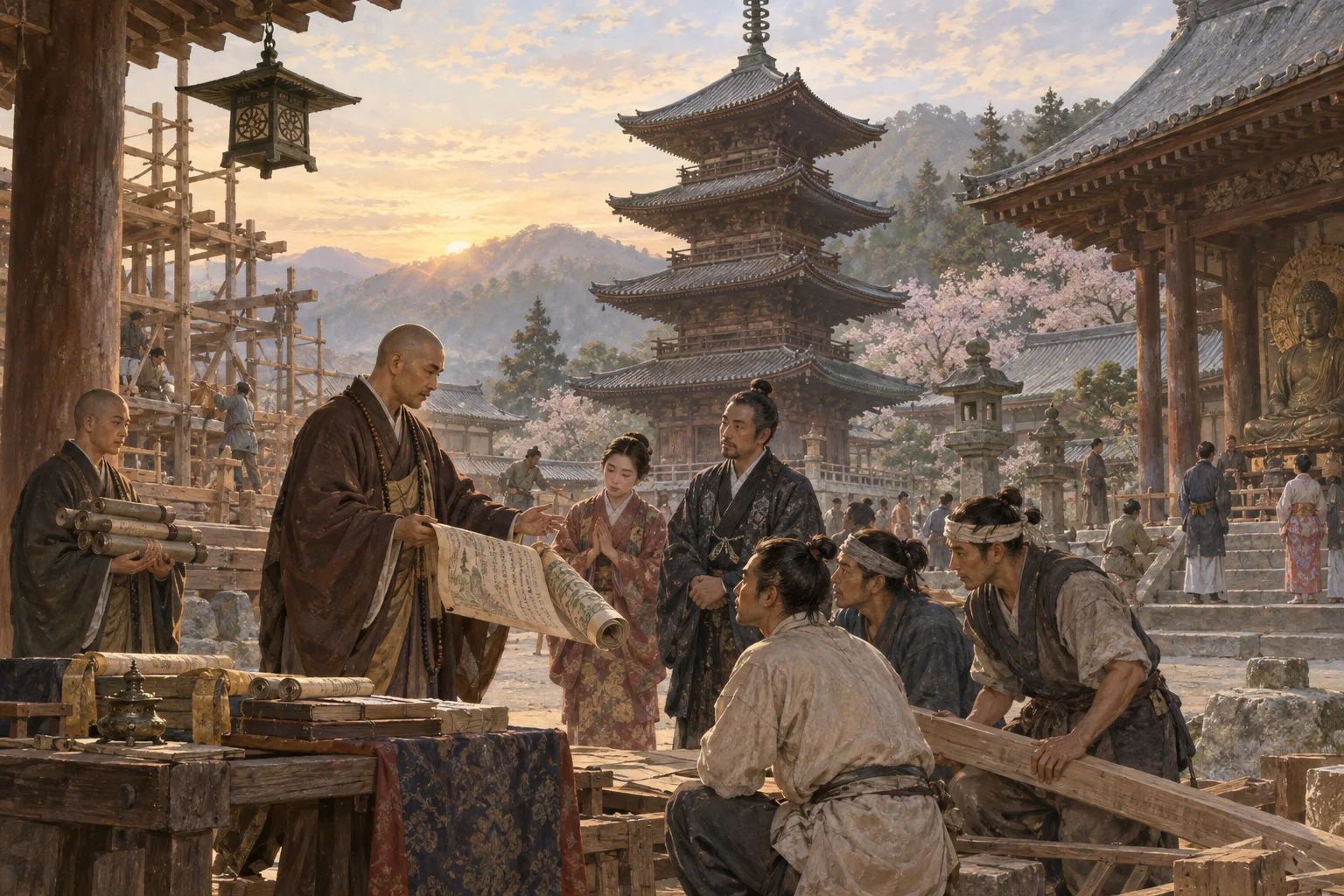
Nihon no bukkyo, or Buddhism in Japan, is a sixth-century arrival that many families now meet mainly at funerals.
日本の仏教とは、6世紀に伝わり、いま多くの家が主に葬儀の場面で出会う宗教です。
In 30 seconds
The standard explanation
Buddhism came to Japan from the Korean peninsula in the sixth century, was adopted by the court, and spread through several waves of new schools. For most of its history it was practiced together with Shinto. Today there are more than seventy-five thousand temples, and most families' contact with them is through funerals and memorial rites rather than weekly worship.
仏教は6世紀に朝鮮半島を経て日本に伝わり、朝廷に受け入れられ、いくつもの新しい宗派の波を通じて広がりました。歴史の大半では神道とともに行われてきました。いま全国に7万5千を超える寺があり、多くの家がそこと関わるのは、日ごとの礼拝ではなく葬儀と法事です。
As a short speech
A full paragraph you can read aloud
Buddhism arrived in Japan in the middle of the sixth century, sent from a kingdom on the Korean peninsula, and the court argued about whether to accept a foreign god before adopting it. From there it changed repeatedly. In the eighth century it served to protect the state: enormous temples, the Great Buddha at Nara.
In the ninth, esoteric schools brought rituals and mountain training. In the thirteenth, during war and famine, came the schools that reached ordinary people: call the Buddha's name and you will be saved, or chant the title of the Lotus Sutra, or sit in meditation. For more than a thousand years it was practiced together with Shinto and only separated by law in 1868.
Under the Tokugawa every household had to register with a temple, which is how temples came to run funerals, and that is still their main role. Many Japanese people will tell you they are not religious, and in the same breath tell you which Buddhist school their family belongs to.
仏教が日本に伝わったのは6世紀の半ば、朝鮮半島の国から伝えられ、朝廷は外国の神を受け入れるかどうかで争ったのちに受け入れました。そこから何度も姿を変えます。8世紀には国家の守りでした。巨大な寺、奈良の大仏。
9世紀には密教が入り、儀礼と山の修行をもたらします。13世紀、戦と飢えの時代に、庶民に届く宗派が現れました。仏の名を称えれば救われる。法華経の題目を唱える。坐って見つめる。千年以上のあいだ神道とともに行われ、法で分けられたのは1868年です。
徳川の世では、すべての家がどこかの寺に登録することを義務づけられました。寺が葬儀を担うようになったのはこのためで、いまもそれが主な役目です。多くの日本人は「自分は宗教的ではない」と言いながら、同じ口で家の宗派を答えたりします。
Questions people actually ask
And how to answer them.
When exactly did it arrive?
Traditionally 538 or 552, when the king of Baekje sent an image and sutras to the Japanese court. The two dates come from different chronicles, and textbooks usually give both.
伝統的には538年または552年で、百済の王が仏像と経典を朝廷へ送ったときとされます。二つの年号は別々の記録によるもので、教科書はたいてい両方を挙げます。
Why do temples handle funerals?
Because of a seventeenth-century policy requiring every household to register with a temple, partly to prove they were not Christian. The relationship became hereditary, and the funeral role outlived the policy.
17世紀の制度で、すべての家がどこかの寺に登録することを義務づけられたからです。キリシタンでないことを示す目的もありました。関係は家に受け継がれ、制度が終わったあとも葬儀の役目だけが残りました。
Can I visit a temple if I'm not Buddhist?
Yes. Temples are open to anyone, most charge only for the garden or hall, and nobody asks about your beliefs. Offering incense and putting your hands together is welcome and commits you to nothing.
行けます。寺は誰にでも開かれていて、料金がかかるのは庭や堂内くらい、信仰を尋ねられることもありません。線香を供えて手を合わせることは歓迎されますし、何かを約束することにもなりません。
A common misunderstanding
MYTHJapanese Buddhism is mainly Zen meditation.
FACTBy number of temples and households, the Pure Land schools are larger than Zen, and the Nichiren tradition also has a very large following. Zen became the best known abroad largely because it was what got translated and introduced overseas in the twentieth century.
Phrases you can use
- Buddhism arrived in the sixth century.仏教は6世紀に伝わりました。
- It was practiced together with Shinto for over a thousand years.千年以上、神道とともに行われてきました。
- Temples came to handle funerals because of an Edo-period policy.寺が葬儀を担うのは江戸時代の制度によります。
- There are more than seventy-five thousand temples.寺は7万5千以上あります。
- Anyone can visit, whatever they believe.信仰にかかわらず、誰でも行けます。
Words you need
- Buddhism仏教
- sutra経典
- temple寺
- monk, priest僧侶
- memorial service法事
Watch
From YouTubeBackground (Japanese)
仏教の公伝は、百済の聖明王が仏像と経論を朝廷に贈った年とされ、『日本書紀』にもとづく552年説と、『上宮聖徳法王帝説』などによる538年説がある。奈良時代には国家鎮護の性格を強め、東大寺の大仏はその象徴である。平安時代に天台宗と真言宗、鎌倉時代に浄土宗・浄土真宗・日蓮宗・臨済宗・曹洞宗が広まった。江戸幕府の寺請制度により、すべての家がいずれかの寺の檀家となることが義務づけられ、これが現在の葬儀を寺が担う仕組みの土台になった。文化庁の『宗教年鑑』では、仏教系の寺院数は7万5千を超える。