Shinto
Japan's indigenous way of relating to spirits in nature and ancestors
神道(しんとう)
In one line
The shortest answer that works
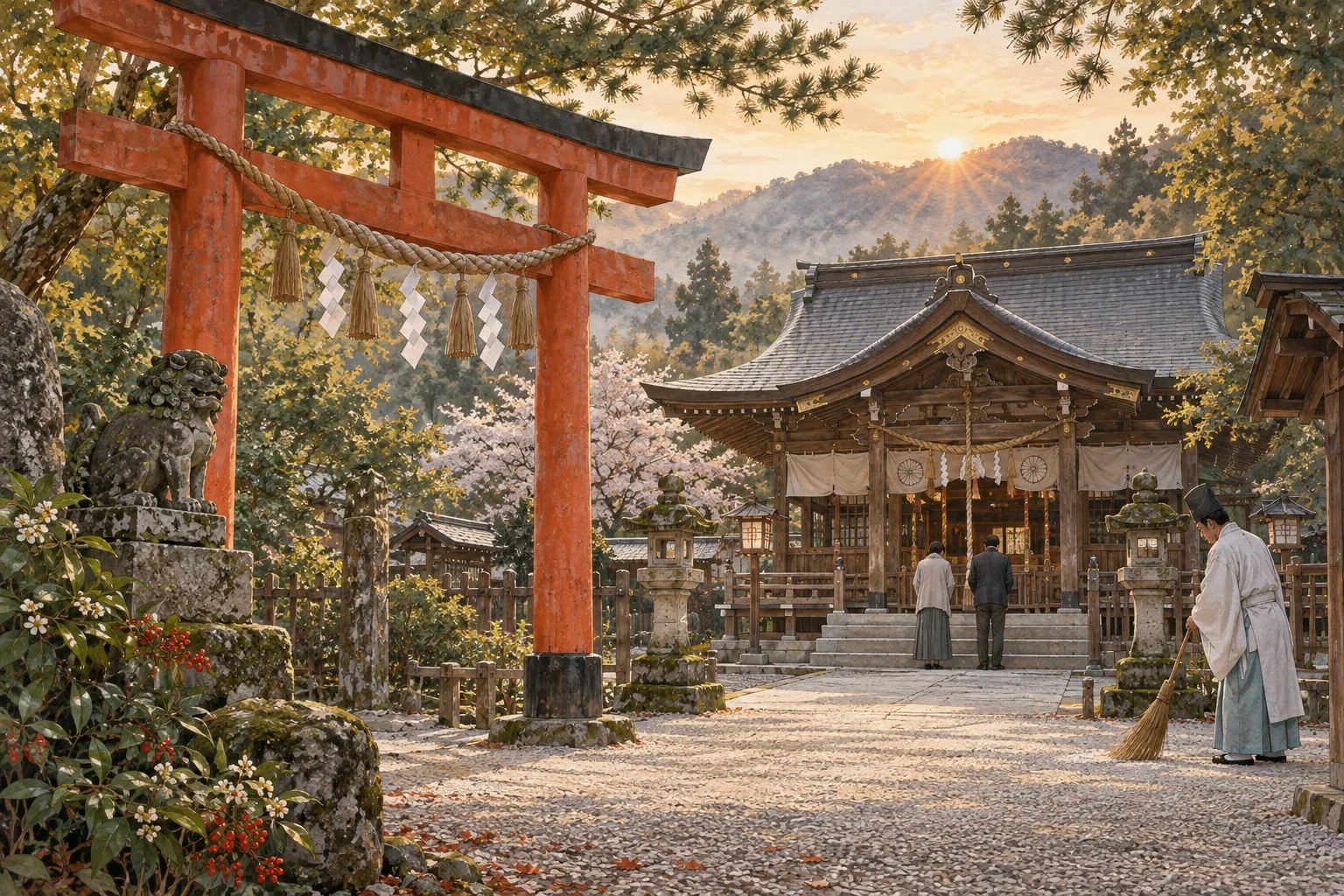
Shinto is Japan's indigenous religion, with no founder, no scripture and countless local deities.
神道は日本の土着の宗教で、開祖も経典もなく、数え切れないほどの神がいます。
In 30 seconds
The standard explanation
Shinto has no founder, no holy book and no list of commandments. It centers on kami, presences found in mountains, rivers, trees, ancestors and outstanding people. Practice is a matter of rites rather than belief: purification, offerings, festivals and prayers at shrines. Most Japanese people take part without calling themselves believers.
神道には開祖も聖典も戒律の一覧もありません。中心にあるのは神で、山、川、木、祖先、抜きん出た人に宿るとされます。実践は信条ではなく儀礼です。お祓い、供え物、祭り、神社での祈り。多くの日本人は、信者を名乗らないまま参加しています。
As a short speech
A full paragraph you can read aloud
Shinto is the hardest thing on this site to explain in English, because the word religion brings expectations it does not meet. There is no founder, no scripture, no creed you recite and no weekly service. What there is, is kami: presences understood to inhabit a mountain, a waterfall, an old tree, a rice field, an ancestor, or a person of exceptional achievement.
There are said to be eight million, which is a way of saying countless. What people do is not believe but act: rinse hands and mouth at the entrance, offer a coin, bow twice, clap twice, bow once. Shrines mark births, weddings and the start of a building.
Historically Shinto and Buddhism were practiced together for over a thousand years and were separated by government policy only in 1868, and in the years before 1945 the state used it politically, which is a real part of the history. Today around eighty thousand shrines operate, and most Japanese people visit one at New Year without considering themselves religious.
神道は、このサイトで英語に直すのがいちばん難しいものです。religion という語が、当てはまらない期待を呼ぶからです。開祖はなく、聖典もなく、唱える信条も、週ごとの礼拝もありません。あるのは神です。
山、滝、老木、田、祖先、そして抜きん出た働きをした人に宿ると理解されてきた存在。八百万といいますが、これは数え切れないという意味です。人がするのは信じることではなく、行うことです。入口で手と口を清め、賽銭を入れ、二礼二拍手一礼。神社は誕生、結婚、建物の起工に関わります。
歴史の上では、神道と仏教は千年以上ともに行われ、1868年の政策で初めて分けられました。1945年より前には国家が政治的に用いた時期があり、これも歴史の一部です。いま全国におよそ8万の神社があり、多くの日本人は自分を宗教的だと思わないまま、正月にそこへ行きます。
Questions people actually ask
And how to answer them.
Is Shinto a religion?
It is registered as one and has priests, shrines and rites. But it has no founder, no scripture and no membership, so people who take part rarely describe themselves as believers. Both statements are true at once.
法制度の上では宗教で、神職も社殿も儀礼もあります。ただ開祖も経典も入信もないので、参加する人が自分を信者と呼ぶことはまれです。この二つは同時に成り立ちます。
Can a non-Japanese person pray at a shrine?
Yes, and nobody will mind. There is no conversion and no exclusion. At most shrines you rinse your hands, put in a coin, bow twice, clap twice, bow once, and that is the whole of it.
できますし、誰も気にしません。入信も排除もありません。多くの神社では、手を清め、賽銭を入れ、二礼二拍手一礼。それで全部です。
What is the relationship with Buddhism?
For most of history they were mixed, with shrines inside temple grounds and deities understood as forms of buddhas. The government forcibly separated them in 1868. Today many families use both: shrine for New Year and some weddings, temple for funerals.
歴史の大半では混ざっていて、寺の中に社があり、神は仏の現れと理解されていました。政府が強制的に分けたのが1868年です。いま多くの家は両方を使います。正月や一部の結婚式は神社、葬儀は寺。
A common misunderstanding
MYTHShinto is a belief system with doctrines that followers accept.
FACTIt has no founder, scripture or creed. It is transmitted as practice — purification, offerings, festivals — and most participants would not call themselves believers.
Phrases you can use
- Shinto has no founder and no scripture.神道には開祖も経典もありません。
- Kami are presences in nature, ancestors and people.神は自然や祖先や人に宿る存在です。
- It's about what you do, not what you believe.信じることではなく、行うことです。
- Shinto and Buddhism were separated only in 1868.神道と仏教が分けられたのは1868年です。
- There are about eighty thousand shrines.神社はおよそ8万あります。
Words you need
- indigenous religion土着の宗教
- deity, spirit神(かみ)
- purificationお祓い・清め
- offering供え物
- shrine priest神職
Watch
From YouTubeBackground (Japanese)
神道という語は、仏教が伝わったのちに、それと区別するために用いられるようになったとされる。古代から明治まで神と仏は多くの場で結びつけて祀られ、神は仏が姿を変えて現れたものとする本地垂迹の考え方が広く行われた。明治元年(1868年)の神仏分離令によって制度上分けられ、以後、国家が神社を管理する体制が敷かれた。戦後は宗教法人となり、国から切り離された。全国の神社数はおよそ8万で、そのうち神社本庁に属するものが多数を占める。