kokka shinto
the state administration of shrines from 1868 to 1945
国家神道(こっかしんとう)
In one line
The shortest answer that works
Kokka shinto, or State Shinto, is the state's nearly eighty-year administration of shrines, treating their rites as civic, not religious.
国家神道とは、八十年近くのあいだ国家が神社を管理し、その祭祀を宗教ではなく公の務めとして扱った仕組みです。
In 30 seconds
The standard explanation
From 1868 the new government separated shrines from Buddhism, placed them under state administration, ranked them, and made priests public officials. Shrine rites were officially defined as not being religion, which allowed the state to require participation while the constitution granted a limited freedom of belief. The arrangement was dismantled by order of the Occupation authorities in December 1945.
1868年以降、新政府は神社を仏教から切り離し、国の管理下に置き、社格を定め、神職を官吏としました。神社の祭祀は宗教ではないと公に位置づけられ、憲法が限られた信教の自由を認める一方で、国が参加を求めることができました。この仕組みは、1945年十二月の占領当局の指令によって解かれています。
As a short speech
A full paragraph you can read aloud
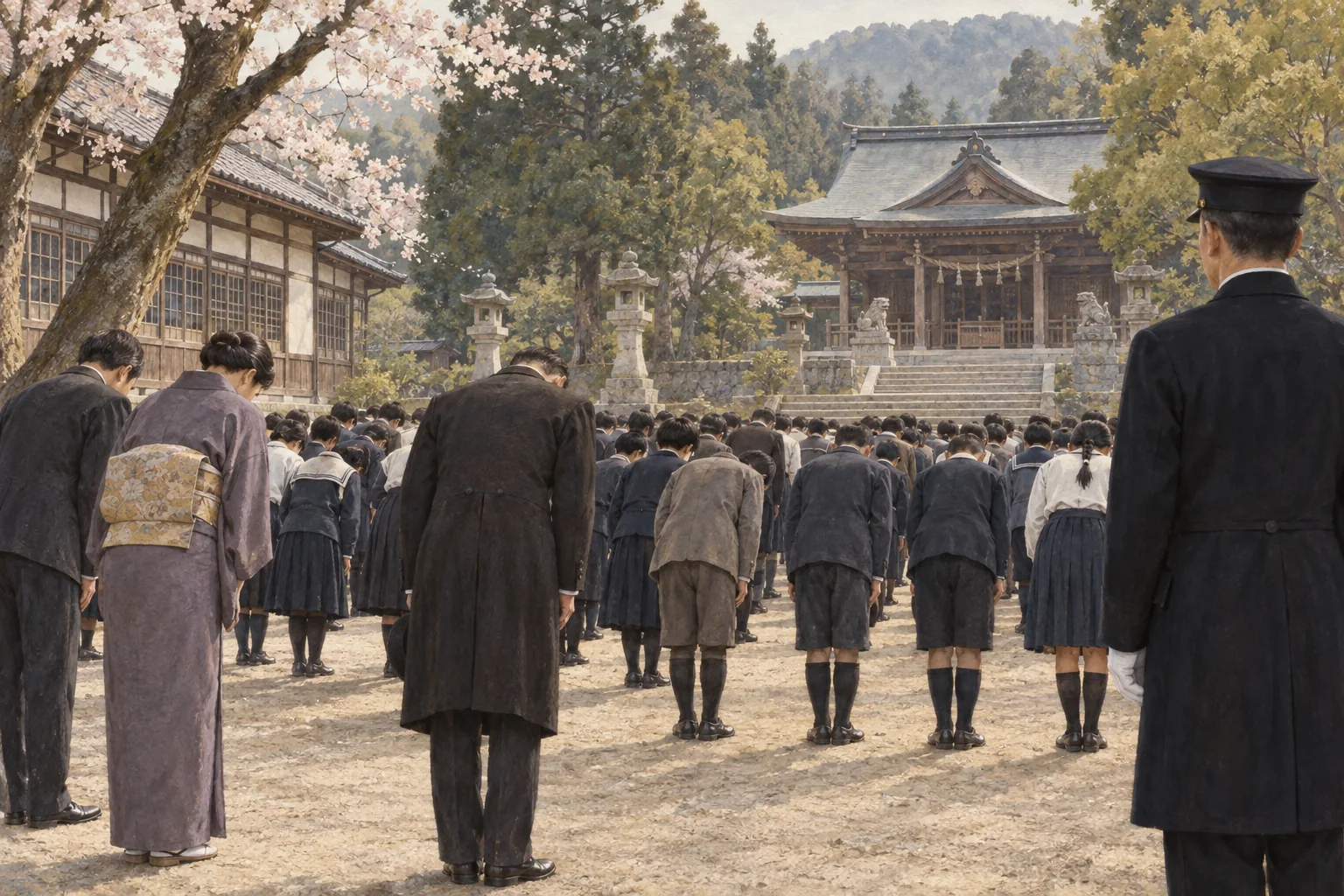
Kokka shinto is the term historians use for the way the Japanese state handled shrines between the Meiji Restoration and the end of the Second World War. The steps are documentable. In 1868 the government ordered shrines and temples separated. In 1871 shrines were declared sites of national rites, given an official ranking, and their priests made public appointees.
Because the constitution of 1889 granted freedom of belief within limits, the state adopted the position that shrine rites were civic observance rather than religion, which allowed schools and organizations to be required to take part regardless of what individuals believed. Shrines were also established in territories Japan governed.
In December 1945 the Occupation authorities issued a directive ending state support, funding and supervision of shrines, and the 1947 constitution separated religion and state. Most shrines then joined a private religious body formed in 1946. Historians continue to disagree about how wide the term should be drawn.
国家神道は、明治維新から第二次大戦の終わりまで、日本の国家が神社をどう扱ったかを指して歴史学が用いる語です。経過は記録で追えます。1868年、政府は神社と寺院を分けるよう命じました。1871年には、神社を国の祭祀の場と定め、社格を設け、神職を官の任命とします。
1889年の憲法が限度つきで信教の自由を認めたため、国は、神社の祭祀は宗教ではなく公の儀礼であるという立場を取りました。これにより、個人が何を信じているかにかかわらず、学校や団体に参加を求めることができました。日本が統治した地域にも神社が建てられています。
1945年十二月、占領当局は、神社への国の支援、財政、監督を終わらせる指令を出し、1947年の憲法は宗教と国家を分離しました。多くの神社はその後、1946年にできた民間の宗教法人に加わります。この語をどこまでの範囲で使うかについては、今も研究者の見解が分かれています。
Questions people actually ask
And how to answer them.
Is Shinto today the same thing?
No. The legal structure was abolished in 1945 and 1947. Shrines are now private religious corporations funded by visitors and parishioners, and the state does not administer, fund or supervise them.
違います。法的な仕組みは1945年と1947年に廃されました。今の神社は民間の宗教法人で、参拝者と氏子によって支えられています。国が管理も財政の負担も監督もしていません。
Why did the state call shrine rites non-religious?
Because the 1889 constitution granted freedom of belief, which would have made compulsory participation difficult. Defining the rites as civic observance removed that obstacle. The position was contested at the time, including by Buddhist and Christian groups.
1889年の憲法が信教の自由を認めており、そのままでは参加を強いることが難しかったからです。祭祀を公の儀礼と定めれば、その障害はなくなります。この立場には当時から異論があり、仏教やキリスト教の団体からも批判が出ていました。
How much of this comes up when I visit a shrine?
Almost none of it. Ordinary shrine practice long predates the Meiji arrangement and continued after it ended. The period matters for understanding modern history and for a few specific shrines, not for how to bow at the entrance.
ほとんど関わりません。神社への参拝そのものは明治の制度よりずっと古く、制度が終わったあとも続いています。この時期が関わるのは近代史の理解と一部の神社についてであって、鳥居での作法とは別の話です。
A common misunderstanding
MYTHShinto has always been Japan's state religion.
FACTShrine practice is far older, but state administration of shrines lasted from the Meiji period to 1945 and was ended by directive and then by the 1947 constitution. Japan has had no state religion since.
Phrases you can use
- The state administered shrines until 1945.1945年まで国が神社を管理していました。
- Priests were public officials then.当時、神職は官の任命でした。
- The rites were defined as non-religious.祭祀は宗教ではないとされていました。
- The system was abolished after the war.この仕組みは戦後に廃されました。
- Shrines are private bodies now.今の神社は民間の法人です。
Words you need
- state administration国家による管理
- shrine ranking社格
- separation of religion and state政教分離
- directive指令
- religious corporation宗教法人
Watch
From YouTubeBackground (Japanese)
1868年の神仏分離令に続き、1871年には神社が国家の祭祀の場と位置づけられ、社格の制度が設けられ、神職は官の任命となりました。1889年の大日本帝国憲法が信教の自由を条件つきで認めたため、政府は神社の祭祀を宗教ではないとする立場を取り、参加を求める根拠としました。1945年十二月の神道指令によって国の関与は終わり、1947年の日本国憲法が政教分離を定めます。多くの神社は1946年に設立された神社本庁に属する宗教法人となりました。国家神道という語の指す範囲については、研究者のあいだで議論が続いています。