tenno
the Emperor of Japan
天皇(てんのう)
In one line
The shortest answer that works
Tenno, or the Emperor of Japan, is the constitutional symbol of the state, with no political power.
天皇とは、憲法で国の象徴と定められ、政治の権能を持たない存在です。
In 30 seconds
The standard explanation
The Emperor of Japan is the head of the imperial house and, under the postwar constitution, the symbol of the state and of the unity of the people. The constitution states that he has no powers related to government. His acts in matters of state, such as appointing the prime minister designated by parliament, require the advice and approval of the Cabinet.
天皇は皇室の当主であり、戦後の憲法のもとでは国および国民統合の象徴と定められています。憲法は、天皇が国政に関する権能を有しないと明記しています。国会が指名した内閣総理大臣を任命するといった国事行為には、内閣の助言と承認が必要です。
As a short speech
A full paragraph you can read aloud
The Emperor of Japan occupies a position that is easy to misread from outside. Under the constitution that came into force in 1947, he is the symbol of the state and of the unity of the people, and the same document states explicitly that he has no powers related to government.
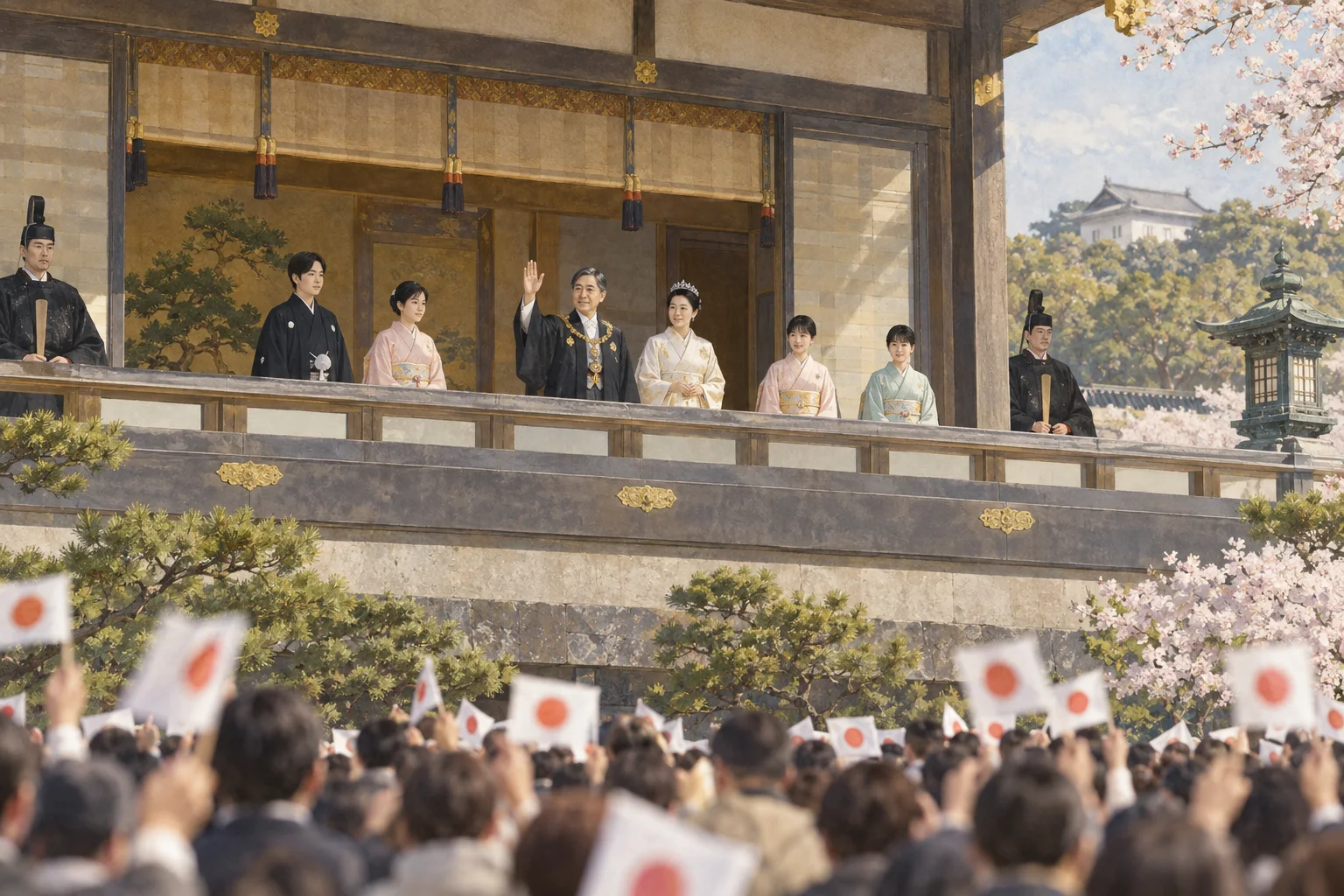
His acts in matters of state, such as promulgating laws, convoking parliament and appointing the prime minister whom parliament has designated, are carried out with the advice and approval of the Cabinet. In practice the role is ceremonial and representational: state visits, disaster area visits, annual rites, and the New Year appearance at the palace.
The imperial house is often described as the oldest continuous hereditary monarchy in the world, though the earliest reigns are legendary rather than documented. Succession is governed by a separate law. In 2019 the previous emperor stepped down, the first abdication in about two centuries, which required special legislation.
天皇の地位は、外から見ると読み違えやすいものです。1947年に施行された憲法のもとで、天皇は国および国民統合の象徴とされ、同じ憲法の中で、国政に関する権能を有しないと明記されています。
法律の公布、国会の召集、国会が指名した内閣総理大臣の任命といった国事行為は、内閣の助言と承認によって行われます。実際の務めは儀礼的で、代表としての性格を持ちます。外国訪問、被災地の訪問、年ごとの祭祀、そして皇居での新年の一般参賀などです。
皇室は世界で最も長く続く世襲の君主家と紹介されることが多くありますが、初期の代については記録ではなく伝承によります。皇位の継承は別の法律で定められています。2019年には前の天皇が退位しました。およそ二百年ぶりのことで、そのために特別の法律が設けられました。
Questions people actually ask
And how to answer them.
Does the Emperor have any political power?
No. The constitution states that he has no powers related to government, and his acts in matters of state require the advice and approval of the Cabinet. He does not vote, does not make policy and does not comment on political questions.
ありません。憲法は、天皇が国政に関する権能を有しないと定めており、国事行為には内閣の助言と承認が要ります。投票もせず、政策も決めず、政治の問題について意見を述べることもありません。
Can a woman become emperor?
Under the current Imperial House Law, only men descended through the male line can succeed, although several women reigned in the past. Some people want the law to allow women on the throne, while others say the male-line tradition should be kept.
現在の皇室典範では、皇位を継げるのは男系の男子に限られますが、歴史上は女性の天皇が何人も在位しました。女性の即位を認めるよう法を改めたいという意見がある一方、男系の伝統を守るべきだという意見もあります。
Can visitors see the palace?
Part of the grounds in Tokyo is open to the public, and guided tours of a route inside can be booked in advance. The inner residence is not open. Two days a year the imperial family appears publicly at the palace.
東京の皇居では一部の区域が公開されており、内側を巡る見学は事前の申し込みで参加できます。お住まいの区域は公開されていません。年に二日、皇族が公に姿を見せる行事があります。
A common misunderstanding
MYTHThe Emperor rules Japan.
FACTThe constitution defines the role as symbolic and states that he has no powers related to government. Political authority rests with the elected parliament and the Cabinet.
Phrases you can use
- The constitution calls him a symbol of the state.憲法は国の象徴と定めています。
- He has no powers related to government.国政に関する権能はありません。
- The era name changes with the reign.元号は代替わりで変わります。
- Part of the palace grounds is open.皇居の一部は公開されています。
Words you need
- constitution憲法
- symbol象徴
- succession皇位の継承
- acts in matters of state国事行為
Watch
From YouTubeBackground (Japanese)
現行憲法の第1条は、天皇を日本国の象徴であり日本国民統合の象徴と定め、その地位は主権の存する日本国民の総意に基づくとしています。第4条は国政に関する権能を有しないと定めています。皇位の継承や皇族の身分は皇室典範によります。2019年の退位は、一代限りの特例法に基づいて行われました。宮中では新嘗祭など年間を通じた祭祀が行われており、これらは国事行為とは区別されています。