kofun
ancient burial mounds
古墳(こふん)
In one line
The shortest answer that works
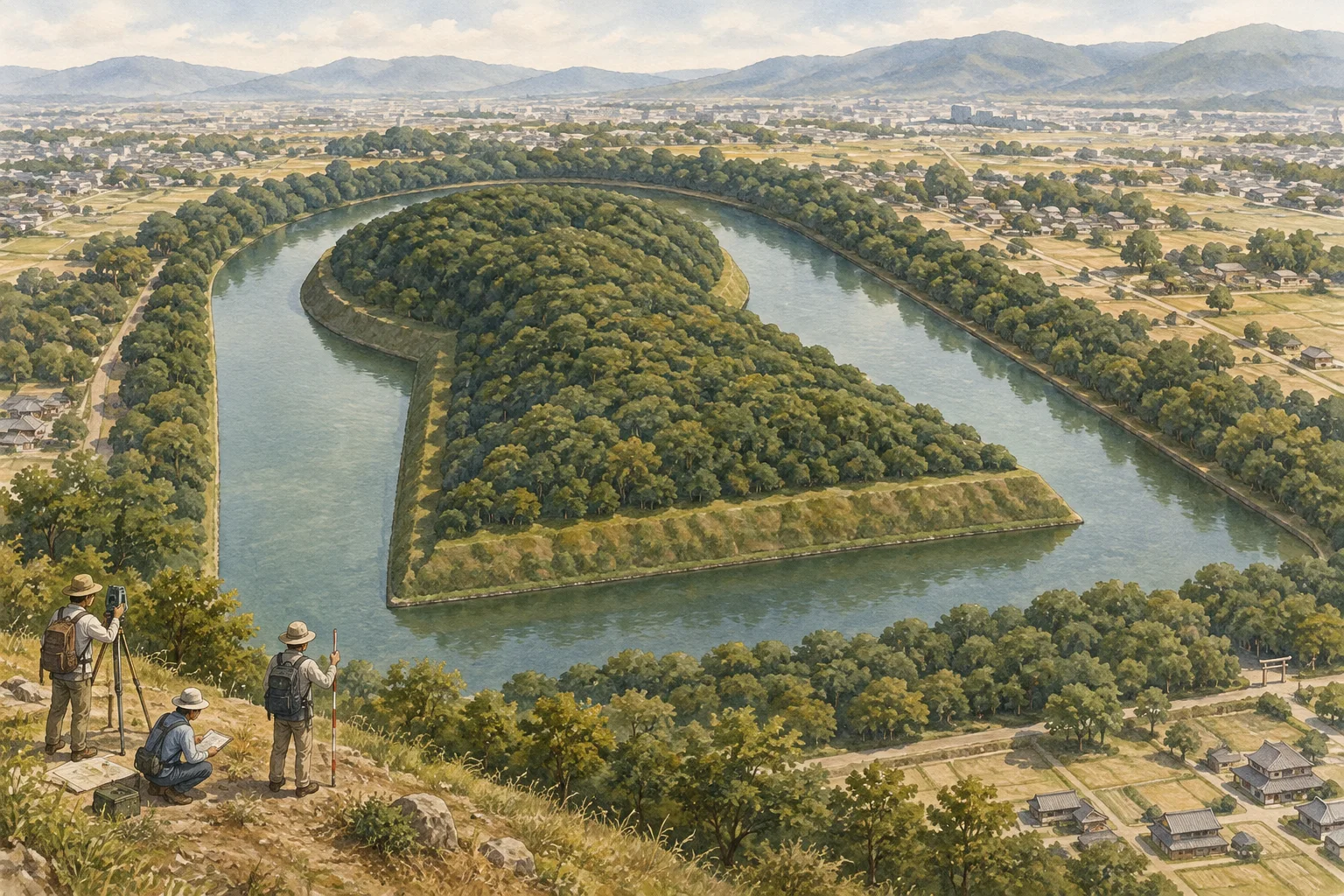
Kofun are the huge keyhole-shaped burial mounds built for Japan's early rulers.
古墳とは、古代の支配者のために築かれた巨大な鍵穴の形の墓です。
In 30 seconds
The standard explanation
Kofun are earth burial mounds built between roughly the third and seventh centuries for rulers and powerful families. The most famous shape is the keyhole: a round mound joined to a square one, surrounded by moats. Clay figures called haniwa were stood on the slopes. The largest are in the Osaka area, and a group of them was added to the World Heritage list in 2019.
古墳とは、およそ3世紀から7世紀にかけて、支配者や有力な一族のために築かれた土の墓です。最も有名な形は鍵穴形、つまり円い墳丘と方形の墳丘をつないだもので、周囲に濠をめぐらせます。斜面には埴輪と呼ばれる素焼きの像が並べられました。最大級のものは大阪周辺にあり、その一群が2019年に世界遺産に登録されました。
As a short speech
A full paragraph you can read aloud
Kofun are the burial mounds of Japan's early rulers, built from about the third to the seventh century, and they gave their name to a whole period. The characteristic form is a keyhole seen from above: a round mound for the burial chamber joined to a trapezoidal front, ringed by one or more moats.
The largest, in Sakai near Osaka, has a mound long given as 486 meters, and recent surveys suggest it may be even longer, which makes it one of the biggest tombs in the world by area. Rows of clay figures called haniwa, shaped as houses, horses, warriors and dancers, stood along the terraces.
In 2019 the Mozu and Furuichi groups of mounds were inscribed as World Heritage. Visiting is strange: most are managed as imperial graves, so you cannot walk in, and from ground level you see only a wooded hill behind water.
古墳は、およそ3世紀から7世紀にかけて築かれた古代の支配者の墓で、一つの時代の名にもなりました。特徴的な形は、上から見ると鍵穴に見えるもので、埋葬の施設がある円い墳丘に台形の前方部をつなぎ、周りに一重か二重の濠をめぐらせます。
大阪の堺にある最大のものは墳丘の長さが486メートルとされてきました。近年の測量ではさらに長いという推定もあり、面積では世界でも屈指の墓です。家、馬、武人、踊る人などをかたどった埴輪と呼ばれる素焼きの像が、段の上に並べられていました。
2019年には百舌鳥・古市古墳群が世界遺産に登録されました。見に行くと不思議な体験になります。多くは天皇陵として管理されていて中に入れず、地上からは水の向こうの森に見える丘があるだけだからです。
Questions people actually ask
And how to answer them.
Can you go inside?
Almost never for the large ones. Many are designated as imperial graves and managed by the Imperial Household Agency, which restricts entry and excavation. Smaller local kofun are often open, and some have their stone chambers accessible.
大きなものはほとんど入れません。多くは天皇陵などに指定され、宮内庁が管理していて、立ち入りも発掘も制限されています。小さな地域の古墳は公開されていることが多く、石室に入れるものもあります。
Why do we not know for certain who is buried in them?
Because excavation of designated imperial graves is heavily restricted, so the identifications rest largely on old records rather than on evidence from inside. This is why the largest mound is now usually called by its place name as well as its traditional imperial name.
天皇陵に指定された古墳の発掘が厳しく制限されているため、被葬者の特定は内部の証拠ではなく古い記録に頼っているからです。最大の古墳が今、伝統的な陵の名とあわせて地名でも呼ばれるのは、そのためです。
Phrases you can use
- From above it's shaped like a keyhole.上から見ると鍵穴の形をしています。
- It's surrounded by a moat.周りに濠がめぐらされています。
- The clay figures stood along the slopes.埴輪は斜面に並べられていました。
- You can't go inside the large ones.大きなものの中には入れません。
Words you need
- burial mound墳丘墓
- moat濠
- clay figure埴輪
- World Heritage site世界遺産
Watch
From YouTubeBackground (Japanese)
堺市の大仙陵古墳は日本最大の古墳で、墳丘の長さは486メートルとされてきました(近年の宮内庁の測量では、さらに長いとする推定値も出ています)。宮内庁は仁徳天皇陵として管理していますが、被葬者を確定する発掘がされていないため、近年は「仁徳天皇陵古墳」「大山古墳」など複数の呼び方が併用されます。2019年に百舌鳥・古市古墳群として世界遺産に登録されました。埴輪は盛り土が崩れるのを防ぐ役目もあったとする説があります。