Oku no Hosomichi
Basho's travel account of the deep north
奥の細道(おくのほそみち)
In one line
The shortest answer that works
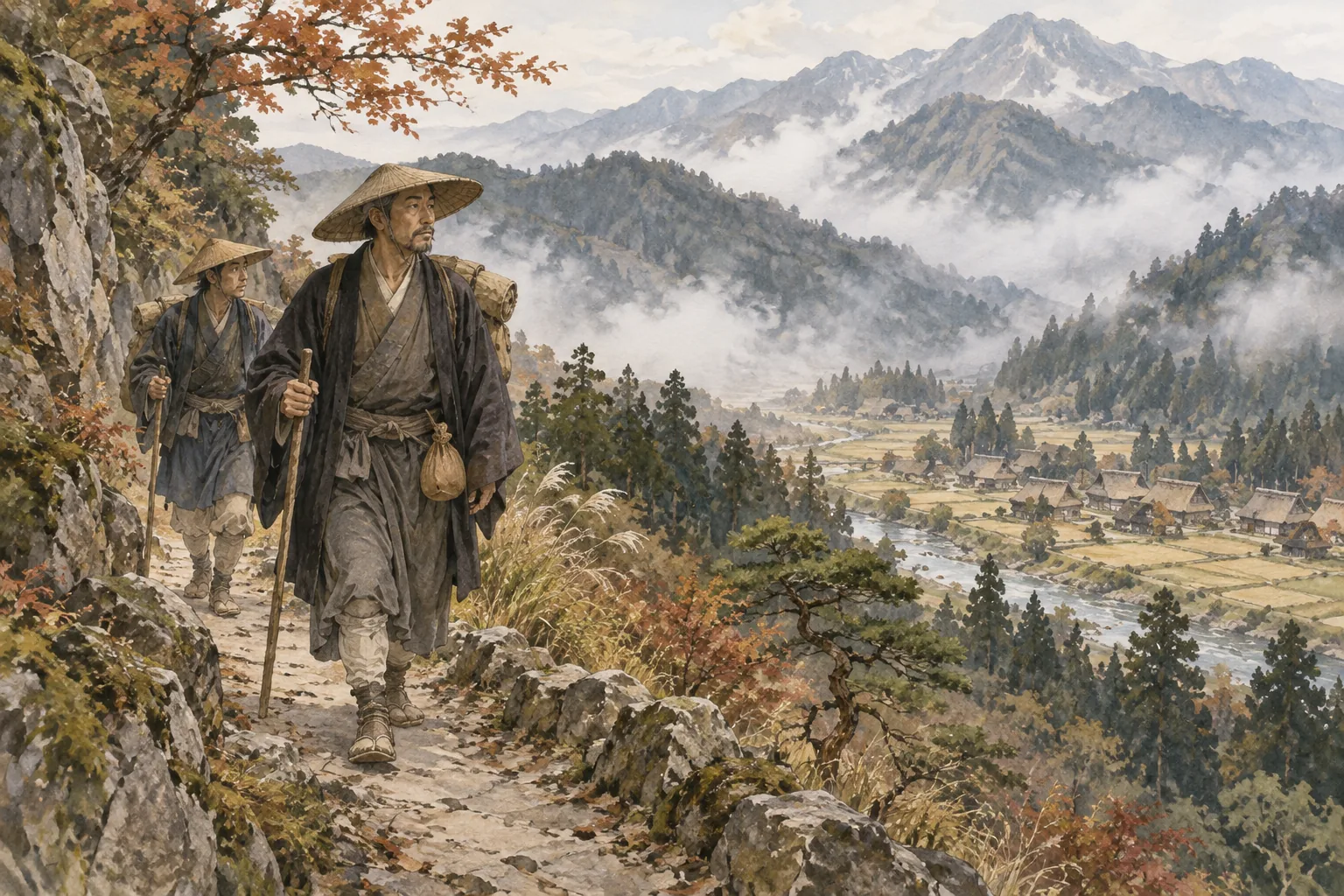
Oku no Hosomichi is Basho's account of a long walk through northern Japan, told in prose and haiku together.
奥の細道は、芭蕉が日本の北を長く歩いた旅の記録で、散文と俳句を交ぜて書かれています。
In 30 seconds
The standard explanation
In 1689 Matsuo Basho, then in his mid-forties, set out from Edo on foot with one companion and walked roughly two thousand four hundred kilometers through the north and down the Japan Sea coast over about five months. The book he made from it alternates short passages of prose with haiku, and several of its verses are among the best known in the language.
1689年、四十代半ばの松尾芭蕉は、供を一人連れて江戸を歩いて発ち、北へ、さらに日本海側を下って、五か月ほどで二千四百キロほどを歩きました。この旅から作られた本は、短い散文と俳句を交互に置く形で、収められた句のいくつかは日本語でもっともよく知られたものです。
As a short speech
A full paragraph you can read aloud
Basho is the poet everyone means when they say haiku, and Oku no Hosomichi is his masterpiece. In 1689 he left Edo on foot with a disciple and walked north through country that was remote and, in places, genuinely hard going, then turned down the Japan Sea side and ended at Ogaki, in today's Gifu Prefecture, about two thousand four hundred kilometers in roughly one hundred and fifty days.
The book is not a diary. It mixes compressed prose with haiku, and Basho shaped it for years afterwards, moving events and inventing some, which we know because his companion kept an actual diary that does not match. That is the point: he was making literature, not reporting.
The verses that came out of it are part of the language now, among them the one at the ruined fortress where summer grasses are all that is left of warriors' dreams, and the one at the mountain temple where the cicadas' voices soak into the rock.
俳句といえば思い浮かぶ人が芭蕉で、その代表作が奥の細道です。1689年、彼は弟子を一人連れて江戸を歩いて発ち、遠く、場所によっては実際に難儀な北の地を進み、日本海側へ回って、今の岐阜県の大垣で旅を終えました。
百五十日ほどで二千四百キロほどです。この本は日記ではありません。凝縮した散文と俳句を交ぜたもので、芭蕉はその後も何年も手を入れ、出来事の順を変え、作りごとも加えています。供をした曾良が実際の日記を残しており、それと合わないことからわかります。
そこが要点です。彼は報告ではなく文学を作っていました。この旅から生まれた句は、今では日本語そのものの一部です。夏草だけが兵たちの夢の跡に残る城跡の句も、蝉の声が岩にしみ入る山寺の句も、そこから来ています。
Questions people actually ask
And how to answer them.
Can I walk the route?
Parts of it, yes. Sections of the old road survive and are signposted, and the main stops, Nikko, Hiraizumi, Yamadera, Kisakata and the Mogami river, are all reachable by train. Walking the whole thing is a project, not a vacation.
一部なら歩けます。旧道の区間が残り、道標も整っています。主な場所である日光、平泉、山寺、象潟、最上川は、いずれも鉄道で行けます。全行程を歩くのは、旅行というより計画の要る話です。
Is it accurate as a travel record?
No, and deliberately so. Sora's separate diary shows differences in dates, routes and even in whether it rained. Basho rearranged for effect, which was normal for the form.
正確ではありませんし、そこには意図があります。曾良の日記と比べると、日付も道筋も、雨が降ったかどうかさえ食い違います。芭蕉は効果のために組み替えました。この形式では、それがふつうでした。
Why did he go at all?
To see the places earlier poets had written about, and to test himself. He was not in good health and wrote as if he might not return. Travel as a way of stripping down was itself part of his idea of poetry.
昔の歌人が詠んだ土地を自分の目で見るためであり、自分を試すためでもありました。体調はよくなく、帰れないかもしれないという構えで書いています。旅によって余分を削ぎ落とすこと自体が、彼の詩の考え方の一部でした。
Phrases you can use
- He walked the whole way.全行程を歩きました。
- It mixes prose and haiku.散文と俳句を交ぜてあります。
- The journey took about five months.旅はおよそ五か月でした。
- This stone marks where he stopped.この碑は彼が立ち寄った場所です。
- The book is not a factual diary.この本は事実の日記ではありません。
Words you need
- travel account紀行
- prose mixed with haiku俳文
- poet's disciple門人
- poem monument句碑
- a famous poetic site歌枕
Watch
From YouTubeBackground (Japanese)
奥の細道は、松尾芭蕉が1689年に江戸を発ち、東北から北陸を回って大垣に至る旅をもとにした紀行文です。行程はおよそ二千四百キロ、日数は百五十日ほどとされます。刊行は芭蕉の没後、1702年です。同行した河合曾良の日記が残っており、本文と日付や経路が食い違うことから、文学として構成し直されたことがわかります。平泉での夏草の句、立石寺での蝉の句、最上川の句などが広く知られ、各地に句碑が建てられています。