senryu
the comic cousin of haiku, about people rather than nature
川柳(せんりゅう)
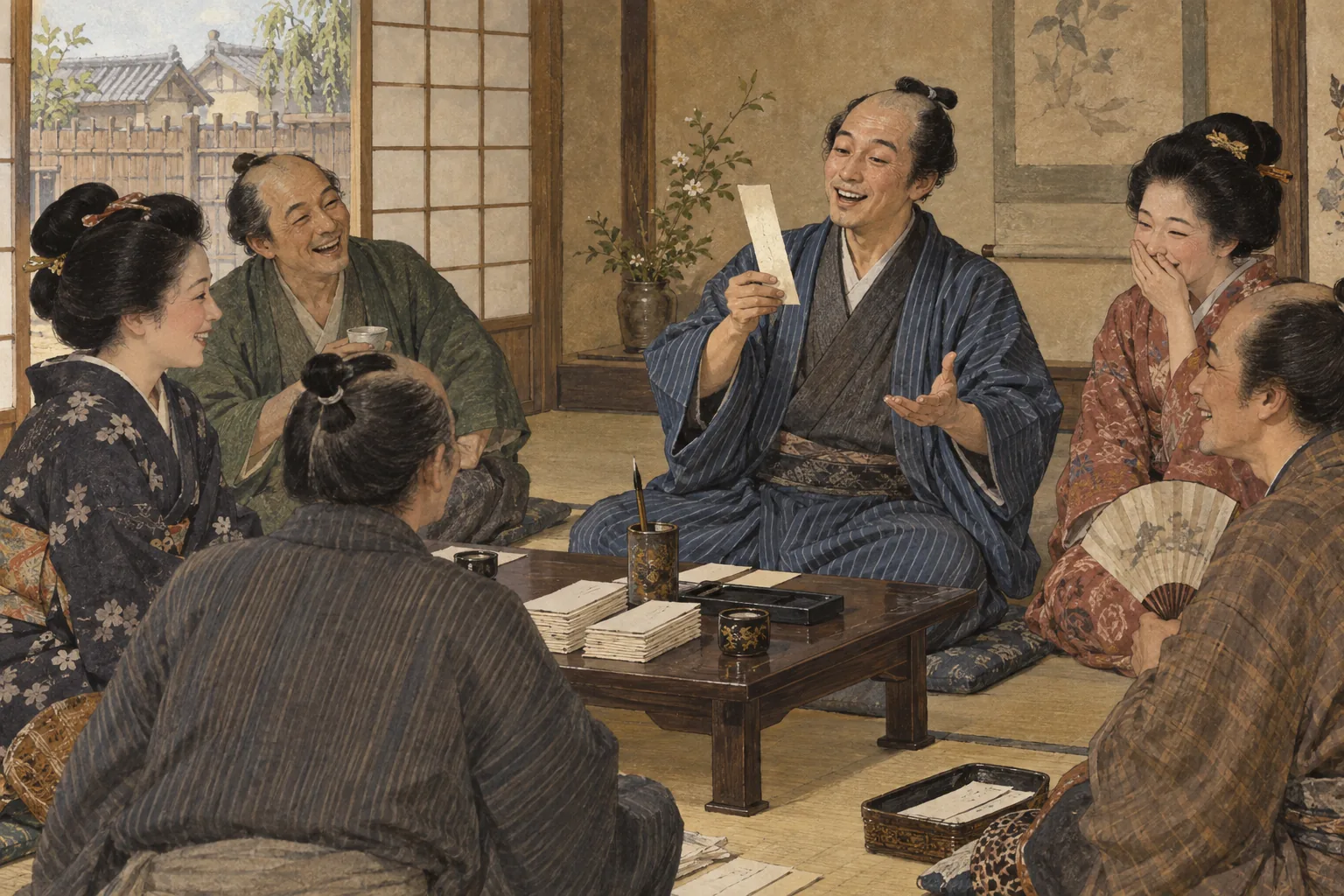
In one line
The shortest answer that works
Senryu, a cousin of haiku, is a seventeen-syllable poem with no season word, usually poking fun at human behavior.
川柳とは、俳句と同じ十七音の詩ですが、季語がなく、人間の姿をたいていは笑いをもって描くものです。
In 30 seconds
The standard explanation
Senryu uses the same five-seven-five count as haiku but drops the two rules that define haiku: a season word and a cutting word. What it gains is freedom to be about office life, marriage, aging and money. It is named after an eighteenth-century Edo judge of verse contests, Karai Senryu. Today it is a living popular form, with companies and newspapers running annual contests.
川柳は俳句と同じ五・七・五ですが、俳句を俳句たらしめる二つの決まり、季語と切れ字を持ちません。その代わり、会社、夫婦、老い、金といったことを自由に詠めます。名前は、江戸時代に句の選をした柄井川柳に由来します。今も生きた大衆の詩で、企業や新聞が毎年、公募を行っています。
As a short speech
A full paragraph you can read aloud
If someone asks about haiku, it is worth mentioning its less famous relative. Senryu has exactly the same rhythm, five, seven and five, but none of haiku's discipline. There is no season word, no cutting word, and no expectation of nature or stillness.
Instead senryu looks at people: a husband who has learned not to argue, a worker whose promotion arrived too late, a mother reading her child's face. It usually aims at a laugh, and the laugh is normally at human weakness, including the poet's own. The form is named after Karai Senryu, an Edo verse judge of the eighteenth century whose selections were published and gave the style its name.
The reason to mention it to a foreign visitor is that it is genuinely alive in a way that classical forms often are not: a life insurance company has run a salaryman senryu contest every year since 1987, newspapers print reader submissions, and elementary schools use it because there is no season word to learn. If haiku is the art form, senryu is what ordinary people actually write.
俳句のことを聞かれたら、あまり知られていない親戚の話をするとよいでしょう。川柳は拍子がまったく同じ、五・七・五です。しかし俳句のような規律はありません。季語も切れ字もなく、自然や静けさを求められることもない。その代わり川柳は人間を見ます。
言い返さないことを覚えた夫、遅すぎた昇進、子の顔色をうかがう母。たいていは笑いを狙い、その笑いは人間の弱さに、自分自身の弱さにも向きます。名前は十八世紀の江戸の選者、柄井川柳に由来します。その選んだ句が本になり、様式の名になりました。
外国の人に紹介する値打ちは、古典の形式にはまれな、本当に生きている詩だという点です。ある生命保険会社は1987年からサラリーマン川柳の公募を毎年続け、新聞は読者の句を載せ、小学校でも使われます。季語を覚えなくてよいからです。俳句が芸術だとすれば、川柳はふつうの人が実際に書いているものです。
Questions people actually ask
And how to answer them.
So what exactly is the difference from haiku?
The rhythm is identical. Haiku requires a season word and traditionally a cutting word, and points at nature; senryu requires neither and points at people, usually with humor or irony.
拍子は同じです。俳句は季語を必要とし、伝統的には切れ字も使い、自然に向きます。川柳はどちらも必要とせず、人間に向き、多くは笑いや皮肉を含みます。
Can you show me one?
The famous contest entries are the easiest. Typical subjects are a husband whose wife controls the money, or a worker finally allowed to work from home discovering there is nowhere to sit.
公募の入選句が分かりやすいです。財布を握られた夫、在宅勤務になったものの座る場所がない、といった題材が典型です。
Is it considered lower than haiku?
It has been, historically. Senryu was popular verse and haiku the literary form. Modern senryu poets reject the ranking, and serious, unfunny senryu exists.
歴史的にはそう見られてきました。川柳は大衆の句、俳句は文学とされたのです。現代の川柳作家はこの序列を認めませんし、笑いのない真剣な川柳もあります。
A common misunderstanding
MYTHSenryu is just badly written haiku.
FACTIt is a separate form with its own eighteenth-century history, deliberately without a season word and aimed at human subjects.
Phrases you can use
- Senryu has the same five-seven-five as haiku.川柳は俳句と同じ五・七・五です。
- But there's no season word.ただし季語はありません。
- It's about people, not nature.自然ではなく人間を詠みます。
- It's usually funny, often about work or marriage.たいていは笑いで、会社や夫婦のことが多いです。
- Companies run senryu contests every year.企業が毎年、川柳を公募しています。
Words you need
- season word季語
- cutting word切れ字
- satire, irony風刺
- verse contest公募・選
- office workerサラリーマン
Watch
From YouTubeBackground (Japanese)
柄井川柳(1718〜1790)は前句付けの選者で、その選んだ句を集めた『誹風柳多留』が1765年(明和2年)に刊行され、川柳という呼び名が定着したとされる。第一生命は1987年からサラリーマン川柳の公募を続けており、2022年からは名称を改めている。季語も切れ字も要らないため、学校教育や社内行事で取り上げやすい形式でもある。