Jomon and Yayoi
Japan's two prehistoric periods
縄文と弥生(じょうもんとやよい)
In one line
The shortest answer that works
Jomon and Yayoi, Japan's two prehistoric periods, are a long hunting and gathering age and the era rice farming arrived.
縄文と弥生とは、日本の二つの先史時代で、長い狩猟採集の時代と、稲作が入ってきた時代です。
In 30 seconds
The standard explanation
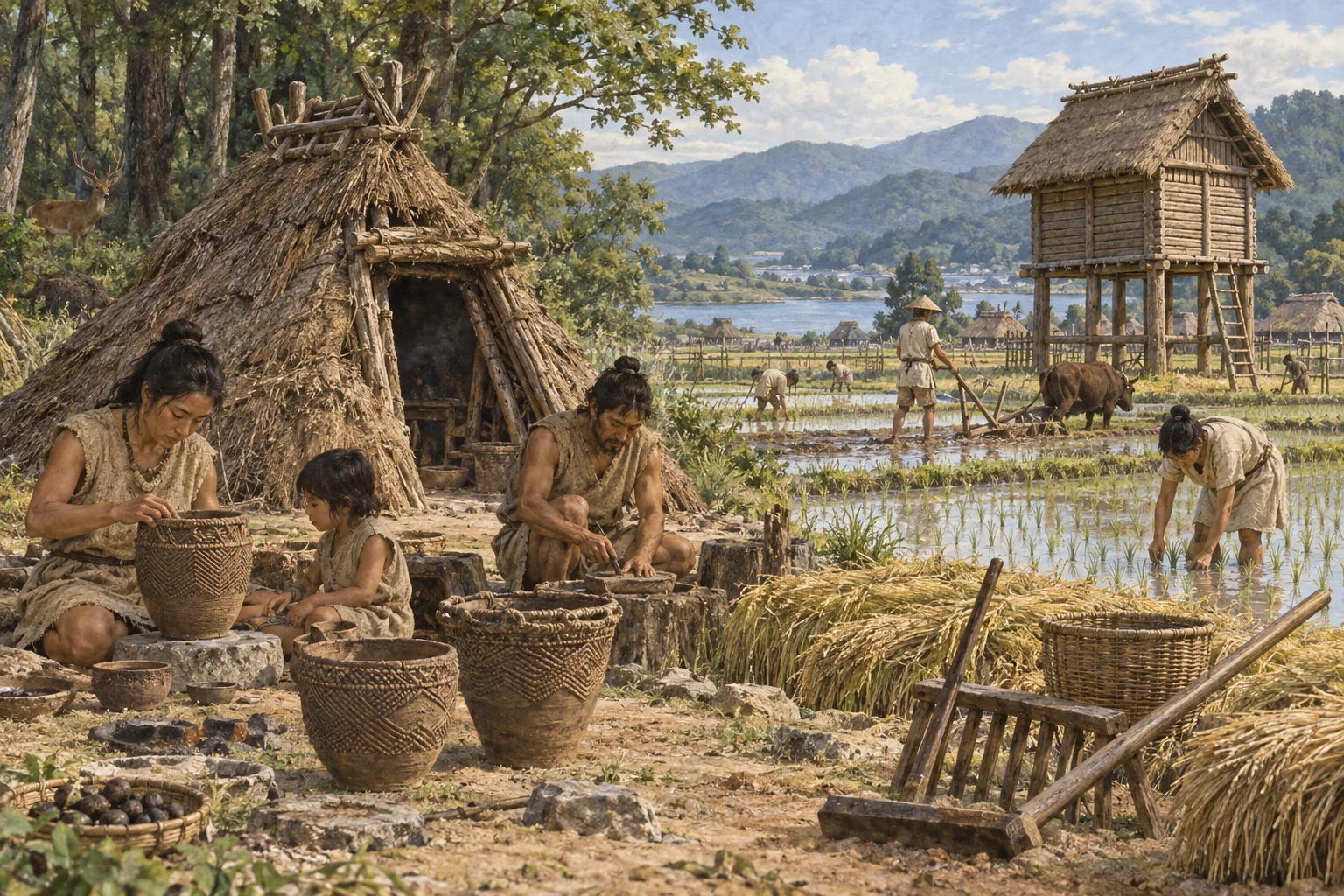
Jomon and Yayoi are the two prehistoric periods Japanese schoolchildren learn first. The Jomon period lasted roughly ten thousand years, with people living by hunting, fishing and gathering, and making cord-marked pottery that is among the oldest known anywhere. The Yayoi period follows, when wet rice farming, metal tools and new burial customs spread from the Asian mainland. Dates are debated.
縄文と弥生は、日本の子どもが最初に習う二つの先史時代です。縄文時代はおよそ1万年続き、人々は狩りと漁と採集で暮らし、縄目の文様のある土器をつくりました。これは世界でも最古級の土器のひとつとされます。続く弥生時代には、水田による稲作、金属の道具、新しい墓の習慣が大陸から広まりました。年代には諸説あります。
As a short speech
A full paragraph you can read aloud
Japanese history textbooks begin with two long periods. The Jomon period is named after the cord marks pressed into its pottery, and it lasted something like ten thousand years. People lived in pit dwellings, ate nuts, shellfish, deer and boar, and left enormous shell mounds behind.
They did not farm rice, and there is little sign of sharp differences in wealth. The Yayoi period follows. Wet rice cultivation, bronze and iron, and weaving came in from the Asian mainland, probably with people as well as with goods.
Rice changed the society: it could be stored, stored food could be owned, and ownership produced chiefs, moated villages and warfare. Exact dates are argued over, and new dating methods keep pushing the boundary earlier, so textbooks have been rewritten more than once.
日本の歴史の教科書は、二つの長い時代から始まります。縄文時代は、土器に押しつけられた縄目の文様から名づけられ、およそ1万年続きました。人々は竪穴住居に住み、木の実や貝、鹿や猪を食べ、巨大な貝塚を残しました。
稲作は行わず、貧富の大きな差の跡もあまり見られません。続くのが弥生時代です。水田による稲作、青銅と鉄、機織りが大陸から入ってきました。おそらく物だけでなく人も一緒に来ています。稲は社会を変えました。
蓄えられるものは所有でき、所有は首長と、濠をめぐらせた集落と、戦いを生みました。正確な年代は議論が続いていて、新しい年代測定によって境目がさかのぼることもあり、教科書は何度も書き換えられています。
Questions people actually ask
And how to answer them.
How old is the pottery, really?
Some Jomon pottery has been dated to well over ten thousand years ago, which puts it among the earliest pottery found anywhere in the world. Researchers still debate the precise figures, so it is safer to say among the oldest rather than the oldest.
縄文土器には1万数千年前とされるものがあり、世界でも最も早い時期の土器のひとつに数えられます。正確な数字については議論が続いているので、最古と言い切るより最古級と言うほうが安全です。
Did the Jomon people simply disappear?
No. The current view is that incoming groups mixed with the existing population rather than replacing it, and genetic studies point to both ancestries in people living in Japan today. The balance differs by region.
いいえ。今の見方では、渡来した集団が既にいた人々を置き換えたのではなく混ざったとされ、遺伝の研究は、今日本に住む人にその両方の系統があることを示しています。その割合は地域によって異なります。
Phrases you can use
- The pottery is named after the cord marks on it.土器は表面の縄目の文様から名づけられました。
- Rice farming came in from the mainland.稲作は大陸から入ってきました。
- Once food could be stored, society changed.食べ物を蓄えられるようになって社会が変わりました。
- The dates are still debated by researchers.年代については今も研究者の議論が続いています。
Words you need
- hunter-gatherer狩猟採集民
- pottery土器
- wet rice cultivation水稲耕作
- shell mound貝塚
Watch
From YouTubeBackground (Japanese)
「縄文」は縄目の文様の意味で、明治時代に日本を訪れたアメリカの動物学者モースが大森貝塚の土器を紹介したことがきっかけで生まれた呼び名です。「弥生」は東京の弥生町で見つかった土器にちなみます。縄文時代の遺跡としては青森県の三内丸山遺跡がよく知られ、2021年に「北海道・北東北の縄文遺跡群」が世界遺産に登録されました。年代の区切りは研究の進展とともに動いています。