Meiji ishin
the transformation that rebuilt Japan in decades
明治維新(めいじいしん)
In one line
The shortest answer that works
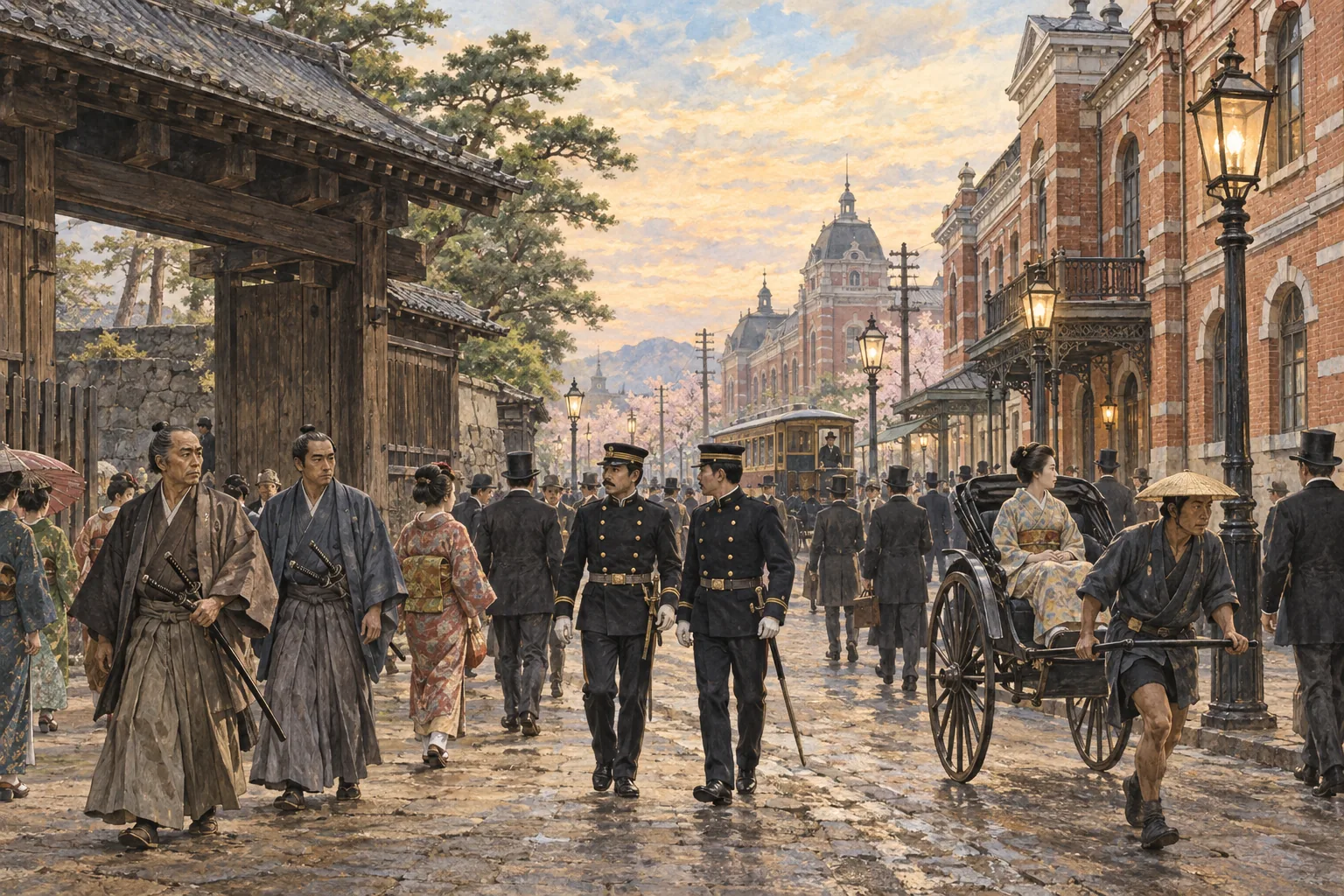
Meiji ishin, or the Meiji Restoration, is the rapid change from 1868 that made Japan a modern industrial state.
明治維新とは、1868年から始まり、日本を近代的な工業国家に作り変えた急速な変革です。
In 30 seconds
The standard explanation
In 1868 the Tokugawa shogunate fell and rule was formally returned to the emperor. Over the following decades Japan abolished the class system, built railways, adopted a constitution and a conscript army, introduced compulsory education, and industrialized. The speed of the change is the part that is genuinely unusual in world history.
1868年、徳川幕府が倒れ、統治は形式上、天皇に返されました。続く数十年で、日本は身分制を廃し、鉄道を敷き、憲法と徴兵制の軍を持ち、義務教育を導入し、工業化しました。世界史のなかで本当に例が少ないのは、その変化の速さです。
As a short speech
A full paragraph you can read aloud
In 1868 the Tokugawa shogunate collapsed and political authority was formally restored to the emperor, which is why this is called a restoration rather than a revolution. What followed was one of the fastest national transformations on record.
Within about twenty-five years, Japan abolished the hereditary class system and the samurai stipends, replaced domains with prefectures, introduced compulsory primary education, built a conscript army and a modern navy, laid railways and telegraph lines, and adopted a written constitution and a parliament.
Delegations were sent abroad specifically to study: a government mission spent nearly two years traveling through America and Europe examining institutions and choosing what to copy. The slogan of the era was to enrich the country and strengthen the military. Many historians also point out that the same drive was closely tied to Japan's colonial expansion in Asia within a generation, and how to weigh the achievements of the era against that expansion is still debated.
1868年、徳川幕府が崩れ、政治的権威は形式上、天皇に返されました。だから革命ではなく「維新」「王政復古」と呼ばれます。そのあとに続いたのは、記録に残るなかで最も速い国家変革のひとつです。
およそ25年のうちに、日本は世襲の身分制と武士の禄を廃し、藩を県に置き換え、義務教育を導入し、徴兵制の陸軍と近代的な海軍を作り、鉄道と電信を敷き、成文憲法と議会を持ちました。学ぶために使節が送られました。政府の使節団は2年近くをかけて米欧を回り、制度を調べ、何を取り入れるかを選びました。
時代の標語は「富国強兵」でした。多くの歴史家は、その同じ推進力が一世代のうちにアジアへの植民地拡張と深く結びついていたことも指摘しており、この時代の成果とその拡張をどう評価するかは、いまも議論が続いています。
Questions people actually ask
And how to answer them.
Why is it called a restoration?
Because it was framed as returning power to the emperor from the shogunate, rather than overthrowing a monarch. In practice a small group of former samurai from a few domains held real power.
幕府から天皇へ権力を戻す、という形が取られたためで、君主を倒したのではないからです。実際には、いくつかの藩の出身の元武士の一団が実権を握りました。
How did they modernize so fast?
By deliberate selection. Missions studied foreign systems and chose models by function: the German constitution, the British navy, the French then German army, French and American ideas for schools. Foreign experts were hired and then replaced by trained Japanese.
意識的な選択によってです。使節団が各国の制度を調べ、分野ごとに手本を選びました。憲法はドイツ、海軍はイギリス、陸軍はフランスからドイツへ、学校制度はフランスやアメリカ。お雇い外国人を招き、のちに育った日本人に置き換えました。
Who lost out?
Former samurai lost their stipends and status, and some rebelled. Farmers faced a new land tax payable in cash. Women gained compulsory education but remained excluded from political rights for decades.
元武士は禄と身分を失い、反乱を起こした者もいました。農民は現金納付の地租に直面しました。女性は義務教育を得ましたが、政治的権利からは何十年も排除されたままでした。
Phrases you can use
- Power was formally returned to the emperor in 1868.1868年に、統治は形式上、天皇に返されました。
- The class system was abolished within a few years.身分制は数年のうちに廃止されました。
- They studied foreign systems and chose models deliberately.各国の制度を調べ、意識的に手本を選びました。
- The slogan was enrich the country, strengthen the army.標語は「富国強兵」でした。
- Historians link that drive to later expansion in Asia.その動きを、のちのアジアへの拡張と結びつける見方があります。
Words you need
- restoration維新、王政復古
- modernize近代化する
- constitution憲法
- conscription徴兵制
- industrialize工業化する
Watch
From YouTubeBackground (Japanese)
岩倉使節団は1871年から1873年にかけて米欧を巡り、条約改正の交渉と制度視察を行った。使節団には大久保利通、木戸孝允、伊藤博文らが加わり、随行した留学生には津田梅子もいた。1872年の学制で国民皆学の方針が示され、1873年の徴兵令で国民皆兵となり、同年の地租改正で税は米から現金納付に変わった。1889年に大日本帝国憲法が発布され、翌年に帝国議会が開かれた。憲法はプロイセンの制度を主な手本としている。鉄道は1872年に新橋〜横浜間で開業した。政府はお雇い外国人を多数招聘し、その多くは数年で日本人技術者に引き継がれた。