Fujisan to shinko
Mount Fuji and mountain worship
富士山と信仰(ふじさんとしんこう)
In one line
The shortest answer that works
Fujisan to shinko, or Mount Fuji and its worship, is the centuries-old reverence for Japan's highest mountain.
富士山と信仰とは、日本で最も高い山である富士山を、何世紀にもわたって敬ってきたことです。
In 30 seconds
The standard explanation
Mount Fuji is an active volcano of 3,776 meters, the highest mountain in Japan. It has been worshipped for centuries, with shrines at its base and a pilgrimage route to the summit, and it has probably been painted and written about more than any other place in the country. In 2013 it was inscribed as a World Heritage site, listed as cultural rather than natural.
富士山は標高3,776メートルの活火山で、日本で最も高い山です。何世紀にもわたって信仰の対象とされ、麓には神社があり、頂上へ向かう登拝の道がありました。おそらく国内のどの場所よりも多く描かれ、詠まれてきた山でもあります。2013年に世界遺産に登録されましたが、自然遺産ではなく文化遺産としての登録です。
As a short speech
A full paragraph you can read aloud
Mount Fuji is an active volcano, 3,776 meters high, and the highest mountain in Japan. Its shape is unusually regular because it is young and built from repeated eruptions, the last of which was in 1707. For most of Japanese history it was not a mountain to climb for fun but a god to be feared and then honored.
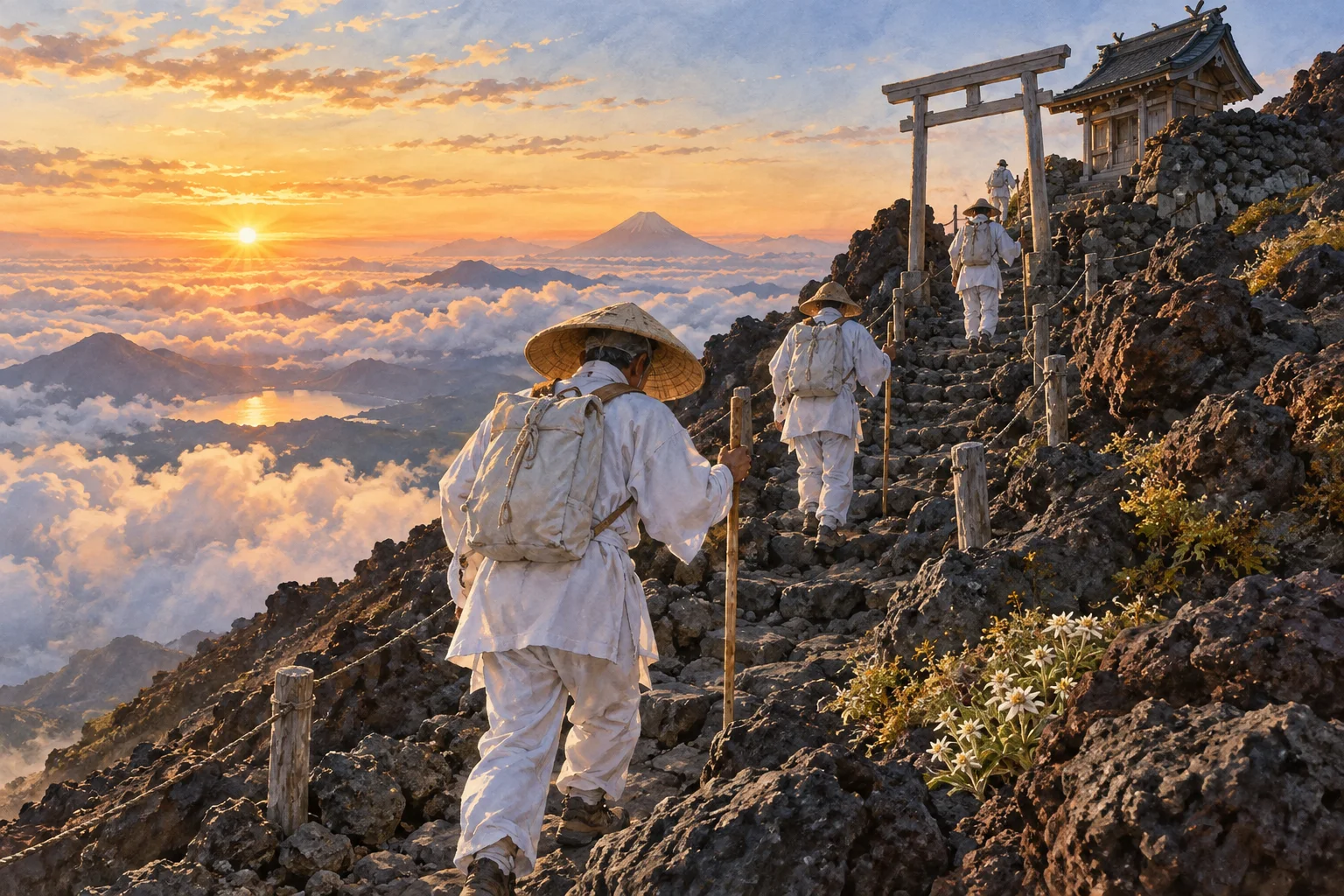
Shrines were built at its foot to calm it, and from the Edo period ordinary townspeople formed associations, saved money together and took turns making the pilgrimage to the summit in white robes. Small artificial replicas were even built in cities so those who could not travel could climb in miniature.
When it became a World Heritage site in 2013 it was registered as a cultural site, not a natural one, precisely because what is exceptional about it is this history of worship and art rather than the geology.
富士山は標高3,776メートルの活火山で、日本で最も高い山です。若く、噴火を重ねて積み上がった山なので、形が珍しく整っています。最後の噴火は1707年です。
日本の歴史の大半において、富士山は楽しみのために登る山ではなく、恐れ、そして敬うべき神でした。それを鎮めるために麓に神社が建てられ、江戸時代には町の人々が講をつくり、みなで金を積み立て、順番に白い衣で頂上を目指しました。
行けない人のために、都市には小さな富士の模型まで築かれました。2013年に世界遺産になったとき、自然遺産ではなく文化遺産として登録されたのは、この山で特別なのが地質ではなく、信仰と芸術の歴史だからです。
Questions people actually ask
And how to answer them.
Why is it a cultural World Heritage site and not a natural one?
Because the value recognized is the tradition around it: the shrines, the pilgrimage routes, the lakes and springs used for purification, and the art it produced. The full registered name refers to it as an object of worship and a source of artistic inspiration.
認められたのが山をめぐる伝統だからです。神社、登拝の道、禊に使われた湖や湧水、そこから生まれた芸術。正式な登録名も、信仰の対象と芸術の源泉として富士山を呼んでいます。
Can anyone climb it?
In summer, yes, and it is more a long uphill walk than technical mountaineering. The official season is roughly July to early September, huts and rescue work outside that window are limited, and in recent years there have been entry fees and limits on numbers to control crowding.
夏なら誰でも登れますし、技術のいる登山というより長い上り坂の歩行です。公式の期間はおおむね7月から9月上旬で、それ以外は山小屋も救助も限られます。近年は混雑を抑えるため、通行料や人数の制限が導入されています。
Is it going to erupt again?
It is classified as an active volcano and is monitored continuously. The last eruption was in 1707, and there is no way to predict the next one, so local governments publish hazard maps and evacuation plans as a matter of routine.
活火山に分類されていて、常時監視されています。最後の噴火は1707年で、次を予知する手段はないため、自治体は日常的に危険度の地図と避難計画を公表しています。
A common misunderstanding
MYTHMount Fuji is a World Heritage site because of its natural beauty.
FACTIt was inscribed in 2013 as a cultural site. An earlier attempt to have it listed as a natural site did not succeed, partly because of trash and development on the mountain.
Phrases you can use
- It's registered as a cultural site, not a natural one.自然遺産ではなく文化遺産として登録されています。
- The climbing season is only about two months.登山の期間は2か月ほどしかありません。
- People used to climb it as a pilgrimage.かつては信仰のために登りました。
- The last eruption was in 1707.最後の噴火は1707年です。
- It's still an active volcano.今も活火山です。
Words you need
- active volcano活火山
- pilgrimage巡礼・登拝
- summit山頂
- object of worship信仰の対象
- hazard map危険度の地図
Watch
From YouTubeBackground (Japanese)
富士山の登拝は江戸時代に「富士講」という組織で広まりました。積み立てをして代表者が登り、行けない人のために町なかに「富士塚」という小さな富士山を築いて登る習慣もあり、今も東京の神社にいくつか残っています。女性の登山が公に認められたのは明治に入ってからです。山頂の一部は浅間大社の境内地とされています。1707年の宝永噴火では江戸にも灰が降りました。