yukiguni
Japan's heavy snow regions
雪国(ゆきぐに)
In one line
The shortest answer that works
Yukiguni means the snow country, the side of Japan that gets some of the heaviest snowfall in the world.
雪国とは、世界でも有数の豪雪に見舞われる日本海側の地域のことです。
In 30 seconds
The standard explanation
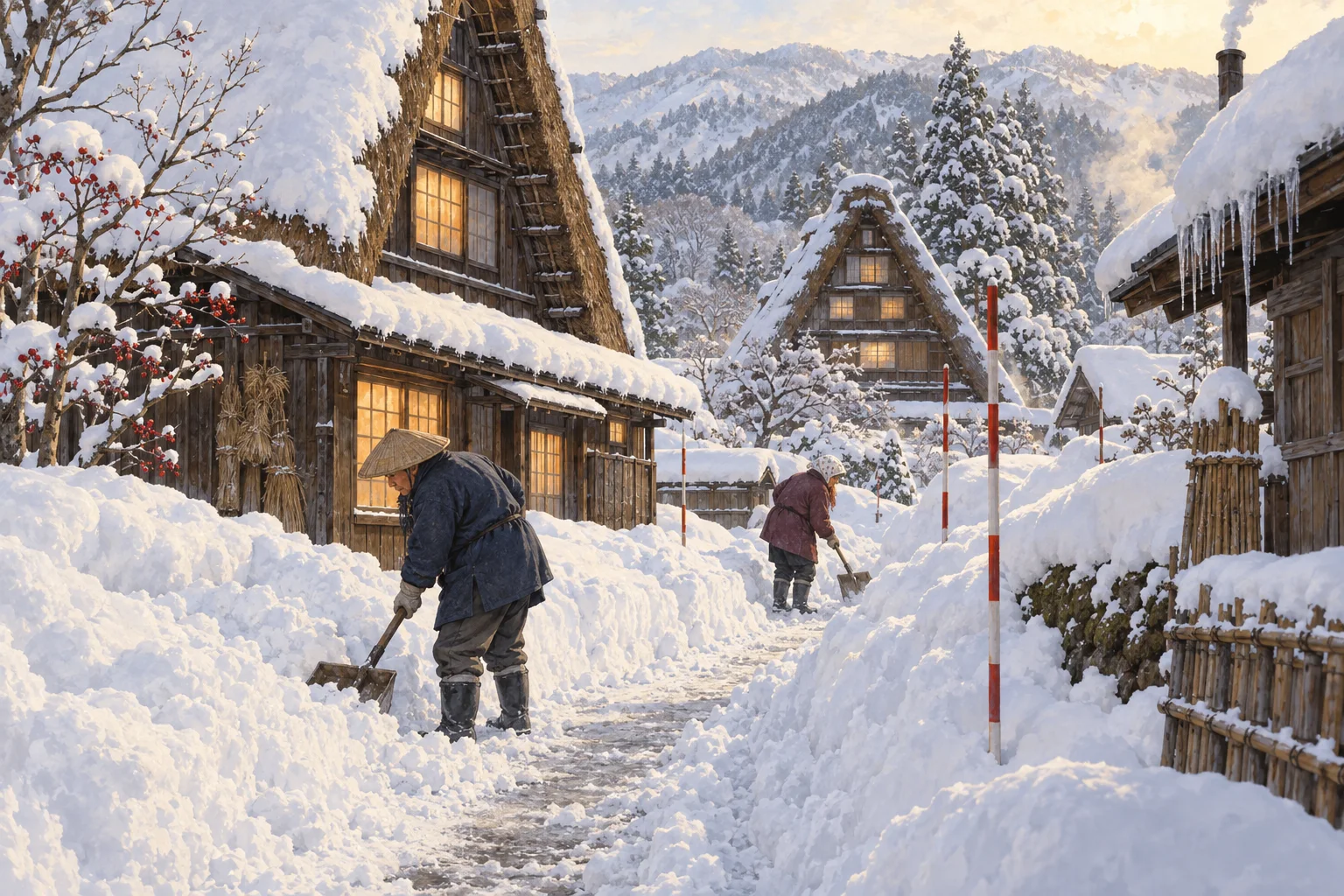
Yukiguni, the snow country, refers to the Sea of Japan side of the country, where winter winds pick up moisture crossing the sea and drop it as snow when they hit the mountains. Roughly half of Japan's land area is legally designated as a heavy snow region. Houses, roads and schedules there are built around snow in a way that surprises visitors from Tokyo.
雪国とは日本海側の地域を指します。冬の風が海を渡るときに水分を含み、山にぶつかって雪として降るためです。国土のおよそ半分が、法律で豪雪地帯に指定されています。家も道も時間割も雪を前提につくられていて、東京から来た人を驚かせます。
As a short speech
A full paragraph you can read aloud
People outside Japan often picture a mild country, and then discover that the same island chain contains subtropical beaches and some of the snowiest inhabited places on earth. The reason is geography.
In winter, cold dry air comes off the Asian continent, crosses the Sea of Japan and picks up moisture, then meets the mountain spine that runs down the middle of Honshu and dumps that moisture as snow on the western side. The eastern side, including Tokyo, gets the same air after it has been wrung dry, which is why Tokyo winters are cold, sunny and clear.
In the snow country, houses have steep roofs or heated roofs, roads have sprinklers set into them that run warm water, and railway timetables have a separate winter version. Clearing snow from your own roof is a normal household chore, and every year it causes deaths among elderly residents.
日本というと穏やかな国を思い浮かべる人が多く、そのあと、同じ列島に亜熱帯の浜辺と、世界でも有数の雪の多い居住地が両方あることを知って驚きます。理由は地形です。
冬になると大陸から冷たく乾いた空気が来て、日本海を渡る間に水分を含み、本州の真ん中を走る山の背にぶつかって、西側にその水分を雪として落とします。東京を含む東側には、乾ききったあとの空気が届きます。東京の冬が寒く、晴れて、空気が澄んでいるのはそのためです。
雪国では家の屋根は急勾配か融雪装置つきで、道路には温水を出す消雪の装置が埋められ、鉄道には冬専用の時刻表があります。自分の家の屋根の雪下ろしはふつうの家事で、毎年それで高齢の住民が命を落としています。
Questions people actually ask
And how to answer them.
How much snow are we talking about?
In the heaviest areas the snow on the ground can exceed two meters at the peak of winter, and mountain sites record far more. Towns keep going: buses run, schools open, and shops have covered arcades along the sidewalk so you can walk without wading.
最も多い地域では、真冬の積雪が2メートルを超えることがあり、山の観測点ではそれよりはるかに多くなります。それでも町は動きます。バスは走り、学校は開き、歩道には雪をよけて歩けるように屋根のついたアーケードがあります。
Is this why Japan has so many ski resorts?
Yes. The same wind pattern produces very light, dry powder snow in Hokkaido and northern Honshu, which is why skiers travel from abroad for it. The season is long and the snowfall reliable, which is rarer than it sounds.
そうです。同じ風の流れが北海道や東北に非常に軽く乾いた粉雪をもたらし、そのために海外からスキー客が来ます。期間が長く、降雪が安定していることは、思うより珍しいことです。
Phrases you can use
- The other side of the mountains gets all the snow.山の向こう側に雪が全部降ります。
- Clearing the roof is a normal winter chore.屋根の雪下ろしは冬のふつうの仕事です。
- The roads have warm water sprinklers.道路に消雪の設備が入っています。
- Trains run on a separate winter timetable.電車は冬用の時刻表で動きます。
Words you need
- snowfall降雪
- snow on the ground積雪
- to clear snow雪かきをする
- powder snow粉雪
Watch
From YouTubeBackground (Japanese)
日本語には雪を表す言葉が数多くあり、水分の多い「ぼたん雪」、軽く乾いた「粉雪」、春先の重い「なごり雪」などが使い分けられます。豪雪地帯では玄関が二階にある家や、雁木と呼ばれる庇の下の通路が見られます。合掌造りの急な屋根も、雪を落とすための形です。屋根の雪下ろし中の事故は毎年報告されており、自治体は二人以上で作業するよう呼びかけています。