taifu
the typhoons that reach Japan each year
台風(たいふう)
In one line
The shortest answer that works
Taifu, or typhoons, are numbered rather than named in Japan, and a few hit land yearly, in summer and autumn.
台風とは、日本では名前ではなく番号で呼ばれる嵐で、毎年、夏から秋にかけて数個が上陸するものです。
In 30 seconds
The standard explanation
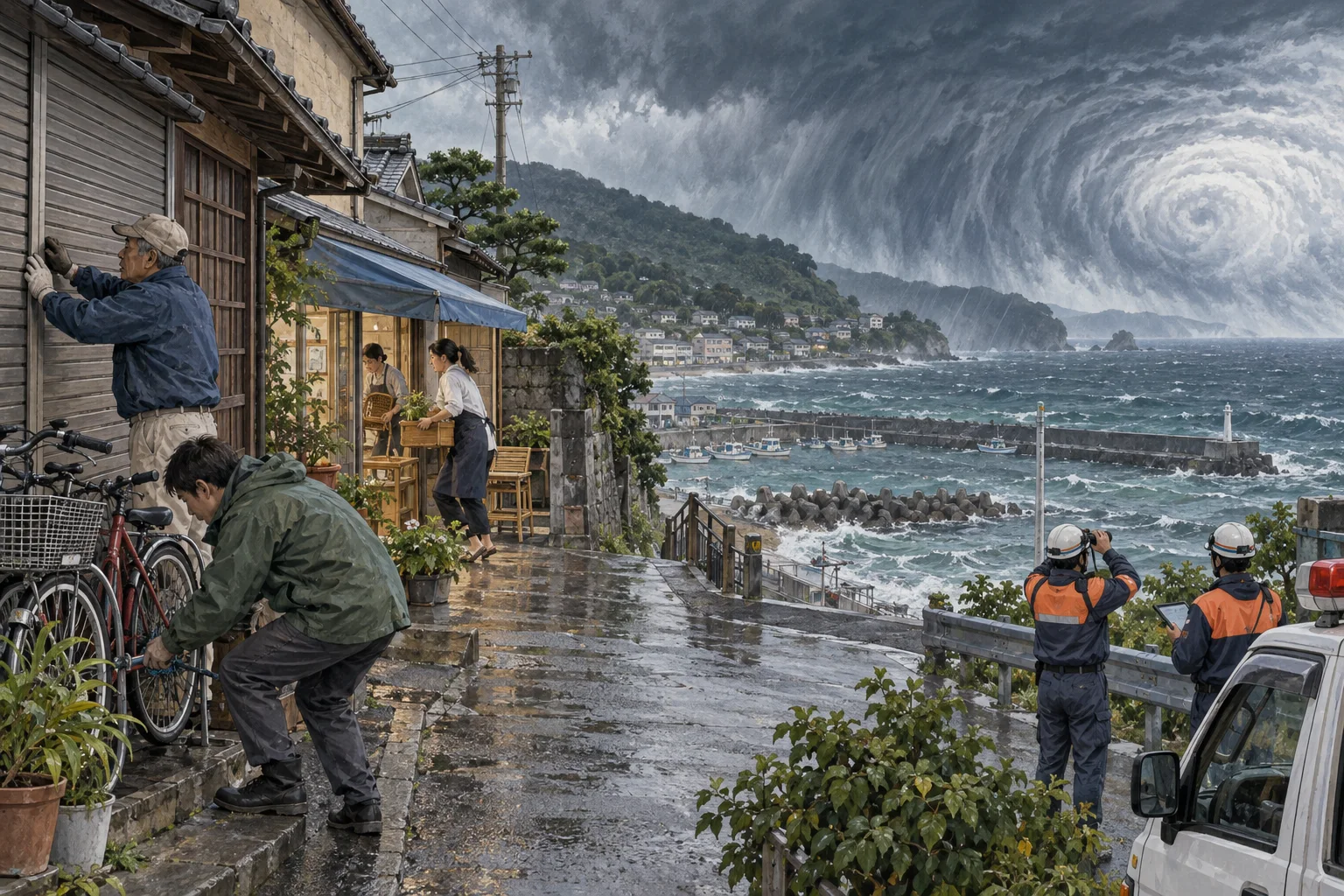
About twenty-five typhoons form in the western Pacific in a normal year, and on average around three make landfall in Japan, mostly between July and October. Japan calls them by number in order of formation rather than by name. When one approaches, trains announce planned suspensions in advance, schools close and shops board up.
平年で年に二十五個ほどの台風が太平洋の西側で発生し、平均して三個前後が日本に上陸します。多くは七月から十月です。日本では名前ではなく、発生した順の番号で呼びます。近づくと、鉄道は前もって計画運休を知らせ、学校は休みになり、店は窓を守ります。
As a short speech
A full paragraph you can read aloud
Typhoons are part of the Japanese calendar rather than a rare emergency. In an average year about twenty-five form over the western Pacific and roughly three make landfall in Japan, concentrated between July and October. Japan numbers them in the order they form within the year, so people speak of typhoon number ten rather than using a name, and landfall has a precise official meaning: the center reaching the coast of Hokkaido, Honshu, Shikoku or Kyushu.
That definition is why a storm passing directly over Okinawa is not counted as a landfall, which surprises people. What visitors notice most is how organized the response is. Railway companies announce planned suspensions a day or more in advance, so you know on Friday that Saturday's trains will stop, and airlines cancel early rather than delaying repeatedly.
Schools close, shops shut, and people buy food the night before. The practical advice is to change your plans when the announcement comes rather than testing it, because once services stop they do not resume until the storm has passed and the tracks have been inspected.
台風は、まれな非常事態ではなく、日本の暦の一部です。平年で年に二十五個ほどが太平洋の西側で発生し、三個前後が日本に上陸します。多くは七月から十月に集まります。日本では、その年に発生した順に番号を付けるので、名前ではなく台風十号という言い方をします。
上陸には正確な定義があり、中心が北海道・本州・四国・九州の海岸線に達した場合を指します。この定め方のため、沖縄の真上を通った台風は上陸には数えられません。ここで驚かれます。旅行で来た方がいちばん気づくのは、対応の整い方です。鉄道会社は計画運休を一日以上前に発表するので、金曜のうちに土曜の列車が止まると分かります。
航空会社も、遅らせ続けるのではなく早めに欠航を決めます。学校は休みになり、店は閉まり、人は前の晩に食料を買います。実用の助言は、発表が出たら試さずに予定を変えること。いったん止まると、台風が過ぎて線路を点検し終えるまで動きません。
Questions people actually ask
And how to answer them.
Why are they called by number?
Japan numbers each typhoon in the order it forms during the calendar year, so the first of the year is number one. International lists of names exist and are used regionally, but Japanese forecasts and conversation use the number.
その年に発生した順に番号を付けるためで、その年の最初のものが一号です。国際的に決められた名前の一覧もあり地域では使われますが、日本の予報や会話では番号を使います。
Should I cancel my trip?
Change the dates of travel rather than the trip. Planned suspensions are announced ahead, so check the railway or airline site the day before and move your journey. Being indoors during a typhoon is safe in most modern buildings.
旅行そのものではなく、移動の日をずらしてください。計画運休は前もって発表されるので、前日に鉄道会社や航空会社の案内を見て動かします。今の建物なら、台風のあいだ屋内にいるのは安全です。
What is the actual danger?
Mostly water rather than wind: rivers rising, landslides on slopes and flooding in low ground. Municipalities issue evacuation information by level, and following the local instruction matters more than watching the wind speed.
危ないのは風より水です。川の増水、斜面の土砂崩れ、低いところの浸水。自治体は段階を付けて避難の情報を出します。風速を見ているより、その地域の指示に従うことのほうが大事です。
A common misunderstanding
MYTHA typhoon means the whole country shuts down in chaos.
FACTClosures are planned and announced in advance, region by region. A typhoon hitting Kyushu may not affect Tokyo at all, and services resume quickly once inspections are complete.
Phrases you can use
- A typhoon is coming this weekend.今週末、台風が来ます。
- The trains will stop from tomorrow afternoon.明日の午後から、電車は止まります。
- Please stay indoors.屋内にいてください。
- The flight has already been canceled.その便はすでに欠航になりました。
- Let's buy food tonight.今夜のうちに食料を買っておきましょう。
Words you need
- to make landfall上陸する
- a planned suspension計画運休
- flooding浸水・洪水
- a landslide土砂崩れ
- to evacuate避難する
Watch
From YouTubeBackground (Japanese)
気象庁の平年値(1991〜2020年)では、台風の発生数は年に25.1個、日本への上陸数は3.0個です。上陸とは、台風の中心が北海道・本州・四国・九州の海岸線に達した場合を指すと定められています。沖縄や離島を通過しても上陸には数えず、この場合は通過と呼びます。番号はその年に発生した順に付けられ、年をまたげば一号に戻ります。鉄道の計画運休が広く行われるようになったのは近年で、駅で人が足止めされる事態を避けるためです。避難の情報は段階を付けて出され、高齢の方には早い段階での避難が呼びかけられます。