denchu to densen
why so many overhead wires
電柱と電線(でんちゅうとでんせん)
In one line
The shortest answer that works
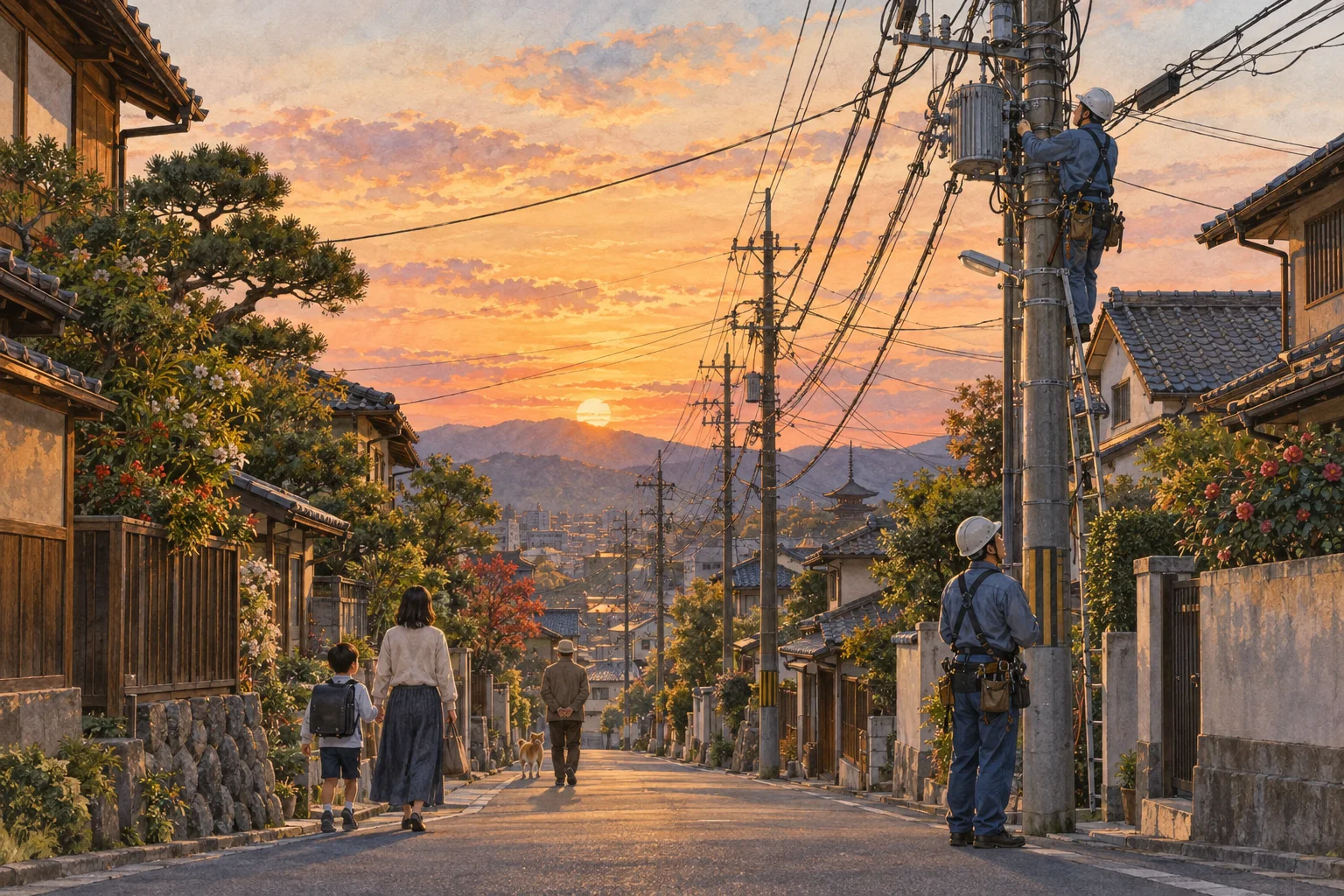
Japanese streets are crossed by overhead wires, largely because burying cables here is costly and slow.
日本の街の上空を電線が横切っているのは、地中化に費用も時間もかかることが大きな理由です。
In 30 seconds
The standard explanation
Most Japanese streets still carry power and communication lines on poles. The share of underground cabling is low compared with major European cities. Costs, narrow roads, many separate utilities and the need to work around earthquakes and existing pipes all slow the work, though central districts are being converted.
日本の通りの多くは、今も電力と通信の線を電柱で支えています。地中化の割合は、欧州の主要都市に比べて低いままです。費用、道路の狭さ、事業者が分かれていること、地震や既設の管への配慮が工事を遅らせています。中心部では置き換えが進んでいます。
As a short speech
A full paragraph you can read aloud
One of the first things people photograph in Japan is the tangle of overhead wires, because the contrast with the tidiness of everything else is striking. The reason is cost and geography rather than indifference.
Burying cables requires digging narrow streets that are already full of water, gas and sewer pipes, coordinating between separate electricity and telecommunications companies, and building access chambers that survive earthquakes, and the per-kilometer cost is high. Poles are also quick to repair after a disaster, which has been used as an argument in their favor, though typhoons that snap thousands of poles cut the other way.
Government programs have pushed undergrounding in central districts, around historic sites and along wide arterial roads, and the difference is visible in places like the approach to a famous shrine. Progress is real but slow, measured against the length of the road network. Photographers, incidentally, have made the wires a recognized part of the Japanese street image.
日本で人が最初に写真に撮るものの一つが、頭上に張りめぐらされた電線です。ほかのすべての整然さとの対比が際立つからです。理由は無関心ではなく、費用と地理にあります。
線を地中に入れるには、すでに水道、ガス、下水の管でいっぱいの狭い道を掘り、別々の電力会社と通信会社の調整を行い、地震に耐える点検用の設備を造らなければならず、一キロあたりの費用は高くつきます。電柱は災害のあとに直すのが速いという点も、擁護の論拠に使われてきました。もっとも、何千本もの電柱をなぎ倒す台風は、その逆を示します。
国の事業として、中心市街地、歴史的な地区、幅の広い幹線道路での無電柱化が進められており、有名な社の参道などでは違いがはっきり見て取れます。前進は本物ですが、道路の総延長に照らせば緩やかです。なお写真を撮る人たちのおかげで、この電線は日本の街並みを象徴する景色の一つとして定着しました。
Questions people actually ask
And how to answer them.
Isn't it dangerous in an earthquake?
Poles can fall and block roads, which is a recognized problem for emergency access. Buried cables avoid that but are slower to locate and repair when damaged, so both sides are argued.
電柱は倒れて道をふさぐことがあり、緊急車両の通行を妨げる問題として認識されています。地中の線はそれを避けられますが、傷んだときに場所を特定して直すのに時間がかかります。どちらにも言い分があります。
Where has it been buried?
Central business districts, areas around major stations, historic townscapes and some shrine approaches. Local governments publish plans, and the change is usually paired with wider sidewalks.
中心業務地区、主要な駅の周辺、歴史的な町並み、一部の参道などです。自治体が計画を公表しており、歩道の拡幅と一緒に行われることが多くあります。
Why are there so many wires on one pole?
Because power lines at different voltages share the pole with telephone, cable television and internet lines from several companies, each with its own attachment and slack loop.
電圧の違う電力の線に加えて、電話、ケーブルテレビ、通信の線が、事業者ごとに同じ柱を共用しているからです。それぞれに取りつけ具と余裕の輪がつきます。
Phrases you can use
- There are wires everywhere.電線がそこらじゅうにあります。
- This street was recently converted.この通りは最近、無電柱化されました。
- Burying cables is expensive.地中化は費用がかかります。
- The pole came down in the typhoon.台風で電柱が倒れました。
- Photographers seem to like them.写真を撮る人には好まれているようです。
Words you need
- utility pole電柱
- overhead line電線
- undergrounding無電柱化
- power outage停電
- streetscape町並み
Watch
From YouTubeBackground (Japanese)
日本の無電柱化率は、欧州の主要都市に比べて低い水準にとどまっています。理由として、道路が狭く地下に既設の管が多いこと、事業者ごとの調整が必要なこと、費用が高いことが挙げられます。2016年に無電柱化の推進に関する法律が制定され、国と自治体が計画的に進めることになりました。防災の面では、電柱の倒壊による道路の閉塞が問題とされる一方、地中の設備は復旧に時間がかかるという指摘もあります。歴史的な町並みや観光地では、景観の観点から優先的に進められています。