hyosatsu
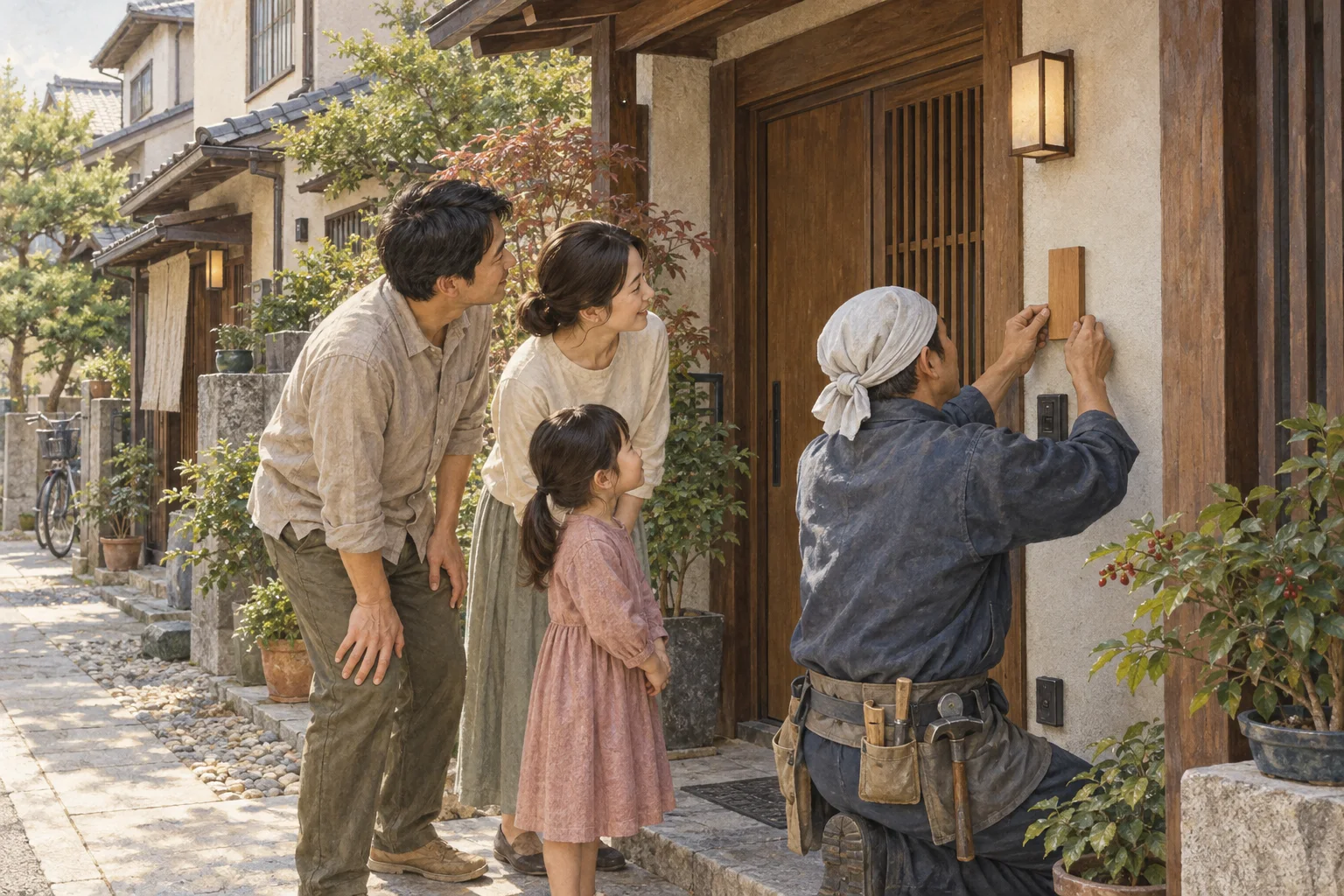
the family nameplate by the door
表札(ひょうさつ)
In one line
The shortest answer that works
A hyosatsu is the nameplate showing a household's surname at the entrance of a Japanese home.
表札とは、日本の家の玄関にその家の苗字を掲げた札のことです。
In 30 seconds
The standard explanation
Most Japanese houses display the family surname on a plate by the door or the gate, in wood, stone, tile or metal. It is not required by law, but it is expected, and deliveries depend on it, because Japanese addresses number blocks rather than running house numbers along a street. Apartments often show the name by the intercom instead. For privacy reasons, more households now leave it off or show only a surname in small letters.
日本のほとんどの家は、玄関や門のそばに木、石、タイル、金属の札で苗字を掲げます。法律の義務ではありませんが、そうするものとされていて、配達もこれに頼っています。日本の住所は通りに沿って番号を振るのではなく区画に番号を振るからです。集合住宅ではインターホンの脇に名前を出すことが多いです。防犯や私生活の保護のため、出さない家や苗字だけを小さく出す家が増えています。
As a short speech
A full paragraph you can read aloud
Walk down a residential street in Japan and you can read off the surnames of everyone who lives there. The hyosatsu, a nameplate at the gate or beside the front door, is standard: a slab of wood, a piece of stone, a ceramic tile or an engraved metal plate with the family name, sometimes with the given names of the couple underneath.
It is a courtesy, not a legal requirement. It is also a practical necessity, because Japanese addresses work by area, block and building number rather than by consecutive numbers along a street, so a delivery driver reaching the right block still has to find the right house, and the nameplate is how.
New houses sometimes get one as a gift when they are built, and choosing the material and the calligraphy is part of moving in. The habit is weakening, though. Concerns about stalking and about advertising who lives alone have led many apartment dwellers and some homeowners to leave the plate blank or omit it.
日本の住宅街を歩くと、そこに住む人たちの苗字がひととおり読めてしまいます。門や玄関脇に掲げる表札は標準的なもので、木の板、石、陶のタイル、彫った金属の板に家の苗字を記し、下に夫婦の名前を添えることもあります。礼儀であって、法律の義務ではありません。
同時に実用上の必要でもあります。日本の住所は通りに沿って連番を振るのではなく、町名・街区・番号で表すので、正しい街区にたどり着いた配達の人は、そこから正しい家を見つけなければならず、その手がかりが表札だからです。
新築の家では表札が贈り物になることもあり、素材と字の選び方は引っ越しの楽しみの一つです。ただしこの習慣は弱まっています。つきまといへの不安や、一人暮らしだと知らせてしまうことへの懸念から、集合住宅の住人や一部の持ち家では、札を空けておくか出さない人が増えました。
Questions people actually ask
And how to answer them.
Is it required by law?
No. There is no national obligation to display your name, and you can leave it off without any consequence. Delivery services and utility readers simply find it harder. Some housing estates ask residents to display one in their own rules, but that is a private agreement.
義務ではありません。名前を掲げる法律上の義務は国レベルでは存在せず、出さなくても何の不利益もありません。配達や検針の人が探しにくくなるだけです。分譲地の規約で掲示を求める例はありますが、それは私的な取り決めです。
Why can't the address alone find the house?
Because Japanese addresses are areal, not linear. You have a ward, a district, then a block number and a building number within the block, and depending on the area the numbers follow land registration order or run around the edge of the block, not along the street. Even locals use maps and nameplates.
日本の住所が通り沿いではなく面で振られているからです。区、町名、そして街区の番号と、その中の建物の番号という順で、番号は地域によって土地の登記の順だったり、街区の外周に沿って振られていたりして、通り沿いには並びません。地元の人でも地図と表札を頼りにします。
What do people do in apartments?
Usually a small card by the door or at the entrance intercom panel, and many buildings now use room numbers only. If you rent, ask the management whether you should put your name up; in a building with a concierge or a locked entrance it is often unnecessary.
ふつうは戸口の小さな札か、入口のインターホンの表示で、今は部屋番号だけにしている建物も多いです。賃貸なら名前を出すべきか管理会社に聞いてください。管理人がいる建物やオートロックの建物では不要なことが多いです。
Phrases you can use
- The nameplate by the gate shows the family's surname.門の表札にその家の苗字が出ています。
- I can't find the house; the numbers aren't in order.家が見つかりません。番号が順番になっていなくて。
- We haven't put our name up yet.まだ表札を出していません。
- A lot of people leave it off these days.最近は出さない人も多いです。
- It's a housewarming gift.新築祝いの品です。
Words you need
- nameplate表札
- surname苗字
- gate門
- block number街区番号・番地
- intercomインターホン
Watch
From YouTubeBackground (Japanese)
表札を掲げる習慣は、住所の表し方と深く関わっています。日本の住所は通りに沿って連番を振る方式ではなく、町名と街区符号、住居番号を組み合わせる面的な方式で、番号が並び順に対応しないことも多いため、最後は表札で家を特定することになります。表札が一般に広まったのは近代の都市化のあととされ、それ以前は屋号や家紋で家を示す地域もありました。素材は木、石、陶器、タイル、ステンレスなどさまざまで、新築や引っ越しの祝いとして贈られることもあります。一方で、防犯やプライバシーの観点から名前を出さない住戸が増え、集合住宅では部屋番号のみの表示が一般的になりつつあります。宅配業者にとっては表札のない家が増えたことが配達の手間につながるという指摘もあります。