keikaku unkyu
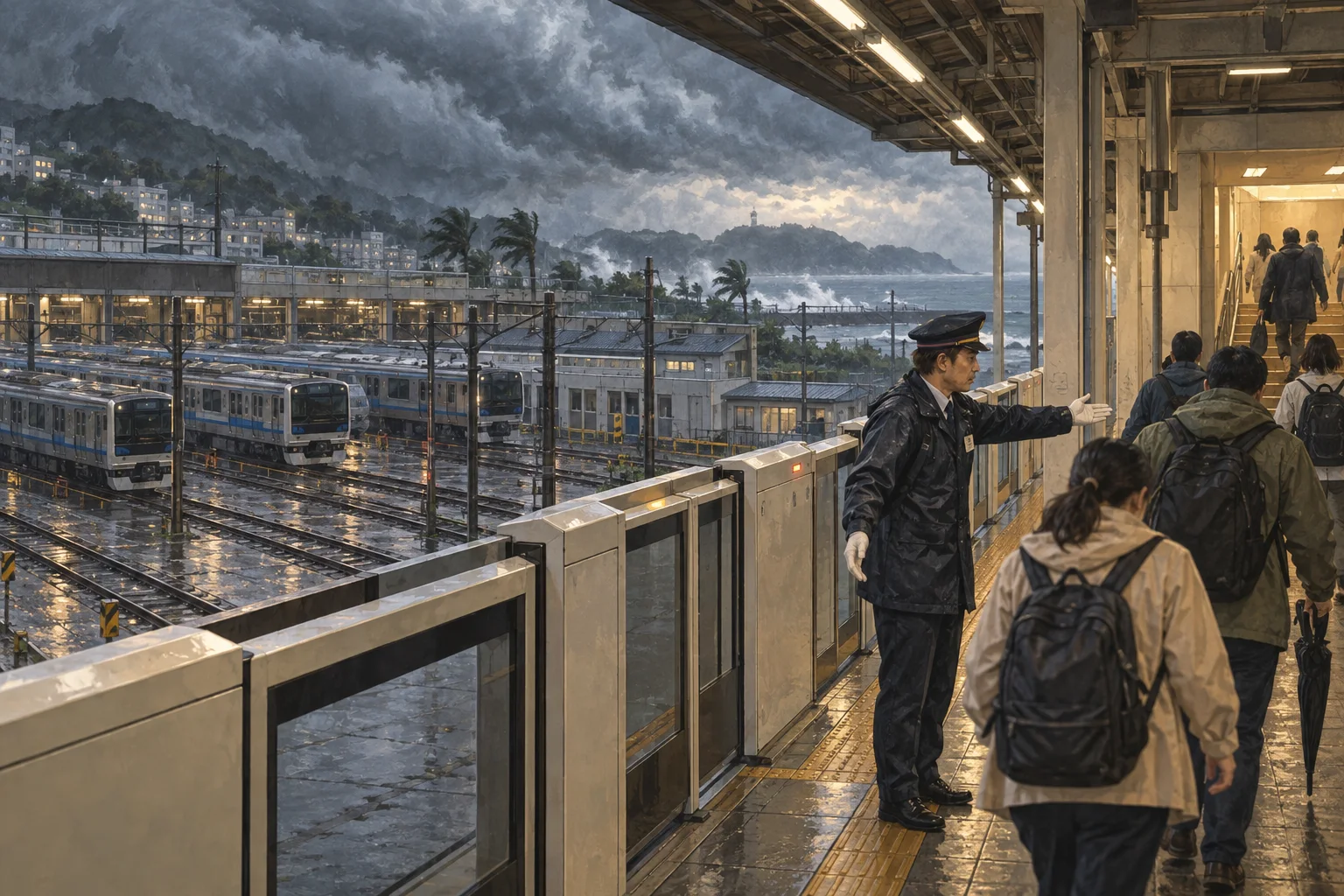
shutting down the trains before the storm arrives
計画運休(けいかくうんきゅう)
In one line
The shortest answer that works
Keikaku unkyu, or planned suspension, is railways announcing in advance that trains will stop before a typhoon or heavy snow.
計画運休とは、台風や大雪の前に、鉄道が前もって運転をやめると発表することです。
In 30 seconds
The standard explanation
Japanese railways now announce a planned suspension a day or so before a major typhoon, naming the lines and the hour service will stop. The point is to avoid trains halting between stations with passengers on board and to let people decide not to travel. Companies and schools plan around the announcement. The practice became standard in the late 2010s after several storms.
大きな台風の前日ごろ、日本の鉄道は計画運休を発表し、どの路線が何時に止まるかを示します。狙いは、乗客を乗せたまま駅間で立ち往生することを避け、人が出かけない判断をできるようにすることです。会社も学校もその発表に合わせて動きます。2010年代の後半、いくつかの台風を経て定着しました。
As a short speech
A full paragraph you can read aloud
One thing that surprises visitors during typhoon season is that Japanese railways will announce, the day before, that they are going to stop. Not delays, not reduced service: a stated hour after which trains on named lines will not run, published by the operators and carried on the news.
This is keikaku unkyu, planned suspension, and it is a recent change in thinking. The older approach was to keep running as long as possible and stop when conditions became impossible, which meant trains halted between stations, passengers stuck for hours, and stations overwhelmed by people trying to get home at once.
After several bad storms in the 2010s the operators decided that announcing a shutdown in advance was safer, and now the announcement itself is the signal for everything else: companies tell staff to work from home or leave early, schools close, shops shut, and deliveries are rescheduled. For a traveler, the practical advice is to check the operators' announcements a day ahead when a typhoon is forecast, because flights and buses follow the same logic, and to assume that if the trains are stopping, the city is stopping.
台風の季節に日本を訪ねた人が驚くことの一つが、鉄道が前日に「止めます」と発表することです。遅れでも間引きでもありません。この路線は何時以降走りません、と時刻を示して会社が発表し、報道が伝えます。これが計画運休で、考え方としては新しいものです。
以前は、走れるかぎり走り、走れなくなったら止める、というやり方でした。その結果、列車が駅間で止まり、乗客が何時間も閉じ込められ、いっせいに帰ろうとする人で駅があふれました。2010年代にいくつかの大きな台風を経て、各社は前もって止めると知らせるほうが安全だと判断します。
いまではその発表が、ほかのすべての合図になります。会社は在宅か早退を指示し、学校は休みになり、店は閉め、配達は日を改めます。旅行者への実際の助言は、台風の予報が出たら前日に各社の発表を確かめること、そして飛行機もバスも同じ考えで動くこと、鉄道が止まるなら街が止まると考えておくことです。
Questions people actually ask
And how to answer them.
How far ahead is it announced?
Often the previous day, with a preliminary notice before that. The operators update it as the forecast changes, so check again on the morning itself.
前日のことが多く、その前に見通しが出ることもあります。予報が変われば更新されるので、当日の朝にもう一度確かめてください。
Will I get a refund?
Yes for reserved tickets on suspended services, and the rules are published each time. Airlines usually waive change fees for the affected days.
運休する列車の指定券は払い戻されますし、その都度、扱いが示されます。航空会社も、その日については変更の手数料を取らないのがふつうです。
Does everything really shut?
Trains, most buses, many flights, department stores and schools. Hospitals and most convenience stores stay open. Taxis become almost impossible to get.
鉄道、多くのバス、多くの便、百貨店、学校は止まります。病院と、多くのコンビニは開いています。タクシーはほぼつかまりません。
A common misunderstanding
MYTHJapanese trains never stop, whatever the weather.
FACTThey now stop deliberately and in advance when a major storm is forecast, and the announcement is treated as the signal for the whole city to stand down.
Phrases you can use
- The trains will stop from this evening.今夜から電車が止まります。
- It's announced the day before.前日に発表されます。
- They stop on purpose, before it gets dangerous.危なくなる前に、意図して止めます。
- If the trains stop, the city stops.電車が止まれば、街も止まります。
- Check the operator's website the day before.前日に鉄道会社の案内を確かめてください。
Words you need
- planned suspension計画運休
- typhoon台風
- resumption of service運転再開
- stranded commuters帰宅困難者
- announcement発表
Watch
From YouTubeBackground (Japanese)
計画運休という言い方が広く知られるようになったのは2010年代後半で、2018年の台風21号や24号の際の対応が転機とされる。国土交通省は事前の情報提供の目安を示しており、各社は運休の見込みを段階的に公表するようになった。2019年の台風では首都圏の主要路線が一斉に運休し、始発からの再開を見合わせる対応も取られた。