manin densha
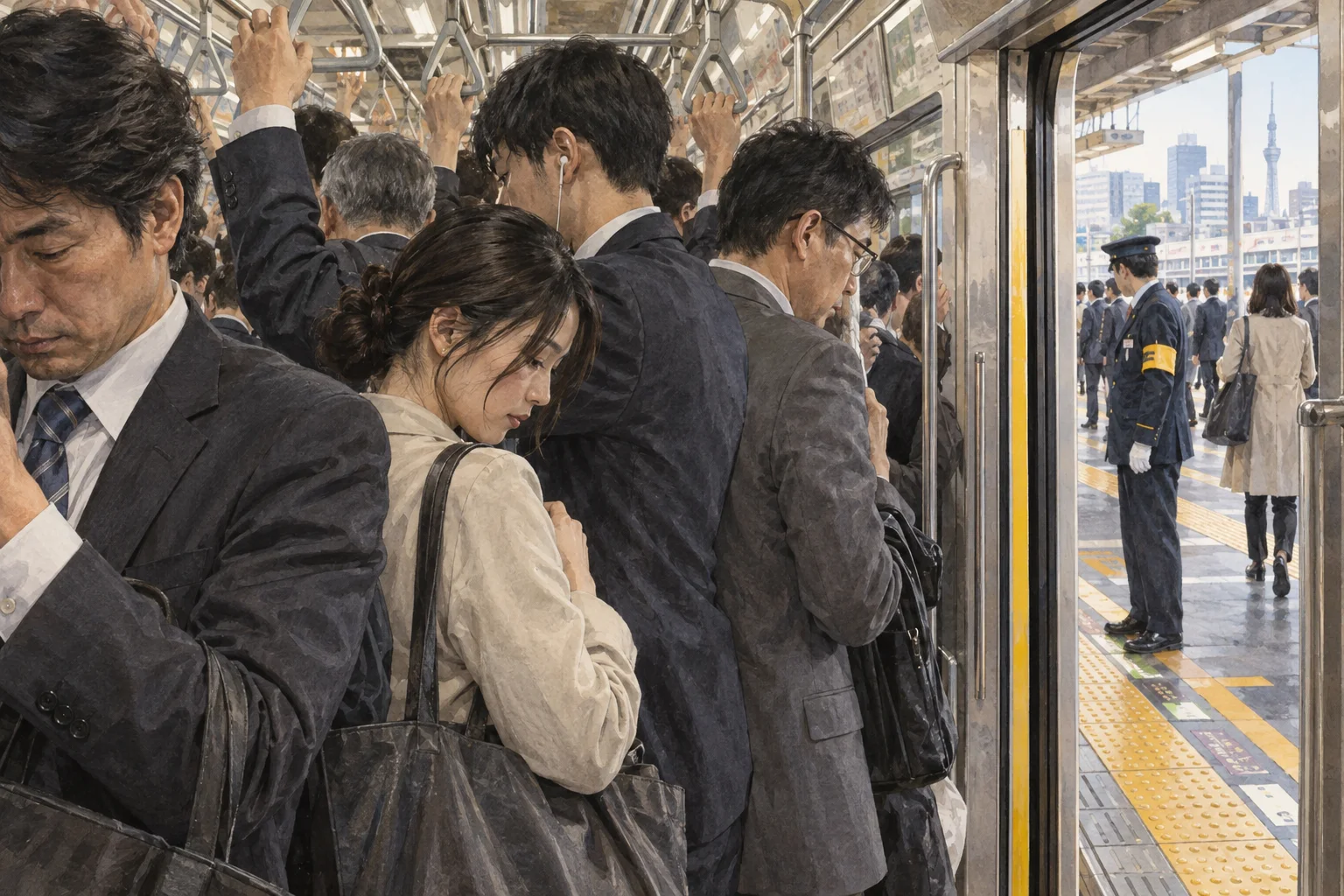
the packed commuter train
満員電車(まんいんでんしゃ)
In one line
The shortest answer that works
Manin densha is the rush-hour train so crowded that you cannot move your arms.
満員電車とは、腕も動かせないほど混み合う通勤ラッシュの電車のことです。
In 30 seconds
The standard explanation
During the morning rush in Tokyo and Osaka, trains carry far more people than they were designed for. Passengers stand pressed against each other, unable to reach their phone or hold a bag. Some stations still employ staff who push people in so the doors can close. It is one of the least pleasant parts of daily life here, and Japanese people complain about it constantly.
東京や大阪の朝のラッシュでは、電車は設計された定員をはるかに超える人を運びます。乗客は互いに押しつけられて立ち、スマホにも手が届かず、荷物も持てません。駅によっては、ドアを閉めるために人を押し込む係員が今もいます。日本の日常でもっとも不快な部分のひとつで、日本人は絶えず文句を言っています。
As a short speech
A full paragraph you can read aloud
One thing about Japan that visitors find hard to believe is the morning commuter train. In central Tokyo, trains regularly carry far more passengers than they were built for. You stand pressed against strangers, sometimes barely able to keep your balance, unable to move your arms.
At some stations there are staff whose job is to push people in so the doors will shut. I want to be honest about this, because it is often shown abroad as something funny or impressive. It is not. It is exhausting, and it is one reason people are asleep on the train home.
Things are slowly improving. Companies now stagger start times, some people work from home, and the worst congestion figures are lower than they were thirty years ago. But it is still the part of Tokyo life I would not recommend to anyone.
外国の方が信じがたいと言う日本の一面に、朝の通勤電車があります。東京の中心部では、電車は設計上の定員をはるかに超える人を日常的に運びます。見知らぬ人に押しつけられて立ち、ときには踏ん張ることもままならず、腕も動かせません。
駅によっては、ドアを閉めるために人を押し込む係員がいます。これは正直に言いたいところです。海外では面白い映像として紹介されがちですが、面白くはありません。疲れます。帰りの電車でみんなが寝ている理由のひとつでもあります。
状況は少しずつ改善しています。時差出勤が広がり、在宅勤務も増え、混雑率のいちばん悪い数字は30年前より下がりました。それでも、東京の暮らしのなかで人にすすめられない部分であることは変わりません。
Questions people actually ask
And how to answer them.
Are the pushers real?
Yes. They are station staff, often part-time students, informally called oshiya, or pushers, though the official title is closer to passenger arrangement staff. They are fewer than they used to be, but you can still see them at the busiest stations.
実在します。駅員や学生アルバイトで、俗に「押し屋」と呼ばれ、正式には旅客整理員などと呼ばれます。以前より減りましたが、いちばん混む駅では今も見られます。
Why are there women-only cars?
Because groping on crowded trains has been a serious and persistent problem. Many major lines run women-only cars during the morning rush. It is a practical response, and there is ongoing debate about whether it is the right one.
混雑した電車での痴漢が長く深刻な問題だったからです。主要路線の多くは朝のラッシュに女性専用車両を運行しています。現実的な対応ですが、それが正しい解決かどうかの議論は続いています。
What should I do if I get on one by mistake?
Face the same direction as everyone else, hold your bag in front of you or put it on the rack, and take your backpack off your back. Those three things are the whole etiquette.
周りと同じ方向を向き、カバンは前で持つか棚に置き、リュックは背中から下ろす。マナーとしてはこの三つがすべてです。
A common misunderstanding
MYTHJapanese people accept the crowding calmly because they are patient.
FACTThey endure it because there is no alternative, not because they do not mind. Congestion is a standard complaint and a standard political promise.
Phrases you can use
- Try to avoid the train between eight and nine.8時から9時の電車は避けたほうがいいですよ。
- Take your backpack off and hold it in front.リュックは下ろして前で持ってください。
- That car is for women only in the morning.あの車両は朝は女性専用です。
- There are staff who push people in at the busiest stations.いちばん混む駅では、人を押し込む係員がいます。
- It's not as bad as it used to be, but it's still bad.昔ほどではありませんが、それでもひどいです。
Words you need
- rush hourラッシュアワー、通勤時間帯
- packed / crammedぎゅうぎゅう詰めの
- commute通勤する、通勤
- train car車両
- congestion rate混雑率
Watch
From YouTubeBackground (Japanese)
国土交通省は路線ごとの「混雑率」を毎年公表している。混雑率100%が定員、150%で「新聞を楽に読める」、180%で「体が触れ合うが新聞は読める」、200%で「体が触れ合い相当圧迫感がある」という目安が示されている。1970年代には東京圏の主要区間で200%を超える路線が珍しくなかったが、その後の輸送力増強で大きく下がり、さらに在宅勤務の広がりで数字は下方向に動いた。ホームで乗客を押し込む係員は「押し屋」と呼ばれ、正式には旅客整理員などの名称が使われる。女性専用車両は2000年代に主要各社へ広がった。