shinkansen
the bullet train
新幹線(しんかんせん)
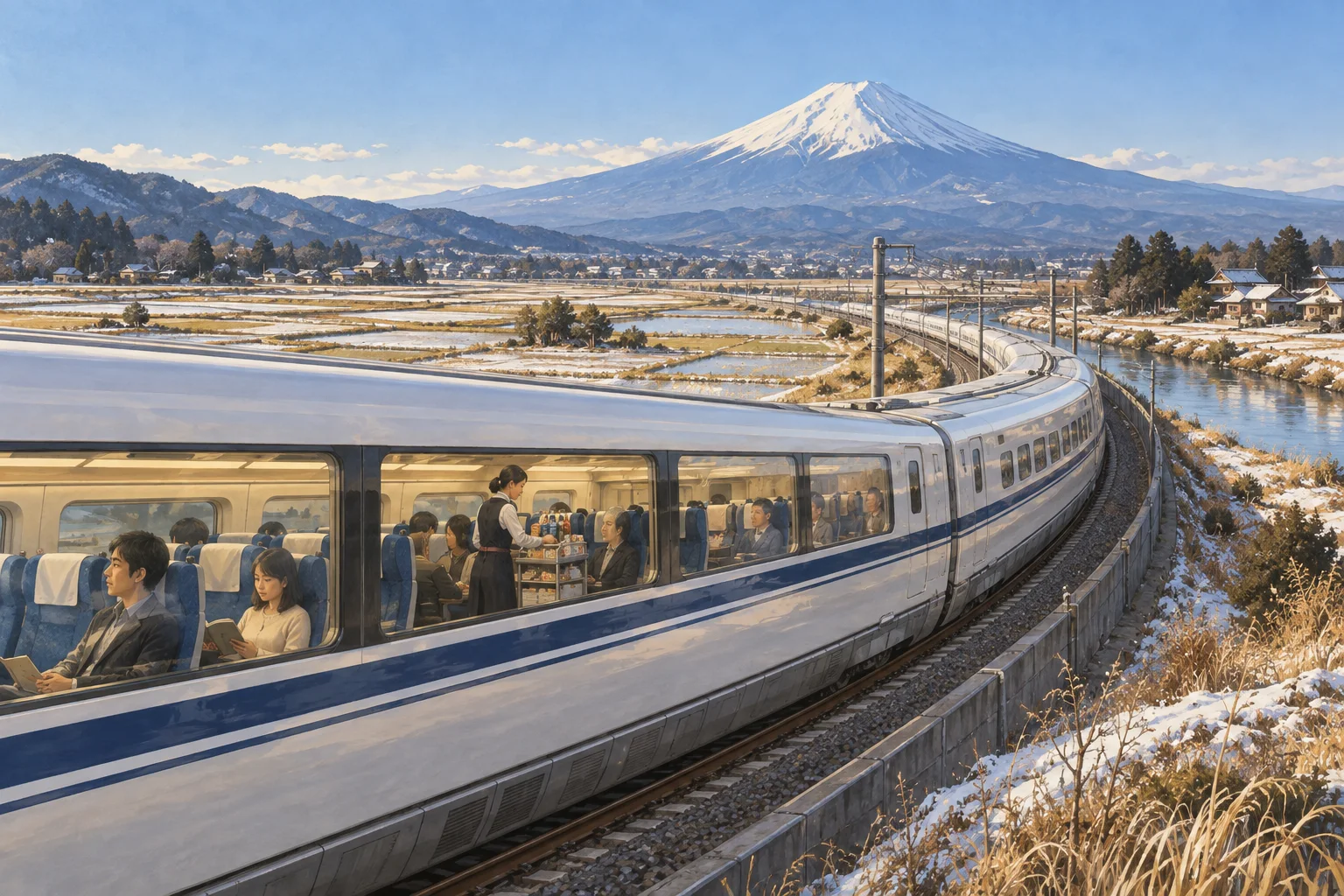
In one line
The shortest answer that works
The shinkansen is Japan's high-speed rail network, famous for running almost exactly on time.
新幹線は日本の高速鉄道網で、ほぼ正確に時刻どおり走ることで知られています。
In 30 seconds
The standard explanation
The shinkansen opened in 1964, the world's first high-speed rail line, and now runs the length of the country. Trains reach 320 km/h on some sections, and on the main Tokaido line the average delay per train is typically about a minute or less. What impresses visitors most is often not the speed but the cleaning: a crew turns a whole train around in about seven minutes.
新幹線は1964年、世界初の高速鉄道として開業し、今では日本列島を縦断しています。区間によっては時速320キロに達し、東海道新幹線の一列車あたりの平均遅延は、例年1分前後かそれ以下です。外国の方がいちばん感心するのは速さより清掃であることが多く、清掃班はおよそ7分で1編成を折り返させます。
As a short speech
A full paragraph you can read aloud
The shinkansen opened in 1964, just before the Tokyo Olympics, and it was the first high-speed railway in the world. Today it runs from Hokkaido in the north to Kyushu, and on some stretches trains travel at 320 kilometers an hour. The statistic people quote is the punctuality: average delays come to about a minute or less per train.
But the thing I find more impressive is the cleaning. At a terminus, a crew boards a thirteen-hundred-seat train, turns every seat to face forward, cleans every car and gets off, all in about seven minutes, and then bows to the waiting passengers.
In more than fifty years of operation there has never been a passenger fatality caused by a derailment or collision on the shinkansen network. That record, more than the speed, is what the system was built for.
新幹線は1964年、東京オリンピックの直前に開業した、世界初の高速鉄道です。今では北は北海道から南は九州まで走り、区間によっては時速320キロで走行します。よく引かれる数字は定時性で、平均遅延は一列車あたり1分前後かそれ以下です。
ただ私がもっとすごいと思うのは清掃です。終着駅では、清掃班が1300席ほどの列車に乗り込み、全席を進行方向に回転させ、車内を清掃して降りるまでを約7分で終え、待っている乗客に礼をします。
開業から50年以上、新幹線では脱線や衝突による乗客の死亡事故が起きていません。速さ以上に、この記録こそがこの仕組みの目指したものです。
Questions people actually ask
And how to answer them.
Is the rail pass worth it?
It depends on your route. Since the price rise in 2023, it usually pays off only on long trips, such as Tokyo to Hiroshima and back within the pass period, so compare it with regular tickets first. If you are staying in one city, it is not worth it.
経路によります。2023年の値上げ以降は、有効期間内に東京〜広島を往復するような長い移動でないと元が取れにくいので、まず普通のきっぷと比べてください。一都市に滞在するだけなら不要です。
Why is everyone so quiet on board?
Phone calls in the seating area are considered rude; you step into the vestibule between cars to take one. Conversation is fine, but people keep their voices down.
座席での通話は失礼とされ、車両のあいだのデッキに出て話します。会話は問題ありませんが、声は落とします。
Can I eat on the train?
Yes, and you should. Ekiben, the boxed meals sold at stations, are a proper part of the experience, and each region has its own. Eating on a local commuter train, however, is a different matter and generally avoided.
食べられますし、ぜひどうぞ。駅で売る駅弁は旅の一部で、地域ごとに違います。ただし在来線の通勤電車で食べるのは別の話で、ふつうは避けられます。
A common misunderstanding
MYTHJapanese trains are never late.
FACTShinkansen delays average about a minute or less, but local lines are delayed often, usually by weather, accidents or overcrowding. The remarkable thing is that a delay of five minutes is treated as worth apologizing for.
Phrases you can use
- Check the platform signs to find the non-reserved cars.自由席の号車はホームの表示で確かめてください。
- Please take phone calls in the area between cars.お電話はデッキでお願いします。
- Buy an ekiben before you board — it's part of the trip.乗る前に駅弁を買いましょう。旅の一部です。
- The cleaning crew turns the whole train around in seven minutes.清掃班は7分で1編成を折り返させます。
- It's been running since 1964 without a single passenger fatality from a derailment.1964年以来、脱線による乗客の死亡事故は一度も起きていません。
Words you need
- high-speed rail高速鉄道
- punctuality定時性、時間の正確さ
- reserved / non-reserved seat指定席/自由席
- boxed meal sold at stations駅弁
- turnaround折り返し(作業)
Watch
From YouTubeBackground (Japanese)
東海道新幹線は1964年10月1日、東京オリンピック開幕の9日前に開業した。当時の東京〜新大阪は4時間で、現在の最速はおよそ2時間20分台。JR東海が公表する東海道新幹線の1列車あたり平均遅延は例年1分前後かそれ以下である(自然災害を含めた数字)。終着駅での清掃は「7分間の奇跡」として海外メディアに紹介され、作業を担う会社の研修が注目された。ちなみに「新幹線」は路線の名称であって列車の名前ではなく、「のぞみ」「ひかり」「こだま」は列車の種別。英語の bullet train は開業前の弾丸列車計画に由来する呼称である。