ekiben
station lunch boxes
駅弁(えきべん)
In one line
The shortest answer that works
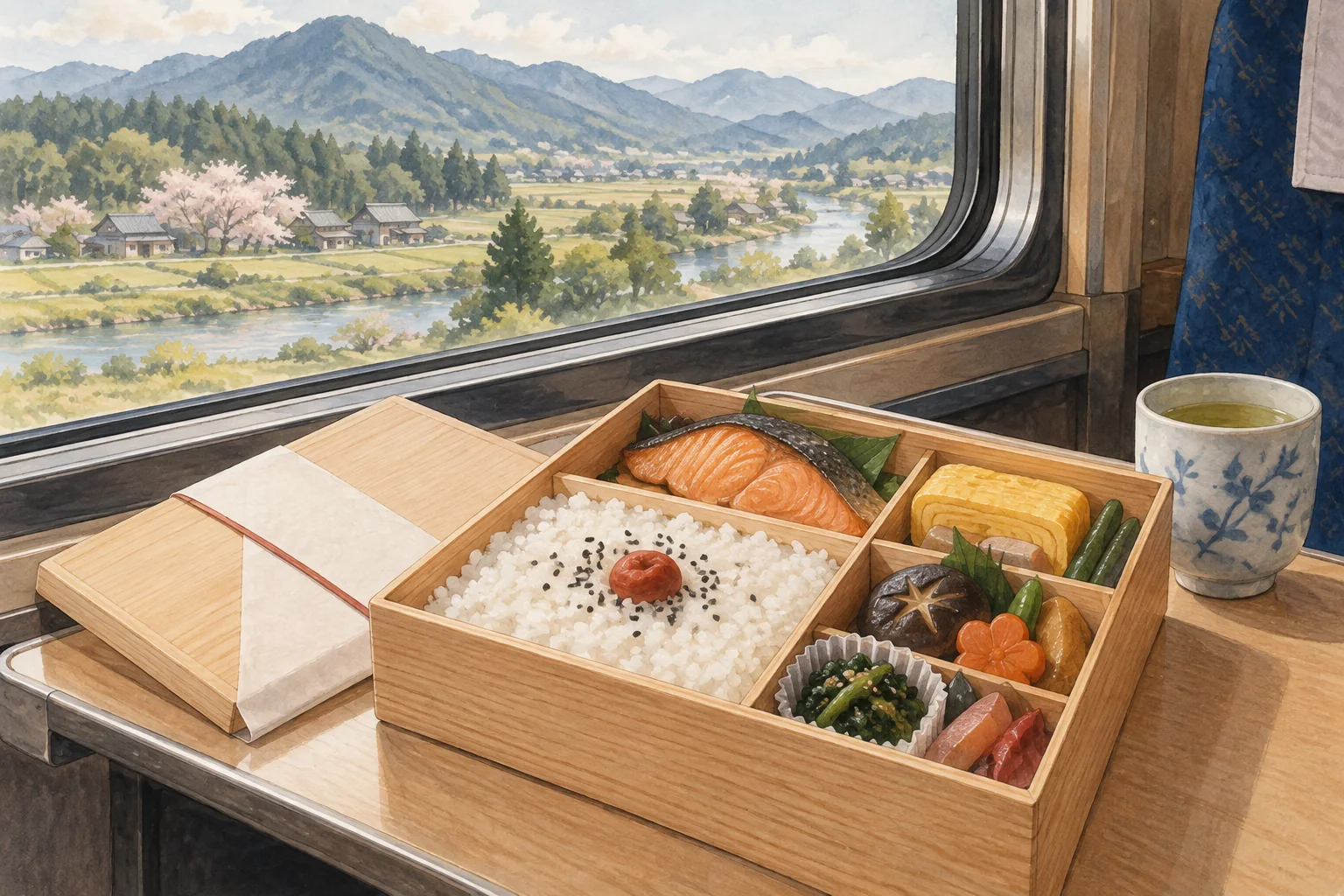
Ekiben are boxed meals sold at railway stations, each made with local ingredients.
駅弁とは駅で売られる弁当で、その土地の食材で作られています。
In 30 seconds
The standard explanation
Ekiben are lunch boxes sold at railway stations and on platforms, designed to be eaten cold on a train. Each region has its own, built around a local specialty, and the wrapper usually carries an illustration of the place. Buying one before boarding a long-distance train is part of the journey.
駅弁は駅やホームで売られる弁当で、列車の中で冷たいまま食べることを前提に作られています。地域ごとにその土地の名物を軸にした駅弁があり、掛け紙にはたいてい土地の絵が描かれています。長距離の列車に乗る前にひとつ買うことが、旅そのものの一部になっています。
As a short speech
A full paragraph you can read aloud
Ekiben are boxed meals sold at railway stations, and they are one of the easier pleasures of traveling in Japan. The rule that shapes them is that they are eaten cold, so everything inside is chosen to taste right at room temperature: grilled fish, simmered vegetables, pickles, rice with something on top.
Each station has its own, usually built around whatever the region is known for, so a box bought in one place is genuinely different from one bought two hours up the line. The wrapper is part of it, printed with a picture of the local landmark or the specialty, and collectors keep them.
The oldest is generally said to date from 1885 at a station north of Tokyo, though several stations claim the first. Practical notes: buy before boarding rather than hoping for a snack cart, some boxes have a pull-cord that heats them, and take your trash with you or use a trash can at the next station.
駅弁は駅で売られる弁当で、日本を旅する楽しみの中でも入りやすいもののひとつです。その形を決めている前提は、冷たいまま食べることです。だから中身は、常温でおいしく感じられるものが選ばれます。焼き魚、煮物、漬物、何かを載せたご飯。
駅ごとに違う駅弁があり、たいていはその地域の名物を軸にしているので、ある駅で買った箱と、二時間先の駅で買った箱は本当に別のものです。掛け紙もその一部で、土地の名所や名物が刷られていて、集める人がいます。
最も古いものは1885年、東京の北にある駅のものとされることが多いのですが、最初を名乗る駅はいくつかあります。実用の注意を。車内販売を当てにせず乗る前に買うこと。紐を引くと温まる箱もあること。ごみは持ち帰るか、次の駅のごみ箱に入れること。
Questions people actually ask
And how to answer them.
Is it acceptable to eat on the train?
On long-distance trains and the shinkansen, yes, and it is expected. On local commuter trains most people avoid it. The dividing line is roughly whether the seats face forward with tables, or sideways along the wall.
長距離の列車と新幹線では問題ありませんし、むしろ当たり前です。近距離の通勤電車では、ふつう控えます。おおよその分かれ目は、座席が前を向いてテーブルがあるか、壁に沿って横向きに並んでいるかです。
Should I heat it up?
No. Ekiben are designed to be eaten at room temperature and the flavors are balanced for that. A few boxes include a heating cord that you pull to warm them, and those are clearly marked with instructions.
温めません。駅弁は常温で食べるように作られていて、味の組み立てもそれに合わせてあります。紐を引いて温める仕掛けのついた箱もあり、それには説明がはっきり書かれています。
Phrases you can use
- Buy it before you get on.乗る前に買ってください。
- Each station has a different one.駅ごとに違う駅弁があります。
- It's meant to be eaten cold.冷たいまま食べるものです。
- Take your trash with you.ごみは持ち帰ってください。
Words you need
- boxed meal弁当
- local specialty名物
- wrapper掛け紙
- platformホーム
Watch
From YouTubeBackground (Japanese)
駅弁の始まりは1885年の宇都宮駅で、握り飯と沢庵を竹の皮に包んだものだったと伝えられますが、最初を名乗る駅は複数あり、確定していません。掛け紙には土地の名所や名物が刷られ、収集の対象になっています。ホームでの立ち売りはほとんど姿を消し、今は売店や車内販売、駅弁大会での販売が中心です。百貨店で各地の駅弁を集めて売る催事は毎年人気を集めます。新幹線の車内販売は縮小が進んでおり、乗る前に買うのが確実です。