inari-zushi
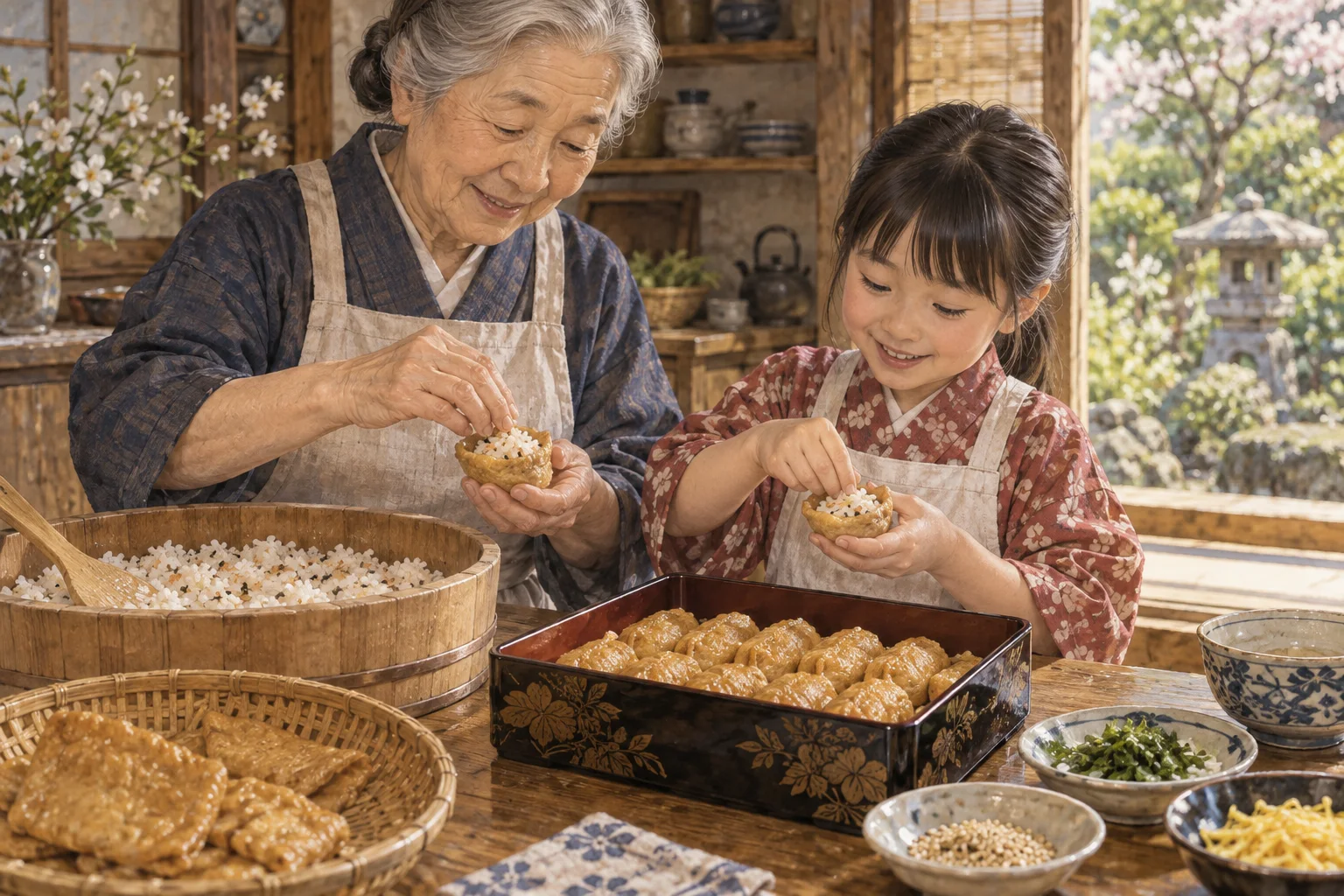
sushi rice stuffed in a sweet fried tofu pouch
いなり寿司(いなりずし)
In one line
The shortest answer that works
Inari-zushi is vinegared sushi rice stuffed into a pouch of sweet fried tofu, named after the deity Inari.
いなり寿司とは、甘く煮た油揚げの袋に酢飯を詰めた寿司で、狐を使いとする稲荷神にちなんで名づけられました。
In 30 seconds
The standard explanation
Inari-zushi is a pouch of deep-fried tofu simmered in a sweet soy broth, then stuffed with vinegared sushi rice. It contains no raw fish, so it travels well and needs no chopsticks skill to enjoy, which makes it a lunchbox and festival-stall staple. The name comes from an old belief that fried tofu is a favorite food of the fox spirits associated with the god Inari. The shape and seasoning differ by region.
いなり寿司は、甘辛い醤油だしで煮た油揚げの袋に、酢飯を詰めたものです。生魚を使わないので持ち運びやすく、食べるのに特別な技術もいらず、弁当やお祭りの屋台でおなじみの一品になっています。名前は、稲荷神に仕える狐の好物が油揚げだとする古い言い伝えに由来します。形や味付けは地域によって違います。
As a short speech
A full paragraph you can read aloud
Inari-zushi is a good example of Japanese sushi that has nothing to do with raw fish, which surprises people who assume all sushi does. It is simply vinegared rice packed into a pocket of abura-age, thin tofu that has been deep-fried and then simmered in a sweet soy broth until it turns a deep brown.
The name ties back to Inari, a Shinto deity of rice whose messengers are said to be foxes. There is an old belief that foxes love fried tofu, so it became a common offering at Inari shrines, and rice wrapped in it came to carry the deity's name.
It even changes shape depending on where you are: in the Tokyo area it is usually rectangular, resembling a small rice bale, while in the Kansai region around Osaka and Kyoto it is triangular, said by some to represent a fox's ear, though the exact reasons for the split are not firmly settled. Because it keeps fairly well and needs no chopstick precision, it has long been a favorite for lunchboxes, festival food stalls and cherry-blossom picnics.
いなり寿司は、生魚とはまったく関係のない日本の寿司の好例で、すべての寿司が生魚を使うと思っている人には意外に映ります。中身は単に、油揚げの袋に酢飯を詰めたものです。薄く切った豆腐を油で揚げ、それを甘い醤油だしで煮て、濃い茶色になるまで味を含ませます。
名前は、狐を使いとする稲(米)の神、稲荷にちなんでいます。狐は油揚げを好むという古い言い伝えから、油揚げは稲荷神社への供え物となり、それで酢飯を包んだものも稲荷の名で呼ばれるようになったとされます。地域によって形も変わります。
東京のあたりではふつう俵型の四角形で、小さな米俵に似せてあるとされ、大阪や京都を中心とする関西では三角形で、狐の耳を表すという説もありますが、その違いがなぜ生まれたのかは、はっきりとは分かっていないとされます。比較的日持ちがよく、箸の使い方も気にしなくてよいため、弁当やお祭りの屋台、花見の場で長く親しまれてきました。
Questions people actually ask
And how to answer them.
Is there raw fish in this?
No. It is just sushi rice inside a pouch of sweet simmered fried tofu, sometimes with small bits of vegetable mixed into the rice. Strict vegetarians should note that the tofu is often simmered in a broth made with bonito flakes.
入っていません。甘く煮た油揚げの袋に酢飯を詰めたもので、酢飯に細かく刻んだ野菜が混ぜてあることもあります。ただ、油揚げを鰹節のだしで煮ることも多いので、厳格な菜食の人は注意が必要です。
Why does the shape change depending on where I am?
Tokyo-area inari-zushi is usually rectangular, said to resemble a rice bale, while Kansai-style is triangular, sometimes said to resemble a fox's ear. The exact origin of the split isn't firmly established.
東京のあたりでは米俵に似せたとされる四角形が多く、関西では狐の耳に似せたとも言われる三角形が多いです。この違いがどこから来たのかは、はっきりとは分かっていません。
Why is it associated with foxes?
Inari, the deity the dish is named for, is closely tied to foxes in folk belief, and fried tofu is traditionally said to be a favorite food of theirs, which is how the pouch came to carry the name.
この料理の名前の由来である稲荷は、民間信仰で狐と深く結びついた神で、油揚げは昔からその好物とされてきました。それがこの袋にこの名がついた理由とされます。
Phrases you can use
- There's no raw fish in this one.これには生魚が入っていません。
- It's named after Inari, the god whose messengers are foxes.狐を使いとする稲荷の神にちなんで名づけられました。
- The shape is different in Kansai.関西では形が違います。
- It's a common lunchbox item.お弁当によく入っています。
- The tofu pouch is simmered until sweet.油揚げは甘くなるまで煮てあります。
Words you need
- deep-fried tofu pouch油揚げ
- vinegared sushi rice酢飯
- Inari, the rice deity稲荷
- rice bale shape俵型
- vegetarian精進
Watch
From YouTubeBackground (Japanese)
いなり寿司の名は、稲荷神に仕えるとされる狐の好物が油揚げだという言い伝えに由来するとされる。東日本では米俵に見立てた俵型(四角形)、西日本では狐の耳や稲荷山の形に見立てたとされる三角形が主流で、その境界や由来には諸説あり、はっきりとした理由は分かっていないとされる。味付けにも違いがあり、関東は甘じょっぱいシンプルな味付けが中心で、関西はだしを効かせ、酢飯に野菜を混ぜ込んだ五目風が好まれる傾向があるとされる。稲荷神社の初午の日には、いなり寿司を供える風習が各地に残る。