kisei rasshu
the mass return to the hometown
帰省ラッシュ(きせいらっしゅ)
In one line
The shortest answer that works
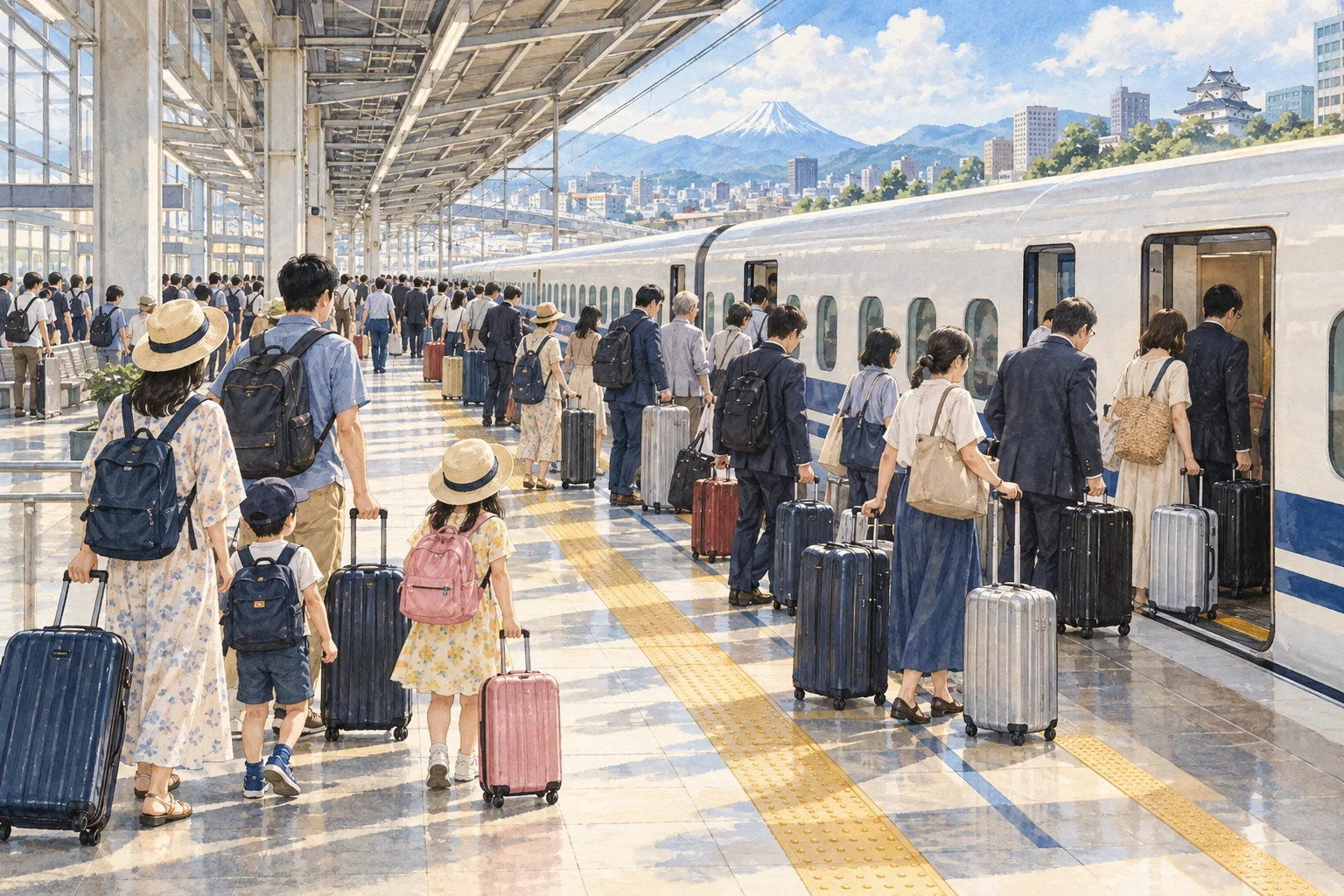
Kisei rasshu, the homecoming rush, is the mass return to hometowns at New Year and in August.
帰省ラッシュとは、正月と八月のお盆に、大勢が一斉にふるさとへ帰る移動のことです。
In 30 seconds
The standard explanation
Kisei rush is the congestion caused when people return to their family homes for the New Year and the Obon period in August. Trains, flights and expressways are packed on the way out and again on the way back, and news programs report the expected peak days in advance so people can plan around them.
帰省ラッシュとは、正月と八月のお盆に人々が実家へ帰ることで生じる混雑です。行きと帰りの双方で、列車も飛行機も高速道路もいっぱいになり、報道番組は混雑の山になる日をあらかじめ伝えて、人が計画を立てられるようにします。
As a short speech
A full paragraph you can read aloud
Kisei rush is what happens when a country with a heavily concentrated population all goes home at once. Twice a year, at New Year and during the Obon period in mid-August, people who moved to the cities for work return to the family home in the countryside.
Because holidays are fixed rather than taken individually, everyone departs within the same two or three days and returns within the same two or three days. The result is one of the most reliably reported news items in Japan: expressway congestion measured in tens of kilometers, shinkansen trains running at well over capacity in the unreserved cars, and airport departure halls full at dawn.
The predicted peak days are reported well in advance. If you are traveling in Japan at those times, reserve seats as soon as booking opens, avoid the peak direction, and remember that the return rush can be just as bad as the outbound one.
帰省ラッシュは、人口の集中した国が一斉に故郷へ帰るとどうなるか、ということです。年に二度、正月と八月半ばのお盆に、仕事のために都市へ出た人が、地方の実家へ帰ります。休みが個人で取るものではなく決まっているため、みなが同じ二、三日のうちに出発し、同じ二、三日のうちに戻ってきます。
その結果生まれるのが、日本で最も確実に報じられる話題のひとつです。数十キロにわたる高速道路の渋滞、自由席が定員をはるかに超えた新幹線、夜明けから満員の空港の出発ロビー。混雑の山になる日は、かなり前から予測が報じられます。
この時期に日本を移動するなら、予約の受付が始まった瞬間に指定席を取り、混む方向を避けてください。そして、帰りのラッシュも行きに劣らず厳しいことがあると覚えておいてください。
Questions people actually ask
And how to answer them.
When exactly is it worst?
Broadly, the two or three days before the 1st of January and before the 13th of August going out, and the two or three days before work resumes coming back. Exact peak days are announced by rail and expressway operators each year.
おおまかには、行きは1月1日と8月13日の二、三日前、帰りは仕事が始まる二、三日前です。正確な混雑の山は、毎年、鉄道会社と高速道路の会社が発表します。
Can I still get a shinkansen?
Yes, but reserved seats sell out quickly and unreserved cars can mean standing for hours. Booking opens one month before departure, and for these dates it matters to book that morning.
乗れますが、指定席はすぐ売り切れ、自由席では何時間も立つことになりかねません。予約は乗車日の一か月前から始まるので、この時期はその朝のうちに押さえることが大事です。
Phrases you can use
- Everyone goes home at the same time.みな同じ時期に帰省します。
- Booking opens one month ahead.予約は一か月前から始まります。
- The return rush can be just as bad.帰りのラッシュも同じくらい厳しいことがあります。
- The peak days are announced in advance.混雑の山になる日は事前に発表されます。
Words you need
- to return to one's hometown帰省する
- congestion混雑
- unreserved seat自由席
- peak dayピークの日
Watch
From YouTubeBackground (Japanese)
帰省ラッシュは1960年代以降、地方から都市への人口移動が進んだことで定着しました。高速道路の渋滞は何十キロにも及び、道路会社が事前に予測を公表します。新幹線の指定席は乗車日の一か月前の午前十時から発売され、この時期は発売と同時に埋まります。近年は休みを分散させる取り組みや、混雑を避けて前後にずらす「ずらし旅」が呼びかけられていますが、大きな変化には至っていません。お盆は法律上の祝日ではなく、企業ごとの休みである点も混雑の集中に関わっています。