shokuba no omiyage
bringing back sweets for colleagues
職場のお土産(しょくばのおみやげ)
In one line
The shortest answer that works
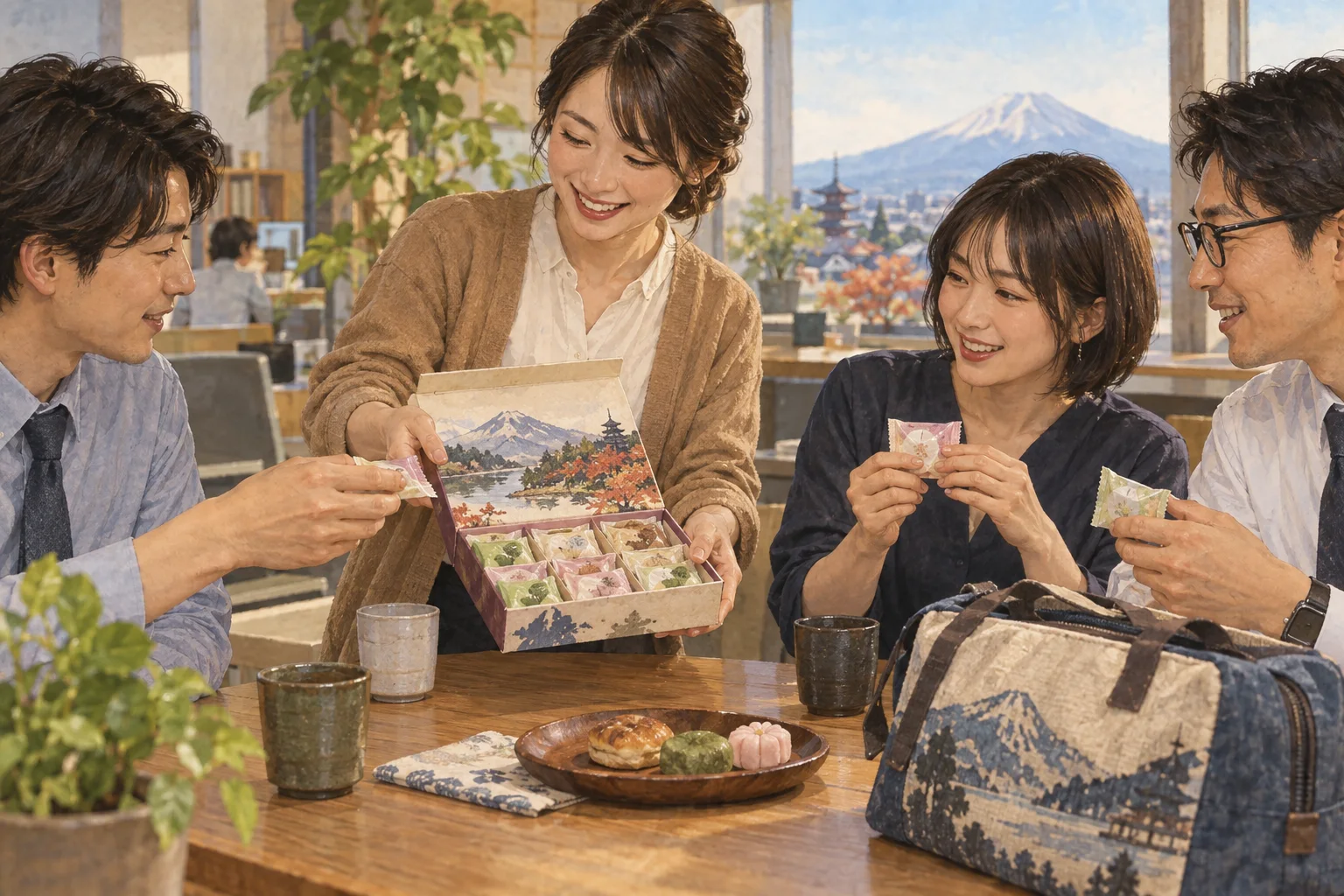
Shokuba no omiyage, or souvenirs for the office, are individually wrapped sweets many Japanese workers bring back after a trip.
職場のお土産とは、日本の多くの働き手が旅行のあと職場のみんなに買って帰る、個包装のお菓子のことです。
In 30 seconds
The standard explanation
Taking time off or going home for the New Year is usually followed by handing out a box of local sweets at work. The box is individually wrapped so that everyone gets one without fuss. It is partly a gift and partly an acknowledgment that colleagues covered your work while you were away.
休暇を取ったり、年末年始に帰省したりしたあとは、職場で地元の菓子の箱を配るのがふつうです。箱の中身が個包装なのは、手間なく全員に行き渡るようにするためです。贈りものであると同時に、留守の間に仕事を引き受けてくれたことへの目配りでもあります。
As a short speech
A full paragraph you can read aloud
If you work in a Japanese office and take a few days off, you will probably come back with a box of sweets. This is omiyage, and in the workplace it has a specific function. Your absence was covered by other people, so the box acknowledges that without anyone having to say it.
The conventions are practical. Buy something from where you went, so it carries the name of the place. Choose a box of individually wrapped pieces, because that lets people take one at their own desk and keeps the rest fresh. Count the team and buy a few extra.
Leave it in the shared area with a short note, or hand it to the nearest colleague and say a word about being away. Nobody expects anything expensive; stations and airports sell boxes designed for exactly this, which is why big stations have whole corridors of souvenir shops. Skipping it once is fine. Never doing it gets noticed.
日本の職場で働いていて数日の休みを取れば、たぶん菓子の箱を持って戻ることになります。これがお土産で、職場では特定の役目を持っています。自分がいない間、ほかの人が仕事を引き受けてくれた。その箱は、誰も口に出さずにそれを認めるものです。作法は実用的です。
行った先のものを買い、地名が入っているようにします。個包装の箱を選びます。各自が自分の席で取れて、残りも傷まないからです。人数を数え、少し多めに買います。共有の場所に短い書き置きを添えて置くか、近くの同僚に渡して、留守にしたことに一言触れます。
高価なものは誰も求めていません。駅や空港には、まさにこのための箱が並んでいます。大きな駅に土産物の店がずらりと並ぶのは、そのためです。一度しないくらいは何でもありません。一度もしないと、気づかれます。
Questions people actually ask
And how to answer them.
How much should I spend?
A box for a team of ten commonly costs between one and two thousand yen. Spending a lot is not better and can make colleagues feel they owe you something.
十人ほどの職場なら、千円から二千円ほどの箱がよく選ばれます。高いものがよいわけではなく、かえって同僚に借りを作らせてしまいます。
What if I went somewhere with no famous sweets?
Anything local works, including something ordinary with the place name on it. Airports and major stations always have a selection, and buying on the way back is completely normal.
その土地のものなら何でもかまいません。地名が入っていれば、ありふれたものでも十分です。空港や大きな駅には必ず売り場があり、帰りに買うのはごくふつうのことです。
Do I need to do this for a personal vacation abroad?
Many people do, and foreign sweets are welcomed as a novelty. Check whether anything needs refrigeration, and prefer packets that survive a suitcase.
そうする人は多く、外国の菓子は珍しがられて喜ばれます。冷蔵が必要なものは避け、スーツケースで持ち帰れる個包装を選んでください。
Phrases you can use
- This is from my trip. Please help yourselves.旅行のお土産です。どうぞ召し上がってください。
- Thank you for covering for me.留守中はありがとうございました。
- It's a specialty of the area.あちらの名物です。
- I left them in the break room.休憩室に置いておきます。
- They're individually wrapped.個包装になっています。
Words you need
- souvenir sweetsお土産のお菓子
- individually wrapped個包装の
- local specialty名物
- to hand out, to distribute配る
- to cover someone's work仕事を代わる
Watch
From YouTubeBackground (Japanese)
職場へのお土産は、菓子の箱を個包装で買うのが定番です。駅や空港、サービスエリアには土産物の売り場が必ずと言ってよいほどあり、地名入りの箱が並びます。もともとお土産は、旅に出られない人の代わりに参拝し、その土地のものを持ち帰る習わしと結びついていたと言われます。近年は、休暇を取りにくくする同調圧力につながるとして、この慣習を見直す職場もあります。配る側の負担を減らすため、部署単位で一箱にするなどの工夫も見られます。