ochugen and oseibo
the two seasonal gift-giving periods
お中元・お歳暮(おちゅうげん・おせいぼ)
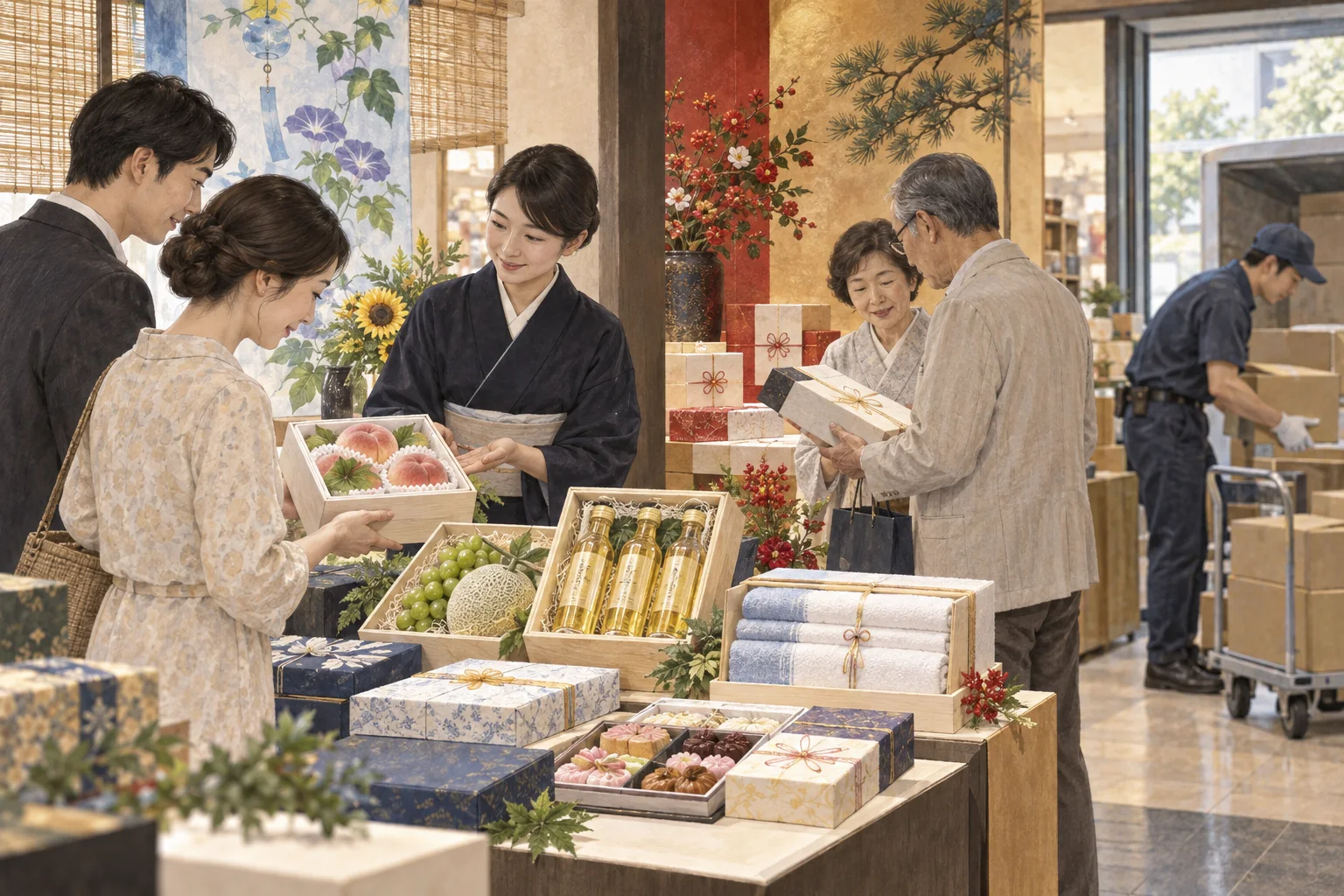
In one line
The shortest answer that works
Ochugen and oseibo are the summer and winter gifts sent to people who have helped you during the year.
お中元とお歳暮は、その年に世話になった相手へ、夏と冬に贈る贈り物です。
In 30 seconds
The standard explanation
Twice a year, in midsummer and in December, Japanese people send gifts to those they owe thanks to: a boss, a teacher, a client, a doctor, parents-in-law. The gifts are practical, often food or drink, and are usually ordered from a department store and delivered. The recipient does not send a gift back, only a note of thanks.
年に二度、盛夏と12月に、日本では世話になった相手へ贈り物をします。上司、恩師、取引先、医師、義理の両親など。品物は実用的で、食品や飲料が多く、たいていデパートから注文して配送します。受け取った側は品物を返さず、礼状だけを出します。
As a short speech
A full paragraph you can read aloud
Twice a year, Japanese people send gifts as a formal expression of thanks. Ochugen goes out in midsummer and oseibo in December, and the recipients are people to whom you owe some ongoing obligation: a boss, a former teacher, a business client, a doctor who treated your family, your spouse's parents.
The gifts are deliberately unremarkable and practical: beer, cooking oil, ham, fruit, detergent, sweets. You order them from a department store, which wraps them and delivers them with a formal label. Two features are worth explaining. First, it is not reciprocal in the way a birthday present is.
The recipient replies with a written note of thanks, not with a gift. Second, it marks a continuing relationship, so starting the practice with someone implies you intend to keep doing it every year. Because of that, and because of concerns about gifts to public officials, the custom has been shrinking for years.
年に二度、日本では感謝を形にして贈り物をします。お中元は盛夏に、お歳暮は12月に。相手は、継続的に世話になっている人です。上司、恩師、取引先、家族を診てくれた医師、配偶者の両親。品物はあえて特別でなく実用的です。
ビール、食用油、ハム、果物、洗剤、菓子。デパートで注文すれば、包装して、のし紙をつけて届けてくれます。説明する価値のある特徴が二つあります。第一に、誕生日の贈り物のように交換し合うものではありません。
受け取った側は品ではなく礼状で返します。第二に、これは続く関係を示すものなので、誰かに始めるということは、毎年続けるつもりだという意味になります。そのことと、公務員への贈答をめぐる意識から、この習慣は長く縮小し続けています。
Questions people actually ask
And how to answer them.
Do I have to send something back?
No. A written note of thanks is the correct response. Sending a gift in return can even read as an attempt to cancel the obligation, which is not the intention.
必要ありません。礼状が正しい返し方です。品物を返すと、かえって受けた恩を帳消しにしようとしていると受け取られることがあります。
How much should it cost?
Commonly between three and five thousand yen, higher for very senior relationships. Department stores organize their catalogs by price band precisely so you can match the relationship.
3千円から5千円が一般的で、目上の関係ではもう少し高くなります。デパートのカタログが価格帯ごとに整理されているのは、関係に合わせて選べるようにするためです。
Is it in decline?
Yes. Household participation has been falling for decades. Companies restrict gifts to avoid the appearance of influence, and many younger people do not start the practice at all.
減っています。贈る世帯の割合は長期的に下がり続けています。企業は便宜供与に見えることを避けて贈答を制限し、若い世代ではそもそも始めない人も多くいます。
Phrases you can use
- It's sent in midsummer and again in December.盛夏と12月に贈ります。
- You reply with a note, not with a gift.返すのは品物ではなく礼状です。
- The department store wraps and delivers it.デパートが包んで配送してくれます。
- Starting it implies you'll continue every year.始めると、毎年続ける意味になります。
- Fewer households do it every year.贈る家庭は年々減っています。
Words you need
- seasonal gift季節の贈り物
- obligation義理、恩義
- thank-you note礼状
- recipient受け取る側
- custom in decline廃れつつある習慣
Watch
From YouTubeBackground (Japanese)
お中元は中国の道教の「中元(旧暦7月15日)」に由来し、日本では盂蘭盆の供え物の習慣と結びついて、世話になった人への贈り物になった。お歳暮は年末に先祖への供物を配った習わしが元とされる。贈る時期は地域差があり、関東は7月初旬から15日ごろ、関西は7月中旬から8月15日ごろまでとされることが多い。時期を過ぎた場合は「暑中見舞い」「残暑見舞い」として贈る。公務員への贈答は国家公務員倫理法などで制限され、企業も内部規程で受領を禁じることが増えた。百貨店の売上に占める中元・歳暮商戦の比重は長期的に低下している。