mizuhiki
decorative cord on gift envelopes
水引(みずひき)
In one line
The shortest answer that works
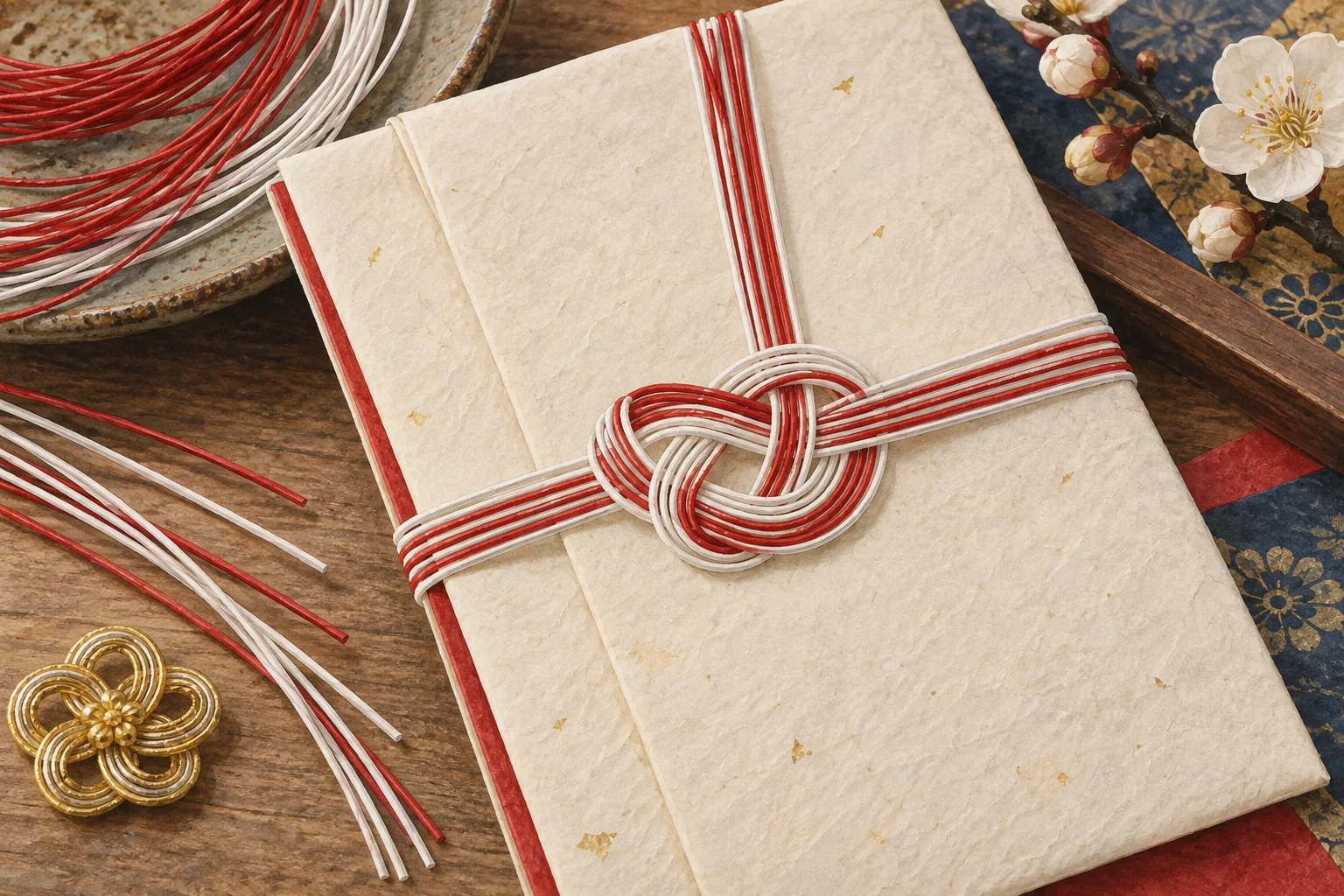
Mizuhiki are the twisted paper cords tied on Japanese gift envelopes, and the knot carries meaning.
水引とは贈答の包みにかける紙の紐で、その結び方が意味を持ちます。
In 30 seconds
The standard explanation
Mizuhiki are stiff cords made from twisted paper, tied on envelopes and gift wrapping. The knot matters. A bow that can be retied is for events you want repeated, such as a birth. A knot that cannot be undone is for events you hope happen once, such as a wedding or a funeral. Colors also differ by occasion.
水引とは、紙をこよりにして固めた紐で、祝儀袋や進物の包みにかけます。結び方に意味があります。何度でもほどいて結び直せる蝶結びは、出産のように繰り返してほしい事柄に使います。ほどけない結び切りは、婚礼や弔事のように一度きりであってほしい事柄に使います。色も場面によって変わります。
As a short speech
A full paragraph you can read aloud
Mizuhiki are the decorative cords tied across Japanese gift envelopes, made by twisting washi paper into a string and stiffening it. They look ornamental, but they are actually carrying information, and getting them wrong is one of the easier ways for a foreigner, or for a young Japanese person, to cause real offense.
The key distinction is the knot. A bow, which can be untied and tied again, says may this happen many times, so it is right for a birth or a general celebration. A tight knot that cannot be undone says once is enough, so it is used for weddings and, in different colors, for funerals.
Red and white is for happy occasions, black and white or yellow and white for mourning, and gold and silver for weddings. Stationery shops label the envelopes clearly, and if you are unsure it is entirely normal to ask the shop assistant which one you need.
水引は、和紙をこよりにして固めた紐で、日本の贈答の包みにかけられます。飾りに見えますが、実際には情報を伝えていて、これを間違えることは、外国の人にとっても若い日本人にとっても、本当に失礼になりやすい落とし穴のひとつです。
要点は結び方です。ほどいて結び直せる蝶結びは「何度あってもよい」という意味で、出産や一般の祝い事に使います。ほどけない結び切りは「一度で十分」という意味で、婚礼に、そして色を変えて弔事に使います。
紅白は慶事、黒白や黄白は弔事、金銀は婚礼です。文具店では袋にはっきりと用途が書かれていますし、迷ったら店員にどれが要るか尋ねるのはまったくふつうのことです。
Questions people actually ask
And how to answer them.
What happens if I use the wrong knot?
At a wedding, a bow reads as wishing the couple will marry again, which is a bad joke at best. At a funeral, a red and white cord is worse. Nobody will shout at you, but people will notice, so it is worth thirty seconds of checking.
婚礼で蝶結びを使うと、また結婚してくださいという意味に読めます。よく取っても悪い冗談です。弔事に紅白を使えば、もっとまずいことになります。誰も怒鳴りはしませんが、気づく人は気づくので、確かめる30秒は惜しくありません。
How many strands should there be?
Five is the standard for ordinary occasions. Weddings often use ten, understood as five from each family joined together. Even numbers below that are avoided for celebrations because they can be divided.
ふつうの場面は五本が標準です。婚礼では十本が多く、両家の五本ずつを合わせたものと解されます。それ以下の偶数は、割り切れることから慶事では避けられます。
A common misunderstanding
MYTHThe cord on a gift envelope is just decoration.
FACTThe knot, the color and the number of strands each carry meaning, and envelopes are sold labeled by occasion for exactly that reason.
Phrases you can use
- A bow means you want it to happen again.蝶結びは、何度あってもよいという意味です。
- For a wedding, use the knot that can't be untied.婚礼にはほどけない結び切りを使います。
- Red and white is for happy occasions.紅白は慶事に使います。
- Ask the shop which envelope you need.どの袋が要るか店員に聞いてください。
Words you need
- gift envelope祝儀袋
- knot結び
- bow (that can be retied)蝶結び
- mourning弔事
Watch
From YouTubeBackground (Japanese)
水引の起源には、遣隋使の贈り物に結ばれていた紅白の紐に由来するという伝承がありますが、確かなことは分かっていません。産地としては長野県飯田市が知られ、全国の水引の大半を生産しているとされます。結び切りには「あわじ結び」など、引くほど固く締まる形もあり、婚礼で好まれます。近年は水引を使った装身具や祝儀袋の飾りが工芸品として売られ、海外向けの土産にもなっています。