mokuhanga
the woodblock printing behind ukiyo-e
木版画(もくはんが)
In one line
The shortest answer that works
Mokuhanga, or the Japanese woodblock print, is the work of a team, not of an artist working alone.
木版画とは、一人の画家ではなく、分業でつくられた版画です。
In 30 seconds
The standard explanation
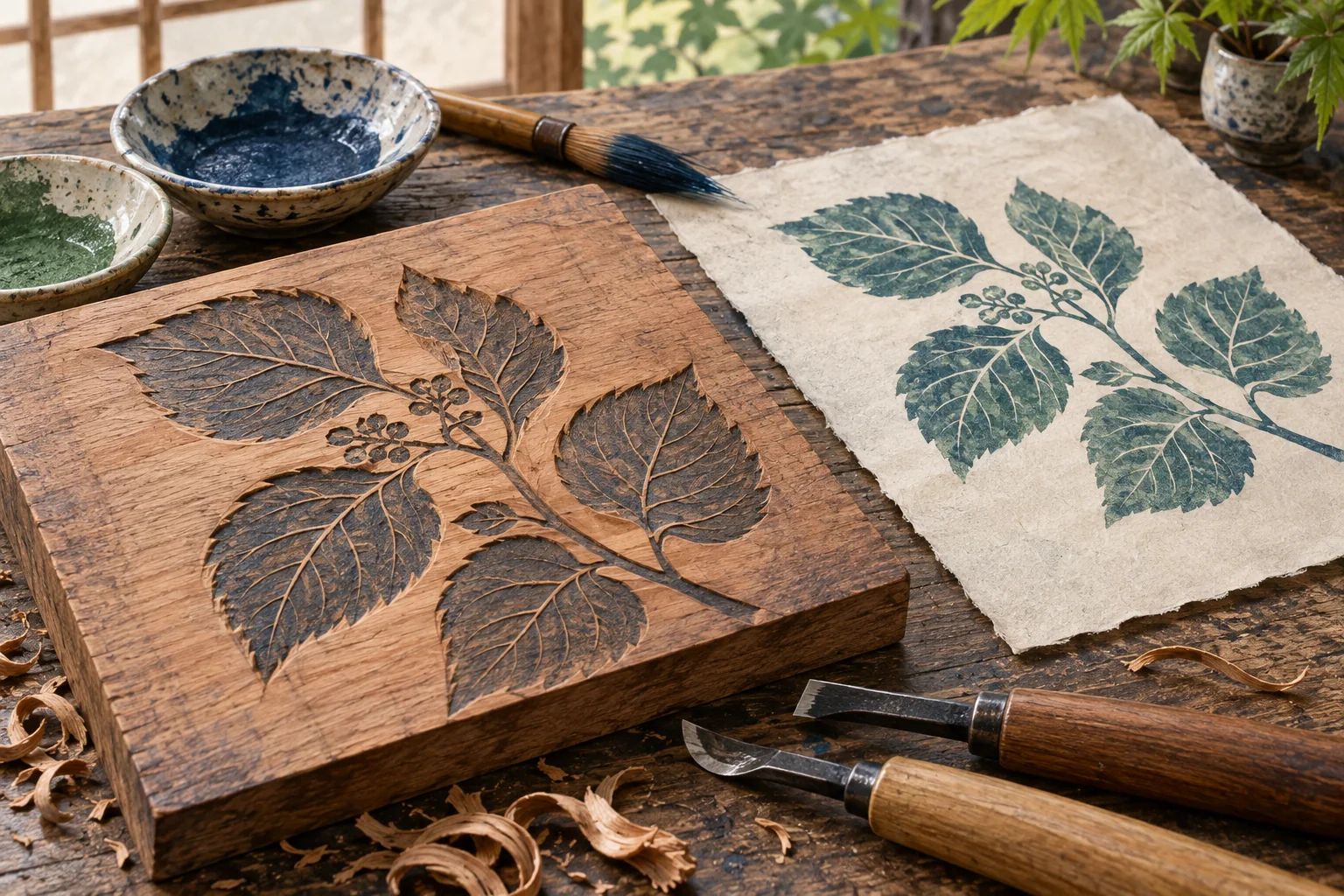
A Japanese woodblock print took four kinds of people: a publisher who commissioned and sold it, an artist who drew the design, a carver who cut the cherry-wood blocks, usually one for each color, and a printer who laid the paper on by hand. The famous names on prints are the artists, but they never touched the blocks.
日本の木版画には四つの役が要りました。企画して売る版元、下絵を描く絵師、桜の板をおおむね色ごとに彫る彫師、そして紙を当てて手で摺る摺師です。版画に名が残るのは絵師ですが、絵師は板に触れていません。
As a short speech
A full paragraph you can read aloud
When people admire a print by Hokusai, they are admiring the work of at least four people. A publisher decided what would sell and paid for it. The artist drew the design on thin paper. A carver pasted that paper face down onto a block of mountain cherry, cut away everything that was not line, and then cut further blocks for the colors, often using both sides of each block.
A printer brushed pigment onto each block in turn, laid the damp paper on and rubbed the back with a disc wrapped in bamboo sheath. Getting each color to land in the right place depended on two small notches cut into the corner of every block, which the printer aligned the paper against.
Prints were cheap, a single sheet often compared to the price of a bowl of noodles, which is why they were made in thousands, and why, as a well-known story goes, some reached Europe as packing around exported pottery.
北斎の版画を見て感心するとき、私たちは少なくとも四人の仕事を見ています。版元が、何が売れるかを決めて費用を出します。絵師が薄い紙に下絵を描きます。彫師はその紙を裏返して山桜の板に貼り、線でない部分をすべて削り、さらに色のための板を彫ります。
一枚の板の両面を使うことも多くありました。摺師は板ごとに絵の具を刷毛で置き、湿らせた紙を載せ、竹の皮で包んだ円盤で裏をこすります。色がずれずに重なるのは、どの板の隅にも彫ってある二つの小さな切り込みのおかげで、摺師はそこに紙の角を合わせます。
版画は安いものでした。一枚が蕎麦一杯ほどとよくたとえられます。だから何千枚と摺られ、輸出する陶器の包み紙としてヨーロッパに渡ったものもあった、という話もよく知られています。
Questions people actually ask
And how to answer them.
So is a print an original or a copy?
An original. There is no single painting behind it; the print is the work itself, and the drawing was destroyed in the carving. Later reprints from recut blocks do exist, and those are a different matter.
原画です。もとになる一枚の絵があるわけではありません。版画そのものが作品で、下絵は彫るときに失われます。板を彫り直した後年の再摺は別の話で、そこは区別が要ります。
Why cherry wood?
Mountain cherry is hard and even-grained, so it holds a very fine line and stands up to hundreds of impressions without crumbling. Softer woods blur after a short run.
山桜は硬く木目が均一で、細い線を保ち、何百枚摺っても崩れにくいからです。やわらかい木では、少し摺っただけで線が甘くなります。
Can I try it?
Yes. Workshops in Tokyo and Kyoto run short sessions where you print from prepared blocks, and some let you carve a simple one. Printing is harder than it looks; the pressure has to be even.
できます。東京や京都の工房で、彫ってある板から摺る短い体験があり、簡単な板を彫らせてくれるところもあります。摺りは見た目より難しく、力を均一にかける必要があります。
Phrases you can use
- One block for every color.色の数だけ板を彫ります。
- The artist never cut the block.絵師は板を彫りません。
- It is printed by hand, not pressed.機械ではなく手で摺ります。
- The notches keep the colors aligned.見当が色のずれを防ぎます。
- These were cheap, everyday pictures.当時は安い、日常の絵でした。
Words you need
- woodblock print木版画
- block carver彫師
- printer摺師
- publisher版元
- registration mark見当
Watch
From YouTubeBackground (Japanese)
浮世絵の木版画は、版元、絵師、彫師、摺師の分業で作られました。板には彫りに耐える山桜が使われ、色ごとに別の板を彫ります。色を正しく重ねるために、板の隅に鉤形と一文字の切り込みを入れ、そこに紙の角を合わせました。これを見当と呼び、見当をつける、見当違いという言い方の語源とする説があります。多色摺りの技法が整ったのは1765年ごろで、この時期の色数の多い版画は錦絵と呼ばれます。摺りにはばれんという、竹の皮で包んだ円盤を使います。