byobu
a folding screen
屏風(びょうぶ)
In one line
The shortest answer that works
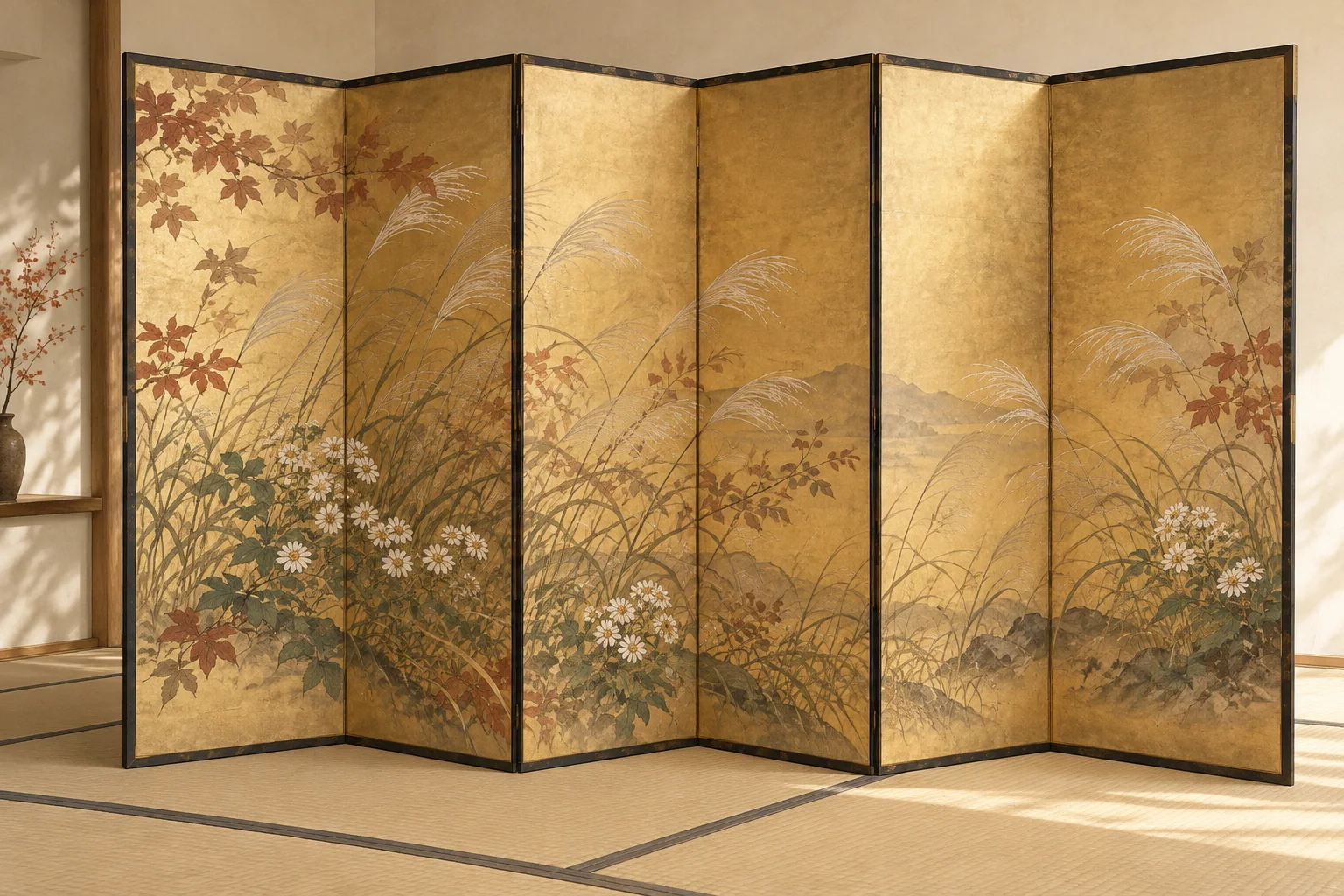
A byobu is a folding screen of painted panels, used to divide a room and to display a picture.
屏風とは絵を描いた面をつないだ折りたたみの衝立で、部屋を仕切りながら絵としても見せるものです。
In 30 seconds
The standard explanation
A byobu is made of panels hinged with paper so they fold flat, each panel covered in paper or silk and painted across the whole surface. It stands on the floor without fixings, blocks a draft, hides a corner and makes a temporary room inside a large one. Because a traditional house had few walls, screens did the work walls do elsewhere. Many of Japan's most famous paintings are on screens.
屏風は紙の蝶番でつないだ面を折りたためるようにしたもので、それぞれの面に紙か絹を張り、全体にわたって絵を描きます。留め具なしに床に立ち、すきま風を遮り、隅を隠し、広い部屋の中に仮の部屋を作ります。伝統的な家には壁が少なかったので、屏風がよその国で壁が果たす役割を担いました。日本で最も有名な絵の多くは屏風に描かれています。
As a short speech
A full paragraph you can read aloud
A byobu is a folding screen, and in a traditional Japanese house it is closer to furniture than to decoration. Panels, usually two, four or six, are joined by hinges made of paper strips, an ingenious joint that lets the screen fold either way and lie almost flat.
Each panel is covered with paper or silk, and the painting runs across the whole width, so the composition changes as you open the screen further or fold it into a zigzag. Because a traditional room has sliding doors rather than solid walls, a screen is how you block a draft, hide a sleeping area, mark off a space for a guest, or put a background behind a seat of honor.
Gold leaf was often used, not only for luxury but because it reflects lamplight into a dark interior. Some of the most celebrated paintings in Japanese art are screens, including pine trees in mist and wind and thunder gods. They travel and store easily, which is part of why so many survive.
屏風は折りたたみの衝立で、伝統的な日本の家では装飾というより家具に近いものです。ふつう二枚、四枚、六枚の面が、紙の帯で作った蝶番でつながれています。これは巧みな仕掛けで、どちらにも折れて、ほとんど平らに畳めます。
各面には紙か絹を張り、絵は全幅にわたって続くので、どこまで開くか、どうジグザグに折るかで構図が変わります。伝統的な部屋は固い壁ではなく引き戸で仕切られているので、すきま風を遮り、寝る場所を隠し、客のための場を区切り、上座の背後に背景を置くのは屏風の仕事です。
金箔がよく使われましたが、贅沢のためだけでなく、暗い室内で灯りを反射させるためでもありました。日本美術で最も称えられる絵のいくつかは屏風で、霧の中の松や風神雷神の図などがあります。運びやすく仕舞いやすいことも、多く残っている理由の一つです。
Questions people actually ask
And how to answer them.
How do the panels hinge without metal?
With paper. Narrow strips of strong paper are glued in an alternating pattern between the panels, which lets the screen fold in both directions and leaves no gap in the picture. The technique is old and is still used by restorers today.
紙で留めます。丈夫な紙の細い帯を面と面の間に互い違いに貼ることで、どちらの向きにも折れ、絵に隙間ができません。古い技法で、今も修復の職人が使っています。
Why so much gold?
Partly display of wealth, but also light. Japanese rooms had deep eaves and paper windows, so interiors were dim, and a gold ground bounced the light from lamps and candles back into the room. Seeing a gold screen by candlelight rather than under museum lighting is a different experience.
富の誇示でもありますが、光のためでもあります。日本の部屋は軒が深く窓は紙なので室内は暗く、金地は灯明や蝋燭の光を部屋へ返しました。金屏風を美術館の照明ではなく蝋燭の明かりで見ると、まったく違う体験になります。
Where can I see good ones?
National museums in Tokyo, Kyoto and Nara hold major screens, and some temples in Kyoto show screens in the rooms they were made for, though these are often high-quality reproductions. Famous originals are usually shown for only a few weeks a year, so check before you travel for one.
東京・京都・奈良の国立博物館が主要な屏風を所蔵しています。京都の寺の中には、本来置かれていた部屋で屏風を見せているところもありますが、精巧な複製であることも多いです。名品の原本はふつう年に数週間しか公開されないので、それを目当てに行くなら事前に確認してください。
Phrases you can use
- That folding screen divides the room.あの屏風が部屋を仕切っています。
- The picture runs across all six panels.絵は六面すべてにわたって続いています。
- The hinges are made of paper, not metal.蝶番は金属ではなく紙でできています。
- The gold reflects the lamplight.金地が灯りを反射します。
- It folds flat and goes into storage.平らに畳んでしまえます。
Words you need
- folding screen屏風
- panel扇・面
- hinge蝶番
- gold leaf金箔
- partition仕切り
Watch
From YouTubeBackground (Japanese)
屏風は中国から伝わったとされますが、面を紙の蝶番でつなぎ、絵が全面にわたって連続するようにした形式は日本で発達したものです。この紙蝶番により、どちらの方向にも折れて隙間なく畳めます。二曲、四曲、六曲といった数え方をし、二つを一組にした「双」で伝わる作品も多くあります。室町から桃山にかけて金地の屏風が盛んに作られ、風俗画や花鳥、合戦図などが描かれました。長谷川等伯の松林図屏風や俵屋宗達の風神雷神図屏風は国宝に指定されています。暗い室内で光を返す金地の効果は、電灯のもとで見るのとは違う前提で描かれていた点がしばしば指摘されます。保存のため、著名な屏風は年間の公開日数を限って展示されるのが一般的です。