tokonoma
the alcove in a tatami room
床の間(とこのま)
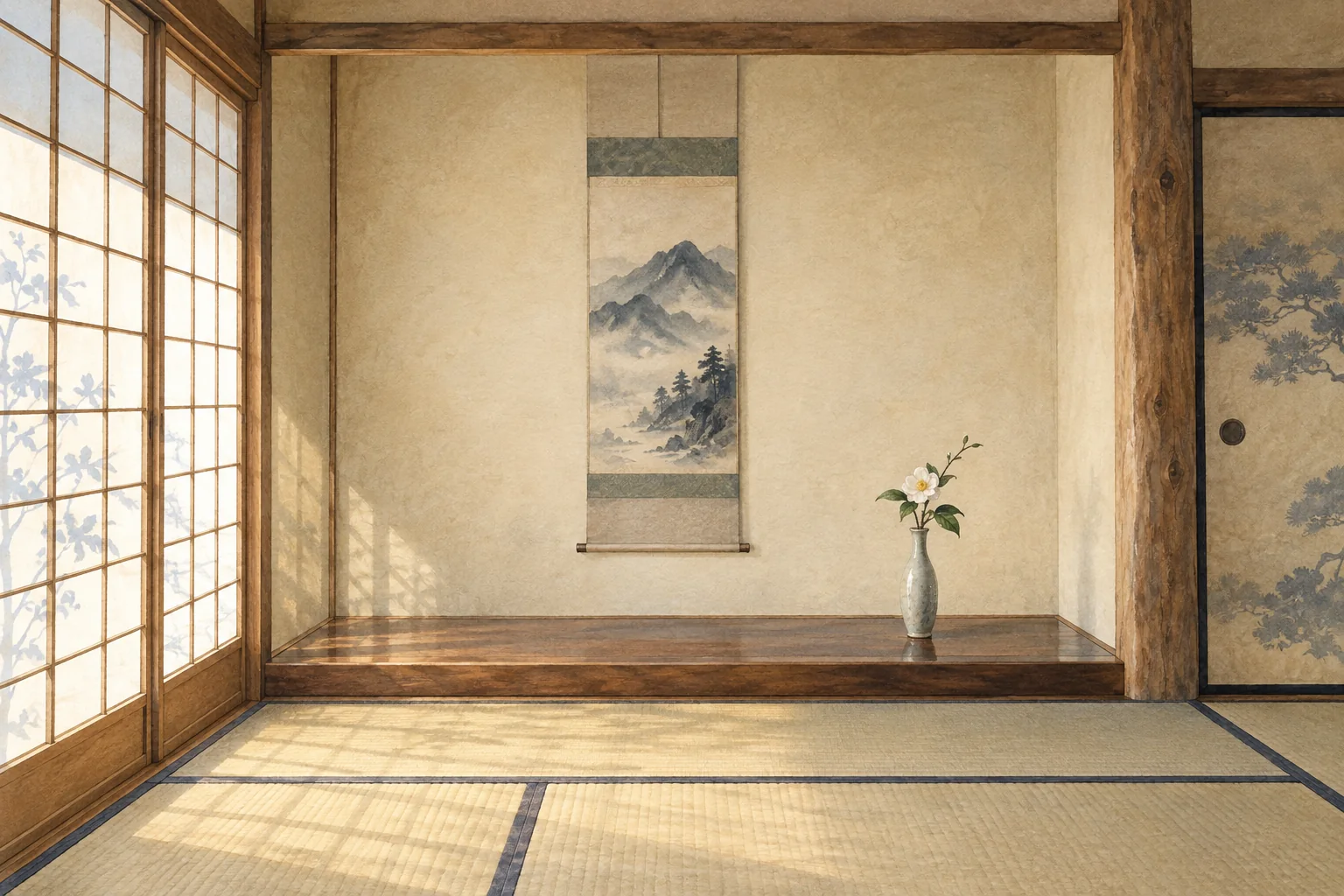
In one line
The shortest answer that works
A tokonoma is a recessed alcove in a tatami room, used to display one scroll and one arrangement.
床の間とは和室の壁を一段くぼませた場所で、掛け軸ひとつと花ひとつを飾ります。
In 30 seconds
The standard explanation
A tokonoma is a shallow alcove built into the wall of a tatami room, usually raised slightly and floored differently from the rest. It holds a hanging scroll and a simple flower arrangement, changed with the season. It is not storage and not a shelf, and the seat in front of it is the place of honor for a guest.
床の間とは和室の壁を浅くくぼませて設けた場所で、たいてい一段高く、床の仕上げも部屋と変えてあります。掛け軸と簡素な花を飾り、季節ごとに掛け替えます。物入れでも棚でもなく、その前の席は客のための上座になります。
As a short speech
A full paragraph you can read aloud
A tokonoma is the alcove built into the wall of a formal tatami room. It is usually slightly raised, finished differently from the rest of the floor, and often framed by a post of visibly good timber.
What goes in it is deliberately little: a hanging scroll on the back wall and one flower arrangement, occasionally an incense burner or a single object, all changed according to the season or the occasion. The point is the restraint. It is a place for one thing to be looked at properly. Two consequences follow for a visitor.
First, it is not a shelf. Putting a bag, a coat or a drink in a tokonoma is a genuine breach of manners and people will react. Second, the seat with its back to the alcove is the place of honor, so if your host directs you there, that is deliberate and you should accept rather than move.
床の間は、格のある和室の壁に設けられたくぼみです。たいてい一段高く、床の仕上げも部屋とは変えてあり、目に見えて良い材の柱で縁取られていることもよくあります。そこに置くものはあえて少なくします。奥の壁に掛け軸を一幅、そして花をひとつ。
ときに香炉や品物をひとつ置く程度で、いずれも季節や場面に応じて替えます。肝心なのは抑えることです。ひとつのものをきちんと見るための場所だからです。訪れる人にとって、ここから二つのことが出てきます。第一に、あそこは棚ではありません。
鞄や上着や飲み物を床の間に置くのは本当に作法に反することで、人は反応します。第二に、床の間を背にする席が上座です。主人がそこへ案内したなら、それは意図があってのことなので、遠慮して移らず受けてください。
Questions people actually ask
And how to answer them.
Can I put my bag there?
No. It is a display space, not storage, and treating it as a shelf reads as disrespectful in the same way as putting a coat on an altar would. Bags go on the floor beside you or in the corridor.
置かないでください。飾るための場所であって物置ではなく、棚のように使うことは、祭壇に上着を置くのと同じように無礼に映ります。鞄は自分のそばの畳の上か、廊下に置きます。
Why is the seat in front of it the best seat?
Because the guest sits with the finest part of the room behind them, where the household's care is displayed, and faces the entrance. Traditionally the host takes the seat nearest the door, which is the lower position.
客が、その家がもてなしを示した最も整った場所を背にして、入口のほうを向いて座る形になるからです。主人は伝統的に入口に近い下座に座ります。
Phrases you can use
- That alcove isn't for storage.床の間は物を置く場所ではありません。
- The scroll is changed with the season.掛け軸は季節で替えます。
- Please take the seat in front of it.床の間の前の席にどうぞ。
- There's only one arrangement, on purpose.花はひとつだけ。それが意図です。
Words you need
- alcove床の間
- hanging scroll掛け軸
- flower arrangement生け花
- place of honor上座
Watch
From YouTubeBackground (Japanese)
床の間は室町時代の書院造から発展したとされ、もとは仏画を掛けて花と香を供えた場所でした。床柱には節や木目の美しい材が選ばれ、そこに施主の好みが表れます。茶室では掛け軸がその日の趣旨を示すため、客はまず床の間の前に進んで拝見します。現代の住宅では床の間のない和室が増え、あってもテレビや飾り棚に置き換えられている家も少なくありません。