koden
condolence money brought to a funeral
香典(こうでん)
In one line
The shortest answer that works
Koden is money given to a bereaved family at a funeral, presented in a plain black and white envelope.
香典とは、通夜や葬儀でご遺族に渡すお金で、黒白の地味な袋に入れて差し出します。
In 30 seconds
The standard explanation
Koden is condolence money handed to the family at a wake or funeral. Everything about it mirrors a wedding gift in reverse: the cord on the envelope is black and white instead of gold, the writing is done in pale ink, and the notes should not be brand new. The family later sends back a return gift worth roughly half, so the money is shared support rather than a payment.
香典は、通夜や葬儀でご遺族に渡すお金です。すべてが祝儀の裏返しになっています。袋の水引は金ではなく黒白、表書きは薄い墨、お札は新札にしません。ご遺族は後日、おおむね半額ほどの香典返しを送ります。ですから、支払いではなく支え合いのお金です。
As a short speech
A full paragraph you can read aloud
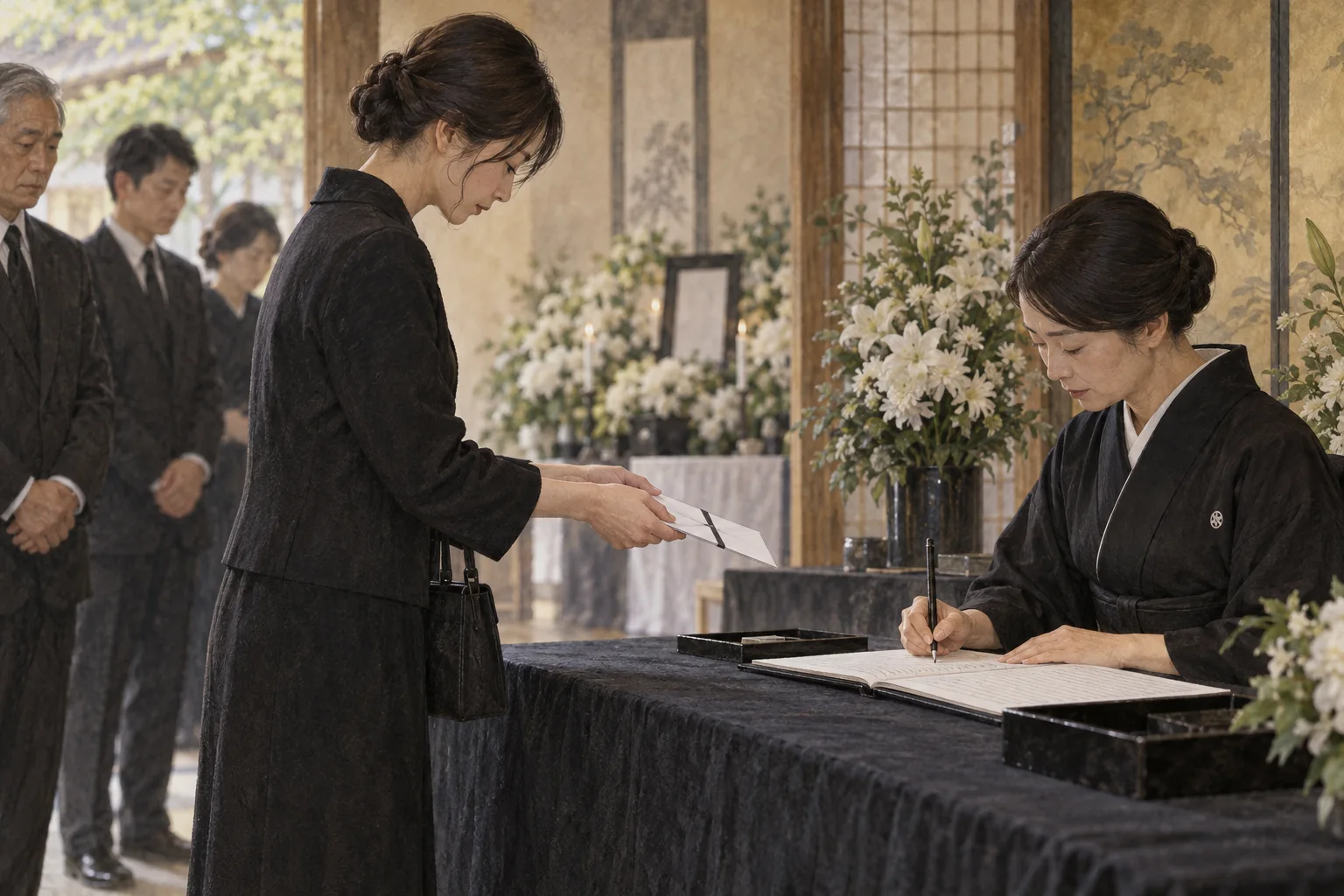
Koden is the money brought to a wake or a funeral in Japan, and it works as the mirror image of a wedding gift. The envelope has black and white cord rather than gold and silver, the family name is written in deliberately pale ink, and the notes are ordinarily not new, because arriving with crisp bills would suggest you had been waiting for the death.
The amount depends on the relationship, and colleagues often collect together and give as a group. You bring it wrapped in a cloth, take it out at the reception desk, and turn it to face the receiver as you hand it over with both hands.
Weeks later the family sends a return gift worth about half of what was received, commonly tea, seaweed or a catalog to choose from. The custom began as practical help with the cost of a funeral among neighbors, and in rural areas that origin is still visible in how the neighborhood association organizes the day.
香典は、日本で通夜や葬儀に持っていくお金で、祝儀をそのまま裏返した形になっています。袋の水引は金銀ではなく黒白、表書きはわざと薄い墨で書き、お札はふつう新札にしません。
真新しいお札で行くと、亡くなるのを待っていたように受け取られるからです。金額は関係の近さで決まり、職場では何人かでまとめて出すこともよくあります。袱紗に包んで持っていき、受付で取り出し、相手から見て正面になるよう向きを変えて両手で渡します。
何週間かして、ご遺族はいただいた額のおよそ半分の品を香典返しとして送ります。お茶や海苔、選べる冊子が多いです。もともとは近所どうしで葬儀の費用を助け合う習わしから始まったもので、地方では今も、その成り立ちが町内会の動き方に残っています。
Questions people actually ask
And how to answer them.
How much should I give?
It depends on how close you were. Colleagues and neighbors commonly give five thousand yen, friends five to ten thousand, and relatives more. If your workplace is collecting as a group, join that instead of giving separately.
関係の近さによります。同僚や近所の方は五千円、友人は五千円から一万円、親族はそれ以上が一般的です。職場でまとめている場合は、別に出さずそちらに加わります。
Why must the ink be pale?
The pale ink is explained as tears having thinned the ink, or as having written in haste on hearing the news. Pens sold for this purpose have a deliberately gray tone, and using ordinary black ink is a common slip.
薄墨は、涙で墨が薄まった、あるいは知らせを聞いて急いで書いた、と説明されます。そのための筆ペンは灰色がかった色で作られています。ふつうの黒で書いてしまうのは、よくある間違いです。
What if I cannot attend the funeral?
You can send it by registered cash mail with a short letter, or give it when you visit the home later. Some families now state that they are declining koden, and in that case you should respect it and not insist.
現金書留に短い手紙を添えて送るか、後日お宅に伺ったときに渡します。近年は香典を辞退すると案内する家もあり、その場合は無理にお渡しせず、意向に従います。
A common misunderstanding
MYTHThe bereaved family keeps all the condolence money.
FACTAbout half typically goes back out as return gifts, and much of the rest goes to the cost of the funeral itself, which in Japan is expensive.
Phrases you can use
- Please accept my condolences.お悔やみ申し上げます。
- The envelope has black and white cord.袋の水引は黒白です。
- Write the name in pale ink.名前は薄墨で書きます。
- The family sends a return gift later.ご遺族から、後日香典返しが届きます。
- Our office is giving as a group.うちの職場は連名で出します。
Words you need
- condolence money香典
- the bereaved family遺族
- a wake通夜
- pale ink薄墨
- a return gift香典返し
Watch
From YouTubeBackground (Japanese)
表書きは相手の宗教で変わります。仏式では御霊前や御香典、神式では御玉串料、キリスト教式では御花料とするのが一般的です。宗派によっては御霊前を用いないため、分からないときは御香典としておくか、事前に確かめます。袋は黒白や双銀の結び切りで、ほどけない形にします。渡すときは袱紗から出し、相手から読める向きにして両手で差し出します。香典返しは四十九日の後に送るのが一般的でしたが、近年は葬儀の当日に品を渡す当日返しも広く行われています。