hoji
a Buddhist memorial service
法事(ほうじ)
In one line
The shortest answer that works
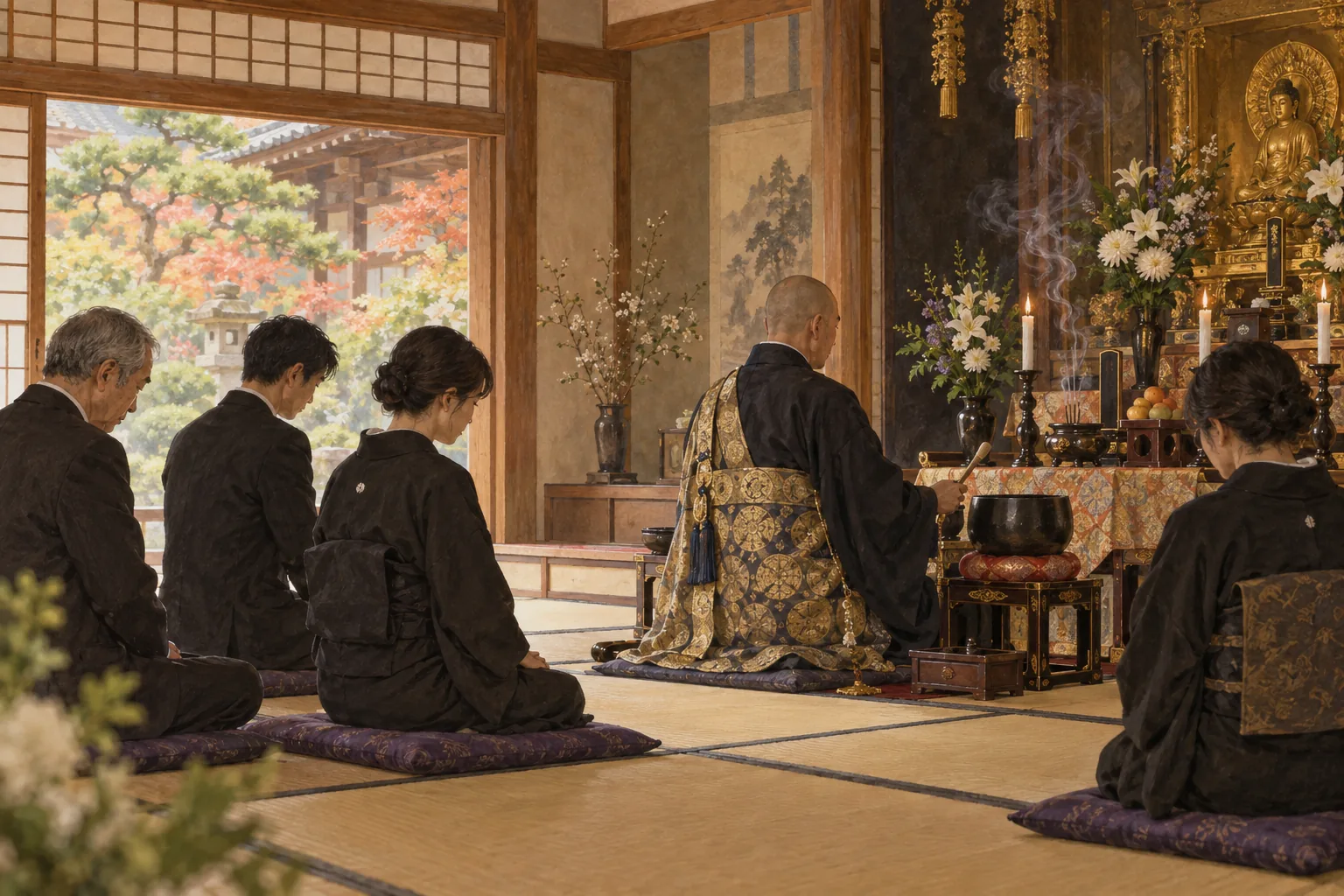
A hoji is a Buddhist memorial service held on fixed anniversaries after a death.
法事とは、死後の決まった年に行う仏教の追善法要のことです。
In 30 seconds
The standard explanation
After a funeral, a Japanese family holds memorial services at set intervals: the forty-ninth day, then the first year, the third, the seventh, the thirteenth and so on, often up to the thirty-third. Relatives gather, a priest chants a sutra, and everyone eats together afterwards. The intervals gradually lengthen, so grief is handed a schedule.
葬儀のあと、日本の家族は決まった間隔で法要を営みます。四十九日、一周忌、三回忌、七回忌、十三回忌と続き、三十三回忌まで行うことも多くあります。親族が集まり、僧が読経し、そのあと会食をします。間隔はしだいに長くなっていき、悲しみに時間の目盛りが与えられます。
As a short speech
A full paragraph you can read aloud
In Japan, a funeral is not the end of the process. A family holds a series of memorial services over many years. The first important one is on the forty-ninth day after the death, which in traditional Buddhist belief is when the spirit's next destination is settled.
After that come services in the first year, the third, the seventh, the thirteenth, and often on up to the thirty-third, after which the individual is considered to have joined the ancestors generally. At each one, relatives gather at the temple or the house, a priest chants a sutra, everyone offers incense, and then there is a meal together.
What I find quietly wise about this is the spacing. The services are close together at first and then further and further apart, which matches how grief actually works. You are not told to move on. You are given a date, years from now, when you will sit in a room with your family and think about that person again.
日本では、葬儀で終わりにはなりません。家族は何年にもわたって一連の法要を営みます。最初の大きな節目は死後四十九日で、伝統的な仏教の考えでは、その日に次の行き先が決まるとされます。
そのあと一周忌、三回忌、七回忌、十三回忌と続き、三十三回忌まで行うことも多く、それを過ぎると個人は先祖の一員になったと考えられます。そのたびに親族が寺か家に集まり、僧が読経し、焼香をし、そして会食をします。私がこの仕組みに静かな知恵を感じるのは、その間隔です。
はじめは短く、だんだん遠のいていく。これは悲しみの実際の進み方に合っています。前を向けとは言われません。かわりに、何年も先の日付を渡され、その日には家族と同じ部屋に座って、もう一度その人のことを考えることになるのです。
Questions people actually ask
And how to answer them.
What do I wear?
Black formal clothing, less strict than for a funeral but still dark and plain. For a service many years later, families often relax to dark everyday clothes. Ask the host.
黒の礼服です。葬儀ほど厳格ではありませんが、暗く地味な服装にします。年数がたった法要では、平服でと案内されることも多いです。施主に確認してください。
Why the forty-ninth day?
In many Japanese Buddhist traditions, the spirit is understood to pass through judgments every seven days for seven weeks, and the forty-ninth day is when the next existence is determined.
日本の多くの仏教の考え方では、死者は七日ごとに審判を受け、七週かけて四十九日目に次の行き先が定まるとされます。
Do I bring money?
Yes, in a special envelope, as a contribution toward the costs. The amount depends on your relationship to the family. Your own family will tell you what is appropriate.
御仏前として、専用の袋に入れて持参します。金額は関係の近さによります。適切な額は身内が教えてくれます。
Phrases you can use
- The forty-ninth day service is the important one.四十九日の法要が大きな節目です。
- After that it's the first year, the third, the seventh.そのあとは一周忌、三回忌、七回忌です。
- A priest comes and chants a sutra.僧侶が来て読経します。
- Everyone eats together afterwards.そのあと、みんなで会食します。
- The intervals get longer as the years pass.年がたつにつれ、間隔が長くなります。
Words you need
- memorial service法事、法要
- anniversary of a death命日
- chant a sutra読経する
- mourning喪、服喪
- the bereaved遺族
Watch
From YouTubeBackground (Japanese)
法要の年忌は数え方が独特で、一周忌は満1年後だが、三回忌は満2年後にあたる。以後、七回忌は満6年、十三回忌は満12年と、亡くなった年を1回目として数える。三十三回忌または五十回忌をもって「弔い上げ」とし、個人の供養を終えて先祖の霊に合わせるのが一般的である。四十九日までを「中陰」、その満了を「満中陰」と呼び、関西ではこの語が香典返しの表書きにも使われる。近年は親族の高齢化や遠方居住を理由に、法要を簡略化したり、一周忌までで区切ったりする家庭が増えている。