sotoba
the wooden memorial tablet at a grave
卒塔婆(そとば)
In one line
The shortest answer that works
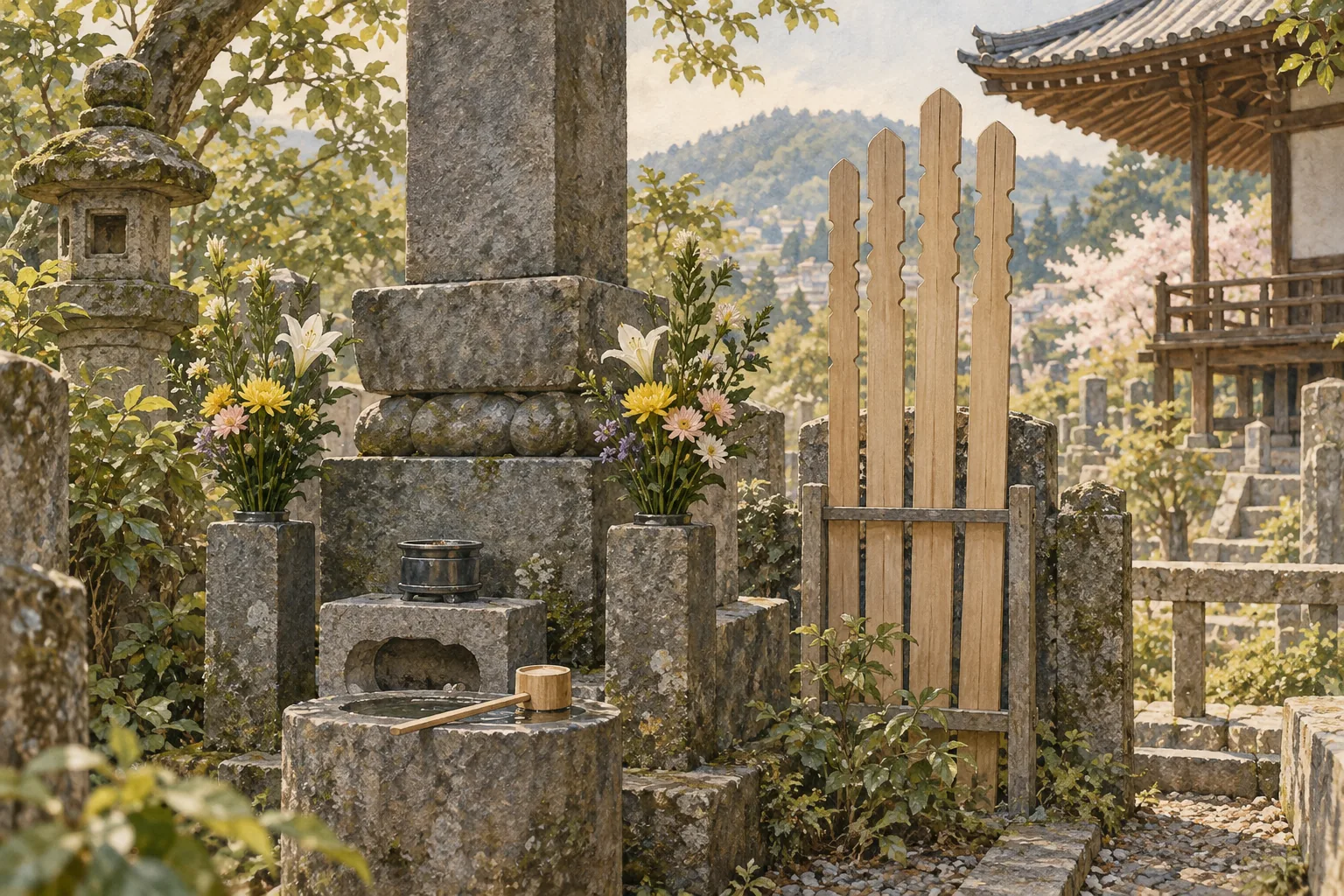
A sotoba is the tall thin wooden board set behind a Japanese grave, inscribed for a memorial service.
卒塔婆とは、日本の墓の後ろに立てる細長い木の板で、法要に合わせて文字を書いて納めます。
In 30 seconds
The standard explanation
A sotoba is a plank of wood, usually over a meter tall, set in a rack behind a gravestone. A priest writes on it in ink: Sanskrit characters, the deceased's posthumous name, the occasion and the date. Families have one made when they hold a memorial service, and old ones are removed and burned. The stepped notches cut into the top represent the five elements, and the shape descends from the Indian stupa.
卒塔婆とは、たいてい一メートルを超える木の板で、墓石の後ろの立てかけに差して立てます。僧侶が墨で、梵字、戒名、法要の名目、日付を書きます。法要を営むときに作ってもらい、古いものは外して焼きます。上部の段になった切り込みは五つの要素を表し、形はインドのストゥーパに由来します。
As a short speech
A full paragraph you can read aloud
If you walk through a Japanese cemetery you will see tall thin boards standing in racks behind the gravestones, weathered to gray, some fresh and pale. These are sotoba, and the name is a Japanese rendering of the Sanskrit stupa, the mound built over relics of the Buddha.
Over centuries that dome was simplified into a stone tower of five stacked shapes representing earth, water, fire, wind and space, and then flattened further into a plank, with the five shapes surviving as the stepped notches cut into the top edge. A priest writes on it with a brush: Sanskrit seed syllables, the posthumous name given to the deceased, the name of the memorial service, and the date.
Families order one when they hold a service, on the anniversaries that structure Japanese mourning, or at the equinoxes and the summer festival of the dead. Erecting it is regarded as an act of merit offered on behalf of the deceased. Old boards are taken down and burned, so the row behind a grave is a record of who has been remembering.
日本の墓地を歩くと、墓石の後ろの立てかけに細長い板が並んでいるのが見えます。灰色に風化したものもあれば、新しく白いものもあります。これが卒塔婆で、名はサンスクリットのストゥーパ、つまり仏の遺骨の上に築かれた塚を日本語に写したものです。
何世紀もかけてその丸い塚は、地・水・火・風・空を表す五つの形を積んだ石の塔に簡略化され、さらに板へと平らになりました。五つの形は、上端に刻まれた段の切り込みとして残っています。僧侶が筆で書くのは、梵字の種子、故人に与えられた戒名、法要の名目、そして日付です。
家族は法要を営むときに用意します。日本の喪の節目をなす年忌や、彼岸、お盆のときです。これを立てることは、故人に代わって積む功徳とされます。古い板は外して焼かれるので、墓の後ろの列は、誰がいつ思い出してきたかの記録になっています。
Questions people actually ask
And how to answer them.
Do all Japanese graves have them?
No. They belong to certain Buddhist traditions, and Jodo Shinshu, one of the largest schools, generally does not use them, because its teaching holds that the deceased is already reborn in the Pure Land and merit transfer is unnecessary. Shinto and non-religious graves do not have them either.
すべてではありません。特定の仏教の伝統のもので、最大の宗派の一つである浄土真宗はふつう用いません。故人はすでに浄土に生まれているとする教えのため、功徳を回し向ける必要がないからです。神道の墓や宗教によらない墓にもありません。
What do the notches at the top mean?
They are the flattened remains of a five-tiered stone pagoda: a cube, a sphere, a triangle, a half-moon and a jewel shape, standing for earth, water, fire, wind and space. Reading the board from the top down, you are reading the whole physical universe in five parts.
五輪塔を平らにした名残です。立方、球、三角、半月、宝珠の形が、地・水・火・風・空を表します。上から順に読めば、物質の世界の全体を五つの要素として読んでいることになります。
Who pays for one, and what happens to the old ones?
The family requesting the memorial service pays the temple a set amount per board. Temples remove weathered boards periodically and burn them, often at a ceremony. You should not take one away yourself or treat it as a souvenir.
法要を依頼する家が、寺に一本あたりの決まった額を納めます。寺は風化した板を定期的に外し、多くは法要を営んで焼きます。自分で持ち帰ったり、記念品のように扱ったりしてはいけません。
Phrases you can use
- Those tall boards behind the grave are memorial tablets.墓の後ろの細長い板は卒塔婆です。
- The priest writes the posthumous name on it.僧侶が戒名を書きます。
- The notches stand for the five elements.切り込みは五つの要素を表します。
- A new one is put up at each memorial service.法要のたびに新しいものを立てます。
- Some schools of Buddhism don't use them at all.まったく使わない宗派もあります。
Words you need
- memorial tablet卒塔婆
- gravestone墓石
- posthumous name戒名
- memorial service法要・法事
- Sanskrit characters梵字
- merit功徳
Watch
From YouTubeBackground (Japanese)
卒塔婆は、サンスクリットのストゥーパを音写した「卒塔婆」に由来し、仏舎利を納めた塚が起源とされます。これが五輪塔として、地・水・火・風・空の五大を表す五つの形を積む石塔になり、さらに簡略化して板にしたものが、現在よく見られる板塔婆です。上部の段状の切り込みは五輪塔の五つの形の名残で、表には梵字の種子、戒名、経文の一節、裏には施主名と年月日などが書かれます。年忌法要、彼岸、お盆などの折に立てるのが一般的で、これを塔婆供養といいます。浄土真宗では、亡くなればただちに阿弥陀仏の浄土に生まれるという教えから、追善のための塔婆を用いないのが通例です。寺は古くなった塔婆を定期的に取り外して焚き上げます。