senko
incense sticks for the dead
線香(せんこう)
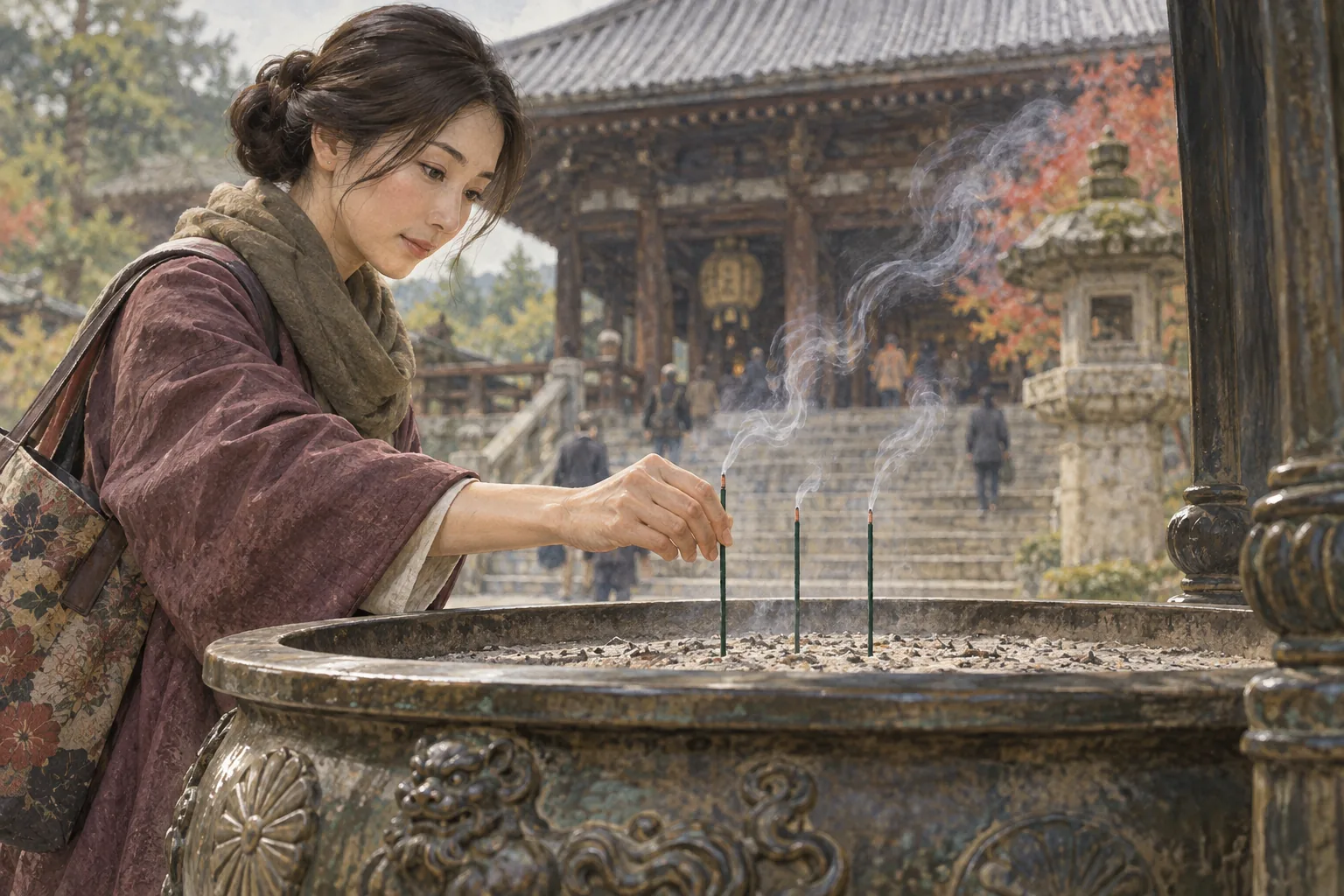
In one line
The shortest answer that works
Senko are incense sticks offered at graves and household altars for the dead.
線香とは、墓や仏壇で亡くなった人に供える香です。
In 30 seconds
The standard explanation
Incense sticks are lit and offered at a grave, at a household Buddhist altar, and at a funeral. At an altar, light one from the candle rather than directly with a lighter, put out the flame by waving your hand rather than blowing, and stand it in the ash. The number and whether you stand or lay them differ by school.
線香は墓、仏壇、葬儀で火をつけて供えます。仏壇ではライターで直接つけず、ろうそくから火を移します。息で吹き消さず手であおいで炎を消し、灰に立てます。本数と、立てるか寝かせるかは宗派で異なります。
As a short speech
A full paragraph you can read aloud
Offering incense is the standard act at a grave, at a household altar and at a funeral, and there are a few conventions worth knowing because they are easy to get wrong. At an altar, light the stick from the candle already burning there rather than from your own lighter.
Once it catches, do not blow the flame out with your breath, because breath is treated as impure in this context; wave your hand or move the stick to extinguish it. Then place it in the ash and put your hands together. How many sticks and whether they stand upright or lie flat differ by school, which trips up Japanese people too.
One school characteristically breaks the stick and lays it down rather than standing it. If you are a guest and do not know, the safe answer is to watch the person in front of you and do the same. Nobody will correct a foreign visitor who is clearly making an effort.
香を供えることは、墓でも仏壇でも葬儀でも標準の所作で、間違えやすい決まりがいくつかあります。仏壇では、そこで燃えているろうそくから火を移してください。自分のライターで直接はつけません。
火がついたら、息で吹き消さないこと。この場では息は清らかでないものとされます。手であおぐか、線香を振って消します。それから灰に立て、手を合わせます。本数と、立てるか寝かせるかは宗派で違い、これは日本人も迷います。
ある宗派は線香を折って寝かせるのを特徴とします。客として作法が分からなければ、答えは単純です。前の人を見て同じようにしてください。明らかに努めている外国からの参列者を、正す人はいません。
Questions people actually ask
And how to answer them.
Why can't I blow out the flame?
Because breath is treated as impure when making an offering, so the flame is put out by waving a hand or moving the stick. The same logic applies to candles at a Buddhist altar.
供えるときの息は清らかでないものとされるため、手であおぐか線香を振って消します。仏壇のろうそくにも同じ考え方が当てはまります。
How many sticks should I use?
It depends on the school, commonly one, two or three, and one school lays a broken stick flat instead. As a visitor, copy the person ahead of you, or ask the family quietly; they will tell you without any fuss.
宗派によって違い、一本、二本、三本が一般的で、折って寝かせる宗派もあります。参列者としては前の人に倣うか、遺族に小声で尋ねてください。気にせず教えてくれます。
Phrases you can use
- Light it from the candle.ろうそくから火をもらってください。
- Don't blow the flame out.息で吹き消さないでください。
- Stand it in the ash and put your hands together.灰に立てて手を合わせます。
- Just do what the person ahead of you does.前の人と同じようにすれば大丈夫です。
Words you need
- incense stick線香
- incense burner香炉
- to offer供える
- to extinguish消す
Watch
From YouTubeBackground (Japanese)
線香が現在の細い棒の形で広まったのは江戸時代とされ、それ以前は香木を焚くのが一般的でした。浄土真宗では線香を立てず、折って香炉に寝かせる作法をとります。焼香は粉状の香を炭に落とすもので、線香とは別の所作です。墓参りでは風で消えないよう横に置ける香立てが使われることもあります。線香の煙は故人への供養であると同時に、場を清めるものとも説明されます。