tera no garan
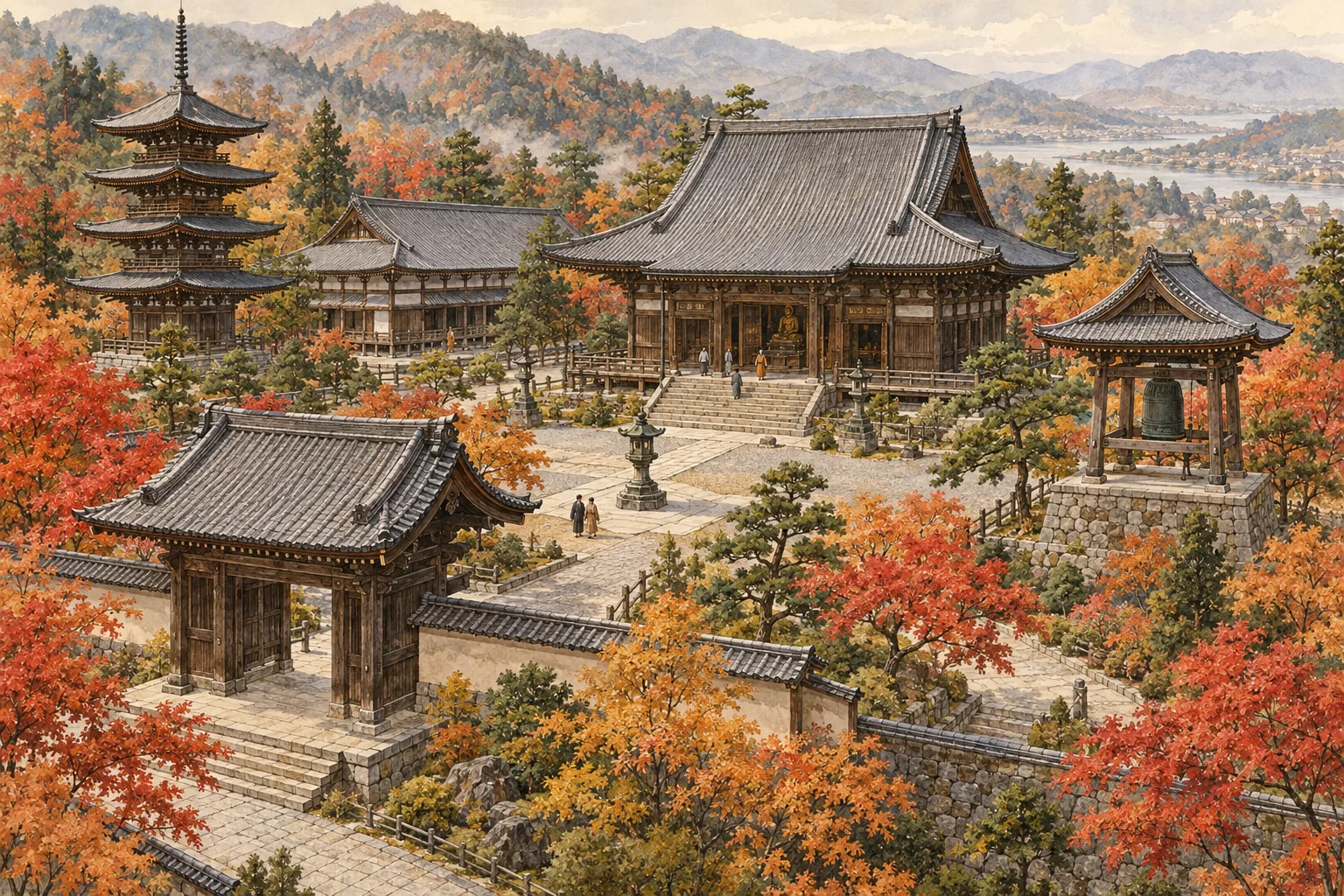
what the buildings at a temple are
寺の伽藍(てらのがらん)
In one line
The shortest answer that works
Tera no garan, the buildings of a temple, are halls laid out to a plan, each with its own job.
寺の伽藍とは、寺の境内に一定の配置で建てられた、それぞれ役目を持つ建物のことです。
In 30 seconds
The standard explanation
A Japanese temple is a compound of buildings with distinct functions: a main gate, a main hall holding the principal image, a lecture hall, a bell tower, and often a pagoda. The pagoda is not a hall for worshippers but a monument descended from the Indian burial mound that held the Buddha's relics.
日本の寺は、それぞれ役目の違う建物でできた境内です。山門、本尊を安置する本堂、講堂、鐘楼、そして多くは塔があります。塔は参拝者が入って拝む堂ではなく、釈迦の遺骨を納めたインドの塚にさかのぼる記念の建物です。
As a short speech
A full paragraph you can read aloud
A Japanese temple is not one building but a compound, and once you know what each part is, the layout becomes readable. You enter through a gate, often with two fierce guardian figures standing in it whose open and closed mouths work exactly like the pair at a shrine.
Inside there is a main hall housing the principal image, which is the object of worship, and at older temples a lecture hall where monks studied. There is a bell tower, and at many temples the bell is struck one hundred and eight times on New Year's Eve. There may be a pagoda with three or five roofs.
The pagoda is the part most people misread: you usually cannot go in and worship there, because it is not a hall but a monument, descended from the Indian stupa that enclosed relics of the Buddha, and at early pagodas relics were placed in the foundation stone under the central pillar. There is also a basin for rinsing your hands, and often a large incense burner where visitors waft smoke toward themselves.
日本の寺は一つの建物ではなく境内であり、どの部分が何かを知ると、その配置が読めるようになります。入口は門で、恐ろしい姿の二体の守護の像が立っていることが多く、開いた口と閉じた口の組み合わせは、神社の一対とまったく同じ考え方によります。
中に入ると、拝む対象である本尊を安置する本堂があり、古い寺には僧が学んだ講堂があります。鐘楼があり、多くの寺ではその鐘が大晦日に百八回撞かれます。三重や五重の塔が建っていることもあります。塔は多くの人が読み違える部分です。
ふつうは中に入って拝む場所ではありません。それは堂ではなく記念の建物で、釈迦の遺骨を納めたインドの塔にさかのぼります。古い塔では、心柱の下の礎石に舎利が納められました。手を清める水盤もあり、参拝者が煙を自分に扇ぎ寄せる大きな香炉が置かれていることもよくあります。
Questions people actually ask
And how to answer them.
Can I go inside the pagoda?
Usually not. It is a monument rather than a hall, with little interior space designed for worshippers, and most are kept closed. Some are opened on special occasions, when you can see Buddhist images or paintings on the first floor; the upper stories are mostly structure.
ふつうは入れません。堂ではなく記念の建物で、参拝者のための内部の空間はほとんどなく、多くは閉じられています。特別な機会に公開されるものもあり、そのときは初層の仏像や壁画を見られます。上の層はほぼ構造だけです。
What is the big incense burner for?
You buy a bundle of incense, light it, stand it in the burner, and then waft the smoke toward yourself, traditionally toward a part of the body you want helped. It is a folk practice rather than doctrine, and nobody minds if you skip it.
束の線香を買って火をつけ、香炉に立て、その煙を自分に扇ぎ寄せます。伝統的には治したい体の部分に当てます。教義というより民間の習わしなので、やらなくても誰も気にしません。
A common misunderstanding
MYTHA pagoda is a tower you climb or worship inside.
FACTIt descends from the Indian stupa, a monument built over relics. The first floor may hold Buddhist images, but it is rarely open, and the upper stories are mostly the central pillar and the roofs.
Phrases you can use
- The main hall holds the principal image.本堂に本尊が安置されています。
- You can't go inside the pagoda.塔の中には入れません。
- The bell is struck 108 times at New Year.鐘は大晦日に108回撞きます。
- Waft the incense smoke toward yourself.香の煙を自分に扇ぎ寄せます。
Words you need
- main hall本堂
- gate山門
- pagoda塔
- bell tower鐘楼
Watch
From YouTubeBackground (Japanese)
伽藍はサンスクリット語で僧の集まる場所を意味する語に由来します。塔はインドのストゥーパが中国と朝鮮を経て日本で木造の多層の形になったもので、中心を貫く心柱が地震に強い理由のひとつとされています。法隆寺の五重塔は現存する世界最古級の木造建築のひとつです。大晦日に撞く除夜の鐘は百八の煩悩を除くとされ、多くの寺で一般の参拝者も撞けます。門に立つ二体は仁王と呼ばれ、阿吽の姿をとります。