karesansui
the dry landscape garden
枯山水(かれさんすい)
In one line
The shortest answer that works
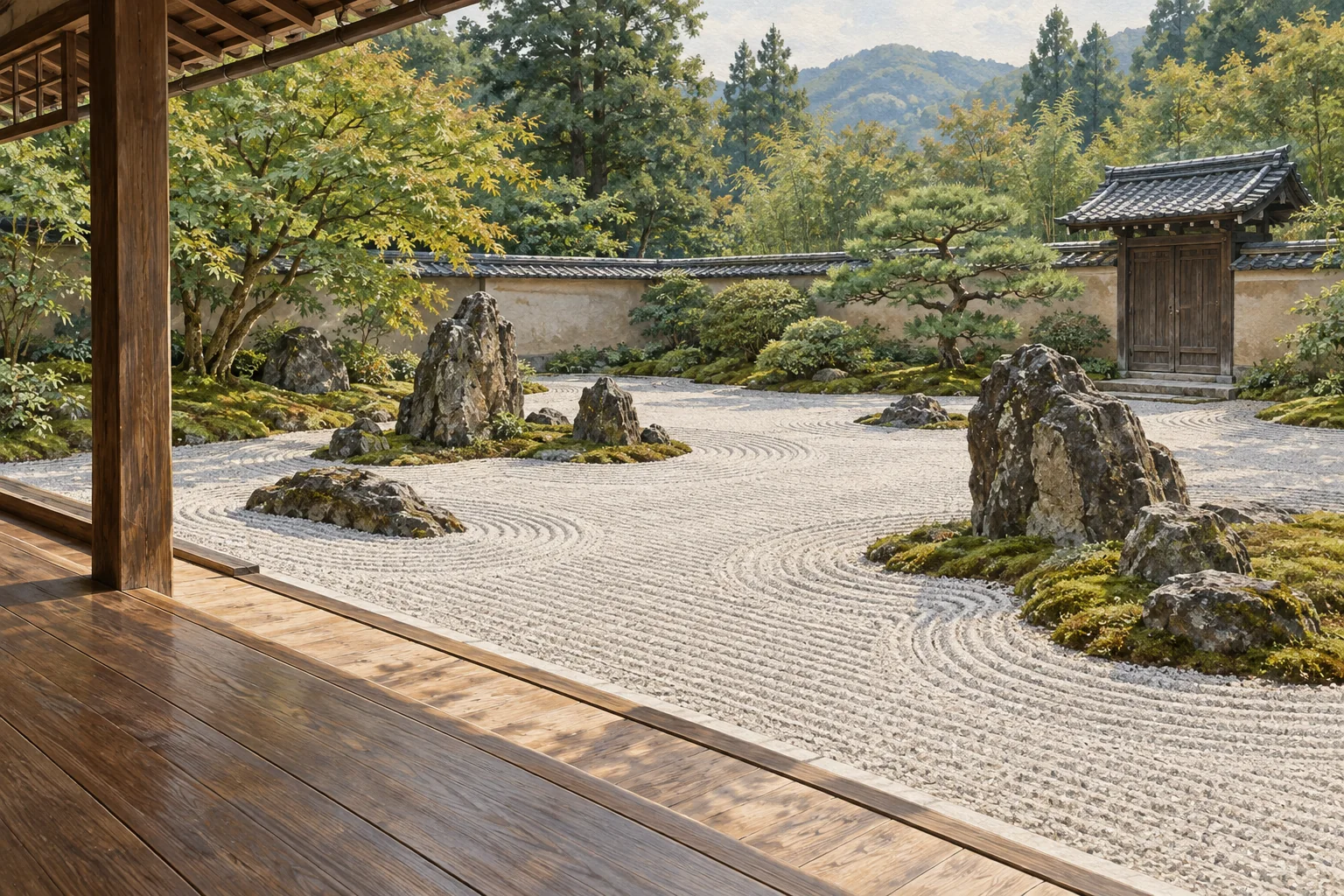
A karesansui is a garden of stone and raked gravel that represents water without using any.
枯山水とは、水を使わずに石と掻いた砂利で水を表す庭です。
In 30 seconds
The standard explanation
A karesansui is a dry garden, usually attached to a Zen temple. White gravel is raked into lines to suggest water, and stones set in it stand for islands, mountains or waterfalls. There are usually no plants beyond moss, and the garden is meant to be viewed from a seated position on the veranda rather than walked through.
枯山水とは、たいてい禅寺に付属する水を使わない庭です。白い砂利に筋を掻いて水を思わせ、そこに据えた石が島や山、滝を表します。苔のほかに植物はほとんどなく、庭は歩き回るのではなく、縁に座って眺めるように作られています。
As a short speech
A full paragraph you can read aloud
A karesansui is a dry landscape garden, the kind you find at a Zen temple: a rectangle of white gravel raked into parallel lines, a few stones set into it, a low wall around it, and usually not a single flower. The gravel stands for water, the raked lines for its movement, and the stones for islands, mountains or a waterfall. It is designed to be looked at from one position, sitting on the wooden veranda of the hall, so it is composed like a picture rather than like a place.
The most famous example is a temple garden in Kyoto with fifteen stones in five groups, said to be arranged so that from any point on the veranda at least one stone is hidden from view, which is usually explained as a lesson that one cannot see the whole of anything. The gravel is raked by the monks, and the pattern is renewed regularly, which is part of the practice rather than maintenance.
枯山水は水を使わない庭で、禅寺で目にする種類のものです。白い砂利の長方形に平行な筋を掻き、いくつかの石を据え、低い塀で囲み、花は一輪もないのがふつうです。砂利は水を、掻いた筋はその動きを、石は島や山、滝を表します。
堂の縁に座った一点から眺めるように設計されているので、場所というより絵のように組み立てられています。最も名高い例は京都の寺の庭で、十五の石が五つの群れに置かれ、縁のどこから見ても必ず一つは見えないように配されているとされます。
これはふつう、人は何ごとの全体をも見通せないという教えとして説明されます。砂利を掻くのは僧の仕事で、筋は定期的に引き直されます。それは手入れというより修行の一部です。
Questions people actually ask
And how to answer them.
What do the raked lines mean?
They represent water: straight lines for a calm surface, curved or circular lines around a stone for ripples and current. The pattern is redrawn regularly, and different temples use different styles of raking.
水を表します。直線は静かな水面、石のまわりの曲線や同心円は波紋や流れです。筋は定期的に引き直され、寺ごとに掻き方の様式が違います。
Am I allowed to walk on the gravel?
No. The gravel surface is the garden, and a footprint destroys the pattern that someone raked that morning. View it from the veranda, sitting down if there is space, and do not lean over the edge to photograph.
いけません。砂利の面こそが庭であり、足跡はその朝に誰かが掻いた模様を壊します。縁から眺め、場所があれば腰を下ろして見てください。撮影のために身を乗り出さないでください。
A common misunderstanding
MYTHThe dry garden is a puzzle with a hidden meaning to solve.
FACTTemples generally do not publish a single official reading. The stone arrangements have attracted many interpretations over the centuries, and the one you hear from a guide is usually one tradition among several.
Phrases you can use
- The gravel represents water.砂利が水を表しています。
- The stones are mountains or islands.石は山や島です。
- Please don't step on the gravel.砂利には入らないでください。
- It's meant to be viewed sitting down.座って眺めるように作られています。
Words you need
- dry garden枯山水
- gravel砂利
- to rake掻く
- veranda縁側
Watch
From YouTubeBackground (Japanese)
枯山水は室町時代の禅宗寺院で発展したとされ、京都の龍安寺の石庭がとくに知られています。龍安寺の庭は十五の石を五群に配し、縁のどの位置からも必ず一つは他の石に隠れて見えないと説明されます。作庭者も作られた年代も確定しておらず、意味についても諸説あります。砂利を掻く作業は「砂紋」を引くと呼ばれ、雨のあとや落ち葉の季節には手間が増えます。海外の美術館や庭園にも枯山水を模した庭が作られています。