ma
the meaningful gap
間(ま)
In one line
The shortest answer that works
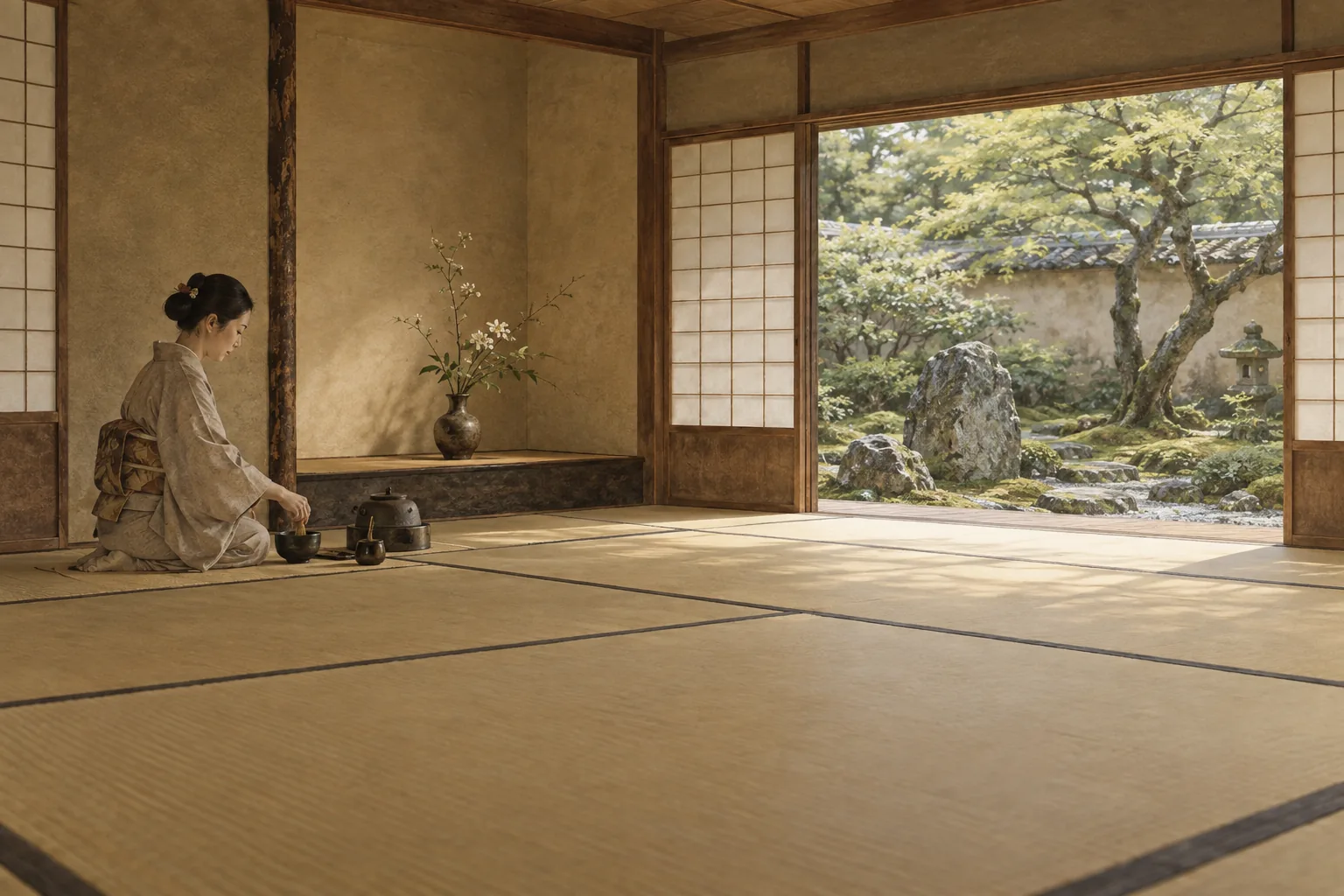
Ma is the interval between things, treated as something with its own meaning rather than as emptiness.
間とは物と物の隔たりのことで、空白ではなくそれ自体が意味を持つものとして扱われます。
In 30 seconds
The standard explanation
Ma is the gap: the pause between two lines of dialogue, the empty area in a painting, the space between the stones in a garden, the silence before a punchline. Japanese aesthetics treat these intervals as active rather than as absence. The same character is used in everyday words for room, timing and interval.
間とは隔たりのことです。台詞と台詞の間の沈黙、絵の余白、庭の石と石の距離、落ちの前の静けさ。日本の美意識はこの隔たりを、欠けている状態ではなく、働いているものとして扱います。同じ字が、部屋、頃合い、区切りといった日常の語にも使われます。
As a short speech
A full paragraph you can read aloud
Ma is usually translated as space or interval, but the point of the word is that the gap is not nothing. In a rakugo performance the laugh depends less on the words than on the length of the pause before the last line.
In a noh play an actor may stand almost still for a long stretch, and that stillness is the performance. In a garden, the distance between two stones is composed as carefully as the stones. In ink painting the unpainted paper is part of the picture, not the part left over.
Japanese speakers use the same character for a room, for timing, and in everyday words for bad timing and for a fool. When people say Japanese conversation contains more silence, ma is part of what they are describing: a pause is not necessarily a failure to speak, and filling every gap can read as not listening.
間はふつう空間とか間隔と訳されますが、この語の肝心なところは、その隔たりが無ではないという点です。落語では、笑いは言葉よりも、落ちの前の沈黙の長さで決まります。能では、役者が長い間ほとんど動かずに立っていることがあり、その静止こそが演技です。
庭では、二つの石の距離が、石そのものと同じだけ入念に組み立てられます。水墨画では、描かれていない紙が絵の一部であって、余ったところではありません。日本語ではこの字を、部屋にも、頃合いにも使い、間が悪い、間抜けといった日常の言い方にも使います。
日本語の会話には沈黙が多いと言われるとき、その一部がこの間です。沈黙は必ずしも話し損ねたことではなく、隙間をすべて埋めることが、聞いていない印に読まれることもあります。
Questions people actually ask
And how to answer them.
Is this just a fancy word for silence?
No, because it applies to space as much as to time. The gap between two rocks, the empty corner of a painting and the pause before a line are all ma. The common element is an interval that has been shaped deliberately.
違います。時間だけでなく空間にも当てはまるからです。二つの石の距離、絵の空いた隅、台詞の前の沈黙は、どれも間です。共通しているのは、意図してかたちを与えられた隔たりだということです。
How does this affect talking with Japanese people?
Pauses in conversation are often longer than English speakers expect, and rushing to fill them can feel like pressure. Leaving a beat after someone finishes is read as considering what they said, not as awkwardness.
会話の沈黙は、英語話者が思うより長いことが多く、急いで埋めると圧に感じられることがあります。相手が話し終えたあとに一拍置くのは、気まずさではなく、言われたことを考えている印として読まれます。
Phrases you can use
- The pause is part of the performance.間も演技のうちです。
- The empty space is composed too.余白も構成のうちです。
- Don't rush to fill the silence.沈黙を急いで埋めなくていいです。
- His timing was off.間が悪かったです。
Words you need
- interval / pause間
- empty space余白
- timing頃合い
- silence沈黙
Watch
From YouTubeBackground (Japanese)
「間」の字は部屋を数える単位にも使われ、和室の「六畳間」のように言います。「間が悪い」は頃合いが合わないこと、「間抜け」は肝心なところが抜けていることを指し、どちらも芸能の言葉から広がったとされます。落語や漫才では「間」が技量そのものと見なされ、同じ台詞でも演者によってまったく笑いが変わります。建築では柱と柱の距離を「一間」と呼び、これが畳や建具の寸法の基準になりました。