mono no aware
the sadness of passing things
もののあはれ(もののあはれ)
In one line
The shortest answer that works
Mono no aware is the gentle sadness felt at the passing of things, and the beauty in that passing.
もののあはれとは、移ろうものに触れたときの静かな悲しみと、その移ろいの中にある美しさのことです。
In 30 seconds
The standard explanation
Mono no aware is a sensitivity to the transience of things and the quiet emotion it produces: cherry blossoms falling, a season ending, a person growing old. It is not grief and not pessimism. The scholar Motoori Norinaga used it in the eighteenth century to describe what he saw as the heart of The Tale of Genji.
もののあはれとは、移ろうものへの感じやすさと、そこから生まれる静かな心の動きのことです。散る桜、終わる季節、老いていく人。嘆きでも悲観でもありません。18世紀の学者、本居宣長が『源氏物語』の核心と見たものを表すために用いた語です。
As a short speech
A full paragraph you can read aloud
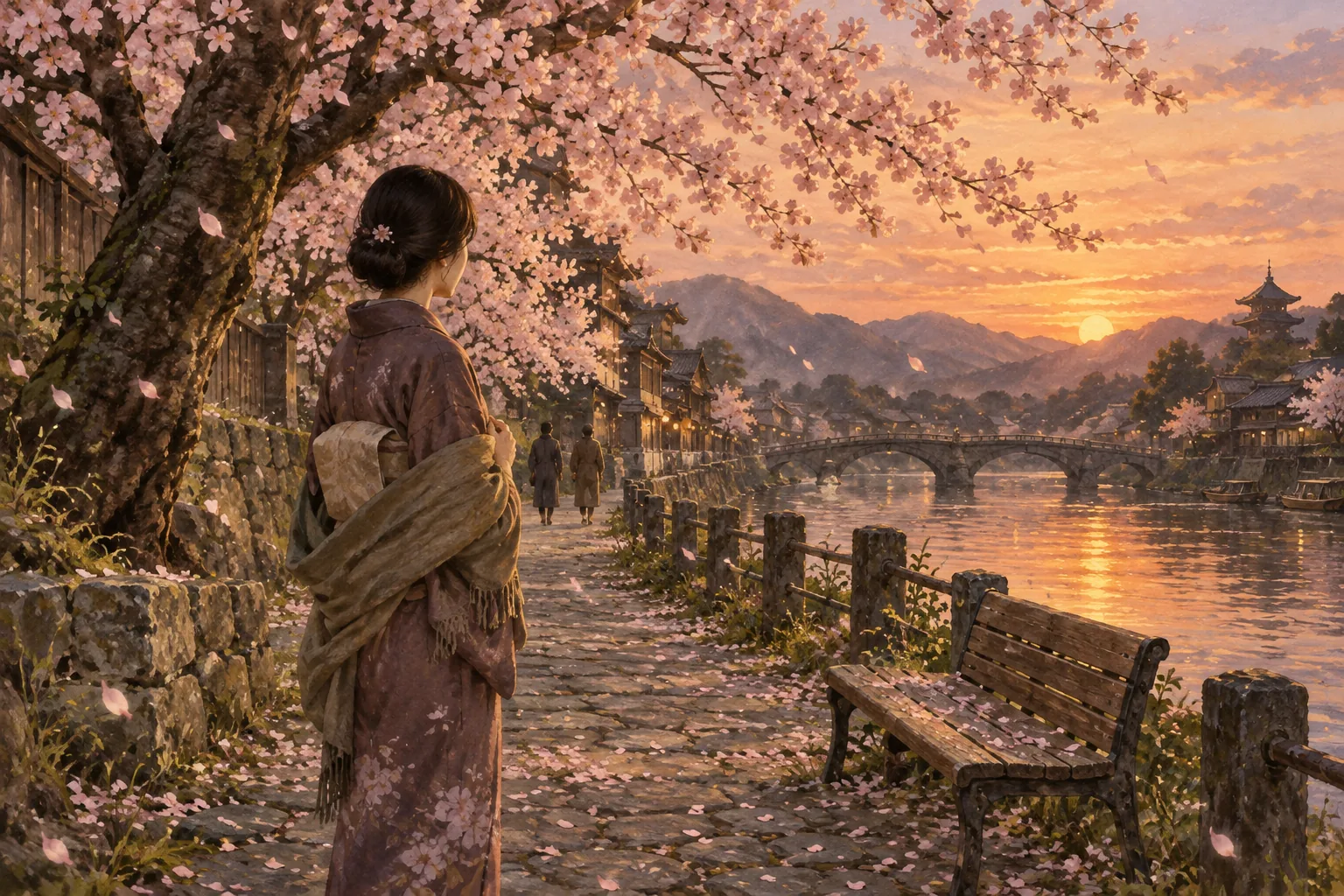
Mono no aware is usually translated as the pathos of things, and it names a particular emotional response: the quiet ache you feel when something beautiful is clearly passing. Cherry blossoms are the standard example, and the point is that they are loved because they fall, not despite it.
The same feeling attaches to the end of summer, to an old photograph, to the last day of a job you disliked. It is not grief, which is heavier, and it is not pessimism, which is a judgment. It is closer to being moved.
The term was given its modern weight by Motoori Norinaga in the eighteenth century, who argued that the value of The Tale of Genji lay not in moral teaching but in its depiction of this sensitivity. Understanding this helps explain a lot of Japanese art: why flowers are often admired most just as they are about to fall, and why a story can end without resolution and still feel complete.
もののあはれはふつう、物の哀れと訳され、ある特定の心の動きを名指します。美しいものが明らかに過ぎ去ろうとしているときに感じる、静かな痛みです。桜がその定番の例で、肝心なのは、散るにもかかわらずではなく、散るからこそ愛されているという点です。
同じ感じは、夏の終わりにも、古い写真にも、嫌だった仕事の最後の日にも生じます。嘆きではありません。嘆きはもっと重いものです。悲観でもありません。悲観は判断だからです。心を動かされることに近いものです。
この語に今日の重みを与えたのは18世紀の本居宣長で、『源氏物語』の価値は道徳の教えにではなく、この感じやすさを描いたことにあると論じました。これが分かると、日本の芸術の多くが腑に落ちます。花がなぜ、散り際にこそいちばん讃えられることが多いのか。物語がなぜ、決着しないまま終わっても完結して感じられるのか。
Questions people actually ask
And how to answer them.
How is it different from wabi-sabi?
Wabi-sabi is about the beauty of things that are imperfect, worn or plain, and it is largely an aesthetic of objects. Mono no aware is about your emotional response to transience. They overlap but are not the same word.
侘び寂びは、不完全で古び、素朴なものの美しさについての語で、おもに物の美意識です。もののあはれは、移ろいに対する心の動きのほうを指します。重なりはありますが、同じ語ではありません。
Do Japanese people actually use this phrase?
Rarely in conversation. It is a literary and academic term that most people meet in school when studying classical literature. The feeling is common, the phrase is not, so using it casually will sound bookish.
会話ではまず使いません。文学や学問の用語で、多くの人は古典を学ぶ授業で出会います。感じ方そのものはありふれていますが、語のほうはそうではないので、日常で使うと硬く聞こえます。
A common misunderstanding
MYTHMono no aware means Japanese people are melancholic.
FACTIt describes being moved by transience, which sits alongside enjoyment rather than replacing it. Cherry blossom season is loud, crowded and cheerful while also being about things ending.
Phrases you can use
- The blossoms are loved because they fall.桜は散るからこそ愛されます。
- It's being moved, not being sad.悲しみというより、心を動かされることです。
- It's a literary term, not everyday speech.日常語ではなく文学の用語です。
- A story can end without resolving.物語は決着しないまま終わってもいいのです。
Words you need
- transience移ろい
- to be moved心を動かされる
- impermanence無常
- sensitivity感受性
Watch
From YouTubeBackground (Japanese)
「あはれ」はもともと感嘆の声で、喜びにも悲しみにも使われた語でした。それが次第に、しみじみとした情趣を指すようになります。本居宣長は『源氏物語玉の小櫛』などで、物語の本質は道徳の教訓ではなく、もののあはれを知ることにあると論じました。この考え方は、仏教の無常観とも重なります。現代語の「あわれ」は気の毒という意味に寄っているため、古語の「あはれ」とは語感が異なります。