ishidoro to tsukubai
the stone furniture of a Japanese garden
石灯籠と蹲踞(いしどうろうとつくばい)
In one line
The shortest answer that works
Ishidoro to tsukubai, a garden's stone lantern and low water basin, are fixtures that began as working objects, not ornaments.
石灯籠と蹲踞とは、日本庭園の灯籠と低い手水鉢で、どちらも飾りではなく実際に使うものとして始まったものです。
In 30 seconds
The standard explanation
A stone lantern originally held an oil light offered at a temple or shrine, and it moved into gardens when tea masters began holding gatherings after dark. A tsukubai is a low basin you have to crouch at to rinse your hands and mouth before entering a tea room. Both were chosen for weathering: moss and worn edges are the point, not neglect.
石灯籠は、もとは寺社に献じる灯りを収めるもので、茶人が日暮れ後の茶会を催すようになって庭に入りました。蹲踞は、身をかがめなければ使えない低い水鉢で、茶室に入る前に手と口をすすぎます。どちらも古びることを見込んで選ばれます。苔や角の丸みは、手入れの不足ではなく、狙ったものです。
As a short speech
A full paragraph you can read aloud
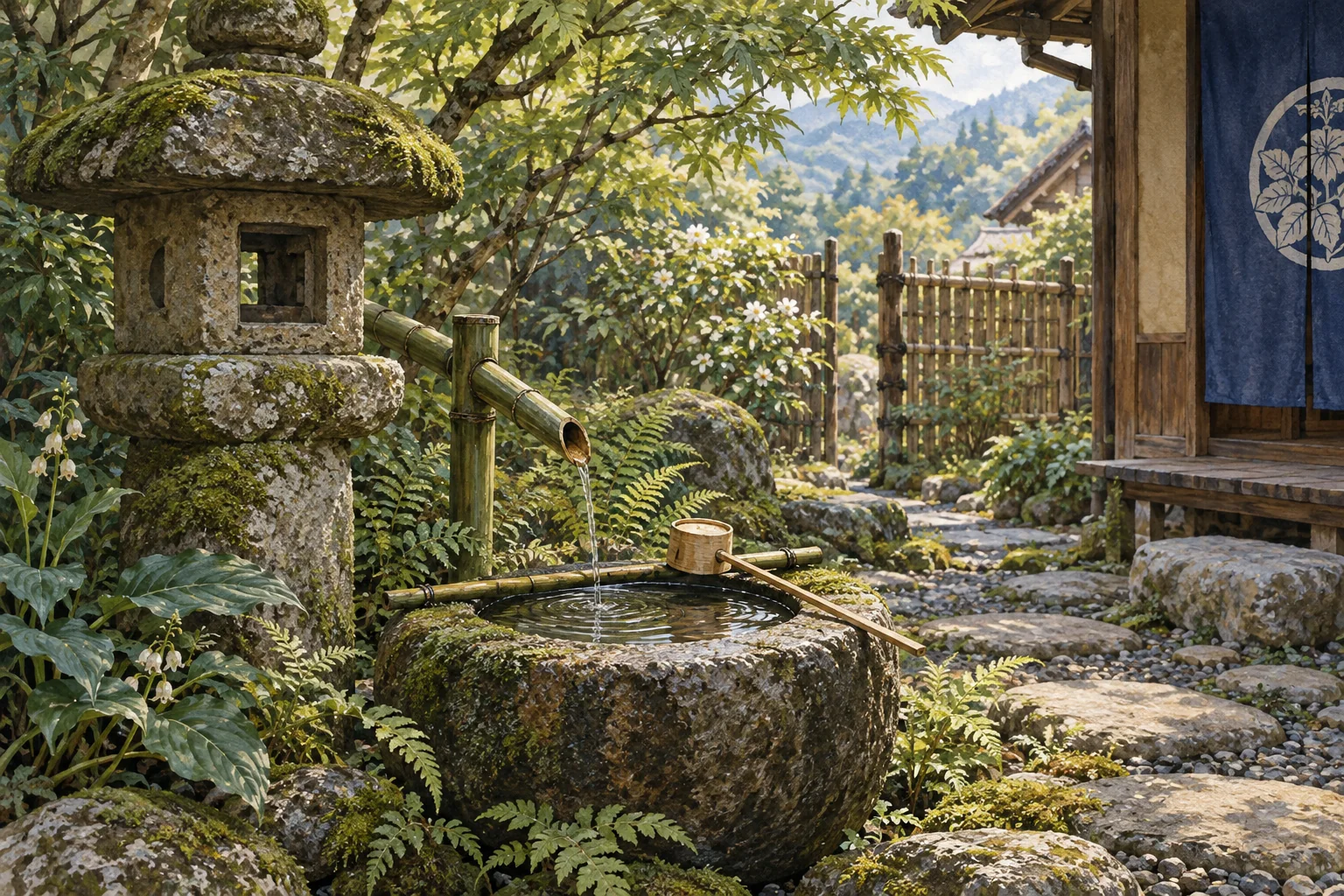
Two stone objects turn up in almost every Japanese garden and both have jobs. The lantern came first as a religious offering, a stone housing for a light placed before a hall, and rows of them still line the approaches to old shrines.
Tea masters of the sixteenth century, holding gatherings that ran into the evening, brought them into gardens to light the path, and garden lanterns then developed into named types: a tall one on a single post, and a low one on legs with a broad cap, often set by a pond, for viewing snow. The basin is the other one.
Before entering a tea room a guest rinses hands and mouth, and the basin is deliberately set low so that everyone has to crouch, which is the same leveling idea as the low doorway. One famous example at a Kyoto temple is cut so that four characters around a square hole read, with the hole standing in for a shared element, as a sentence meaning that one already has enough.
日本庭園にはほぼ必ず二つの石の道具があり、どちらにも役目があります。先にあったのは灯籠で、堂の前に置かれる灯りのための石の器でした。古い神社の参道に、今も並んで立っています。十六世紀の茶人たちは、日が暮れてからの茶会のために、これを庭に持ち込んで道を照らしました。
庭の灯籠はやがて型に分かれます。一本の竿の上に載る背の高いもの、そして脚の上に広い笠を載せ、池のほとりによく据えられる、雪を眺めるための低いもの。もう一つが水鉢です。茶室に入る前、客は手と口をすすぎます。
この鉢はわざと低く据えられ、誰もがかがまなければ使えません。低いにじり口と同じ、人を並べる考え方です。京都のある寺の有名な水鉢は、四角い穴の周りの四つの字が、その穴を共通の部分として読めるように彫られており、足ることを知っている、という意味の一文になります。
Questions people actually ask
And how to answer them.
Are the lanterns ever lit?
Occasionally. Some temples and gardens hold evening events with candles or small lights inside, and shrine approaches are lit for festivals. Day to day they stand unlit, and many garden lanterns are purely decorative and have never held a flame.
たまにあります。寺や庭園が夕方の催しで蝋燭や小さな灯りを入れることがあり、祭りのときは参道の灯籠にも火が入ります。ふだんは灯さず、庭の灯籠には一度も火を入れないものも多くあります。
Should I use the basin?
Only if you are entering a tea room as a guest, or where a sign invites you. In an ordinary garden it is there to be looked at, and the ladle resting across it is part of the composition.
茶室に客として入るときか、そう案内があるときだけです。ふつうの庭では見るためのもので、鉢に渡してある柄杓も景色の一部です。
Why is everything covered in moss?
Because it is wanted. Stone is chosen and placed so that it will weather, and moss is encouraged, watered and sometimes planted. A new, clean lantern is considered unfinished rather than smart.
そうあってほしいからです。石は古びることを見込んで選ばれ、置かれます。苔は歓迎され、水をやり、植えることもあります。新しく汚れのない灯籠は、立派というより、まだ出来上がっていないと見られます。
Phrases you can use
- The lantern used to hold a real light.灯籠には実際に灯りが入っていました。
- You have to crouch to use the basin.蹲踞はかがまないと使えません。
- The moss is deliberate.苔はわざとそうしています。
- Please do not climb on the stones.石に上らないでください。
- That type is for viewing snow.あの形は雪見のためのものです。
Words you need
- stone lantern石灯籠
- low water basin蹲踞
- ladle柄杓
- stepping stone飛石
- moss苔
Watch
From YouTubeBackground (Japanese)
石灯籠は、寺社に灯明を献じるための石造の器として広まり、古い神社の参道には寄進された灯籠が並びます。庭に取り入れたのは茶人で、夜の茶会の足元を照らす必要からとされます。型には、竿の高い春日型、笠が広く脚のある低い雪見型(池のほとりに据えることが多い)などがあります。蹲踞は茶室に入る前に手と口を清める低い水鉢で、かがむ姿勢そのものに意味があります。京都の龍安寺に伝わる水鉢は、中央の四角い口を共通の部分として四字が読める形で知られます。