komainu
the guardian pair at a shrine
狛犬(こまいぬ)
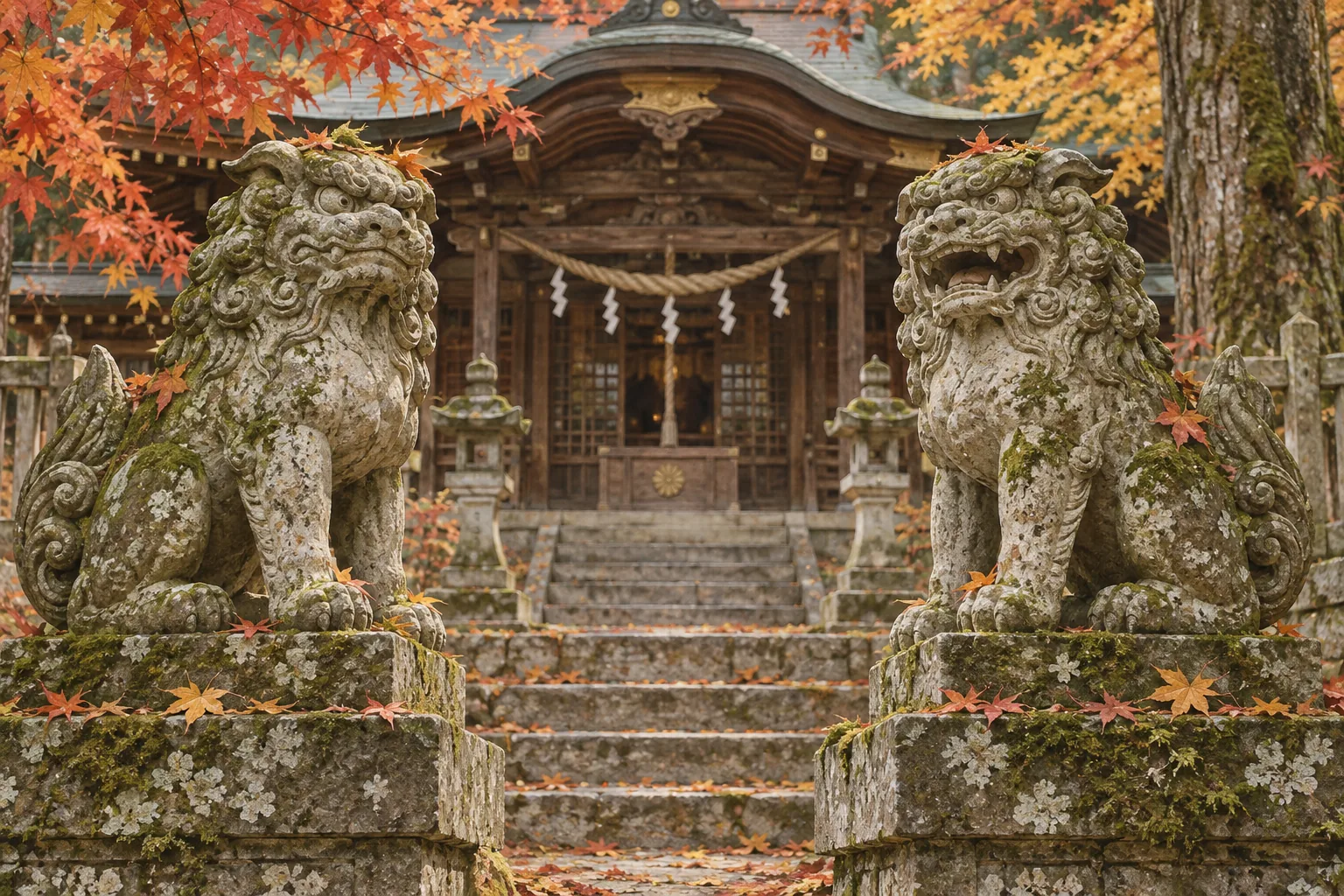
In one line
The shortest answer that works
Komainu are the pair of stone guardians at a shrine, one with its mouth open and one closed.
狛犬とは神社の入口に置かれた一対の石像で、片方は口を開き、片方は閉じています。
In 30 seconds
The standard explanation
Komainu are the two stone animals that sit at the entrance to a Japanese shrine, facing the visitor. They look like lions or dogs. Look at the mouths: one is open and one is closed. The open one is said to be sounding the first letter and the closed one the last, so the pair together stands for everything from beginning to end.
狛犬とは、日本の神社の入口で参拝者のほうを向いて据えられた二体の石の獣です。獅子とも犬ともつかない姿をしています。口を見てください。片方は開き、片方は閉じています。開いたほうは最初の音を、閉じたほうは最後の音を発しているとされ、二体で初めから終わりまですべてを表します。
As a short speech
A full paragraph you can read aloud
Komainu are the pair of stone beasts guarding the approach to a Japanese shrine. They are usually described as lion-dogs, and the tradition traveled a long way: lion guardians came from India through China and Korea before settling into this Japanese form. The detail worth pointing out to a visitor is the mouths.
One has its mouth open and one has it shut. The open one is said to be sounding a, the first sound, and the closed one un, the last, so between them they contain the whole alphabet and by extension everything that exists. The same pairing appears in the guardians at temple gates.
Strictly speaking only one of the two is the komainu and the other is a lion, though almost nobody makes that distinction now. They also vary enormously by region and by the stone carver, so once you start looking at them, no two shrines are quite the same.
狛犬は日本の神社の参道を守る一対の石の獣です。ふつうは獅子と犬を合わせたような姿と説明され、この伝統は遠い道のりを経てきました。獅子の守護像はインドから中国、朝鮮を経て、日本のこの形に落ち着きました。
訪れた人に教えるとよいのは口の形です。一方は口を開き、他方は閉じています。開いたほうは最初の音である「あ」を、閉じたほうは最後の音である「ん」を発しているとされ、二体で音の全体を、ひいては存在するものすべてを表します。
同じ組み合わせは寺の門の仁王にも見られます。厳密には二体のうち一方だけが狛犬で、もう一方は獅子ですが、今その区別をする人はほとんどいません。姿は地域や石工によって大きく違うので、気にして見始めると、同じ神社は二つとありません。
Questions people actually ask
And how to answer them.
Are they dogs or lions?
Both, in a sense. The form came from lion guardians brought in from the continent, and the Japanese name refers to a beast from Korea. In the strict old distinction, the one with the open mouth is a lion and the horned one with the closed mouth is the komainu.
ある意味でどちらもです。形は大陸から入った獅子の守護像に由来し、日本語の名は朝鮮から来た獣を指しています。古い厳密な区別では、口を開いたほうが獅子、角があり口を閉じたほうが狛犬です。
Why are some of them foxes or other animals?
Because the guardian follows the deity. Shrines to Inari have foxes, some have monkeys, wolves, horses, cows or rabbits, depending on which animal is associated with the god enshrined there. The pairing and the open and closed mouths usually stay the same.
守り手は祀られる神に従うからです。稲荷の社は狐、ほかに猿、狼、馬、牛、兎などがあり、その神と結びついた動物が置かれます。一対であることと、開いた口と閉じた口の組み合わせはたいてい変わりません。
Phrases you can use
- One has its mouth open, one closed.片方は口を開け、片方は閉じています。
- Together they mean beginning and end.二体で始まりと終わりを表します。
- At Inari shrines they're foxes instead.稲荷の社では狐になります。
- Every shrine's pair looks a little different.神社ごとに少しずつ姿が違います。
Words you need
- guardian statue守護の像
- stone carving石彫
- a pair一対
- approach (to a shrine)参道
Watch
From YouTubeBackground (Japanese)
口を開いた「阿形」と閉じた「吽形」の組み合わせは、梵字の最初と最後の音に由来するとされ、寺の仁王像や、獅子舞の獅子頭にも同じ考え方が使われています。「阿吽の呼吸」という言い回しも、この「阿吽」から生まれました。狛犬は江戸時代に石造のものが各地に広まり、地元の石工が腕を競ったため、姿の違いを見て歩く愛好家がいます。角のある狛犬、子を連れた狛犬、玉を踏んだ狛犬など、意匠には型があります。