miyadaiku
temple and shrine carpenters
宮大工(みやだいく)
In one line
The shortest answer that works
Miyadaiku are carpenters who specialize in building and repairing temples and shrines.
宮大工とは、寺社の建築と修理を専門とする大工です。
In 30 seconds
The standard explanation
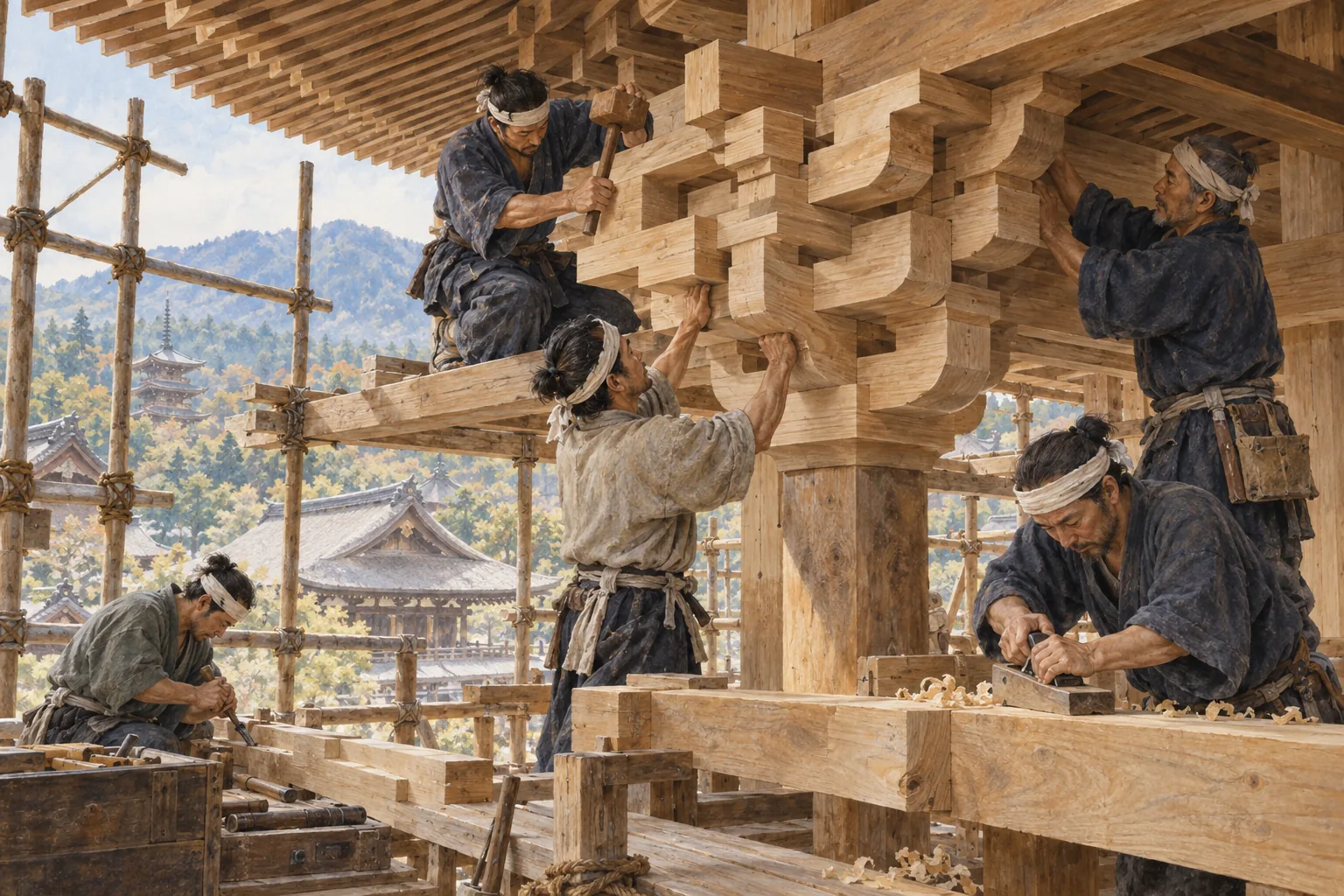
Miyadaiku are carpenters trained specifically in temple and shrine construction, using traditional joinery and hand tools. Much of their work is repair: buildings are periodically dismantled, decayed members replaced and the structure reassembled. Training is long and largely conducted on site under a master.
宮大工とは、寺社の建築を専門に修めた大工で、伝統的な木組みと手道具を用います。仕事の多くは修理です。建物は定期的に解体され、傷んだ部材が取り替えられ、構造が組み直されます。修業は長く、その多くは棟梁のもと、現場で行われます。
As a short speech
A full paragraph you can read aloud
Miyadaiku are carpenters who specialize in temples and shrines, and their work is unlike ordinary construction in one decisive way: most of it is repair rather than new building. A major temple hall is periodically taken apart down to the frame, each timber is examined, decayed pieces are replaced with new wood cut to the same joints, and the building is reassembled.
That process is also how the knowledge is transmitted. Dismantling a structure built four hundred years ago means reading the decisions of the carpenters who made it, and their solutions enter the vocabulary of the people doing the repair.
Training is long, served under a master on site rather than in a classroom, and includes setting up and maintaining your own tools, since a plane has to be tuned and sharpened by the person who uses it. The number of people qualified to this level is small, and maintaining the supply of both craftsmen and suitable old-growth timber is a recognized problem.
宮大工は寺社を専門とする大工で、その仕事はふつうの建築とひとつ決定的に違います。多くが新築ではなく修理だということです。大きな堂は定期的に骨組みまで解体され、一本ずつ木材が調べられ、傷んだ部材は同じ継手に刻んだ新しい木と取り替えられ、そして組み直されます。
この過程は、技を伝える手立てでもあります。四百年前に建てられた構造を解くことは、それを造った大工たちの判断を読み取ることであり、その解き方が、修理に携わる者の語彙に入っていきます。
修業は長く、教室ではなく現場で棟梁のもとに就いて行われ、自分の道具を仕立てて手入れすることも含みます。鉋は、使う本人が調整し、研がなければならないからです。この水準の担い手は数が少なく、職人と、適した古木の双方をどう確保するかが、認識された課題になっています。
Questions people actually ask
And how to answer them.
Why are buildings dismantled rather than just patched?
Because decay in a wooden frame is often internal, in the joints and at the base of columns, and cannot be judged from outside. Taking the frame apart is the only way to inspect it properly and replace what has failed.
木の骨組みの傷みは、継ぎ目や柱の根元など内側に生じることが多く、外からは判断できないからです。骨組みを解くことが、きちんと調べて傷んだ部分を取り替える唯一の方法です。
Is the craft dying out?
It is under pressure rather than gone. There are fewer practitioners, and suitable large old timber is hard to source, so some temples and shrines grow their own forests. The traditional building skills were added to UNESCO's intangible heritage list in 2020.
消えたのではなく、圧力を受けています。携わる人は減り、適した大きな古木も手に入りにくいため、自ら森を育てている寺社もあります。伝統建築の技は2020年にユネスコの無形文化遺産に登録されました。
Phrases you can use
- Most of the work is repair.仕事の多くは修理です。
- The frame is taken apart and inspected.骨組みを解いて調べます。
- They tune and sharpen their own tools.道具は自分で仕立て、研ぎます。
- Training is done on site under a master.修業は現場で棟梁のもとに就いて行います。
Words you need
- master carpenter棟梁
- apprenticeship弟子入り
- to restore修復する
- plane (tool)鉋
Watch
From YouTubeBackground (Japanese)
寺社の建物は数十年から数百年ごとに大規模な修理を行い、これを解体修理と呼びます。部材を取り替えながら建物を保つ考え方は、伊勢神宮の式年遷宮のように、定期的に建て替えることで技を伝える仕組みとも通じます。宮大工は鉋や鑿を自分で仕立て、木の性質を見て使う場所を決めます。2020年には「伝統建築工匠の技」としてユネスコの無形文化遺産に登録され、大工だけでなく、屋根、左官、畳など十七の技術が対象になりました。