kanchu mimai
the midwinter greeting card
寒中見舞い(かんちゅうみまい)
In one line
The shortest answer that works
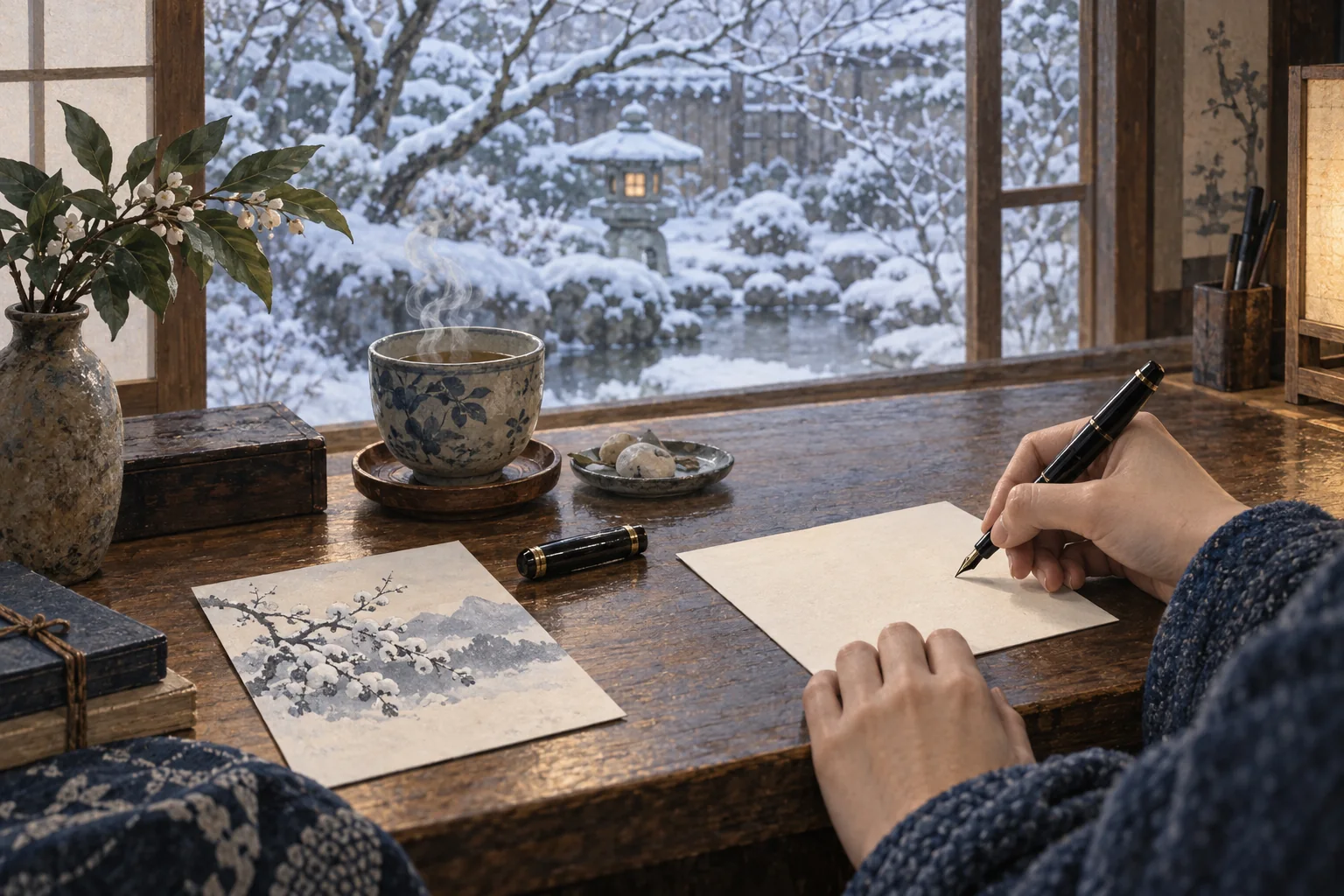
A kanchu mimai is a midwinter card sent after the New Year period, often when a New Year card would be wrong.
寒中見舞いとは、松の内が明けてから出す冬の便りで、年賀状がふさわしくない場合によく使われます。
In 30 seconds
The standard explanation
Kanchu mimai are cards sent in the coldest part of winter, roughly from the 8th of January to early February. They are used to reply to someone in mourning who could not exchange New Year cards, to apologize for a late reply, to inform people of a death that happened at year end, or simply to ask after someone's health in the cold. The design is quiet, without the red and gold of New Year cards.
寒中見舞いは冬の最も寒い時期、おおむね一月八日から二月の初めにかけて出す便りです。喪中で年賀状をやりとりできなかった人への返事、遅れた返事のお詫び、年末に亡くなった知らせ、あるいは寒さの中で相手の体を気づかうために使います。図柄は控えめで、年賀状の紅白や金は使いません。
As a short speech
A full paragraph you can read aloud
Japanese card-writing has a solution for the awkward cases that New Year cards cannot handle, and it is called kanchu mimai, the midwinter inquiry. The window opens once the New Year period ends, around the eighth of January, and runs to the start of spring on the old calendar, in early February. You send one in several situations.
If you received a mourning notice from a family and sent nothing at New Year, this is how you make contact and offer condolences. If someone sent you a New Year card and you failed to reply in time, this covers you without pretending it is still the new year. If a death in your own family happened too late in December for you to send out mourning notices, you can explain here.
And if none of that applies, it is simply a note asking whether someone is keeping well in the cold, which older people still appreciate. The tone and the design are restrained: no red and gold, no celebration words, a winter landscape or a plain pattern. After early February the equivalent card changes name again.
日本の便りには、年賀状では扱えない厄介な場面のための解が用意されています。それが寒中見舞いです。松の内が明ける一月八日ごろから、旧暦の立春にあたる二月の初めまでが期間です。出す場面はいくつかあります。
喪中はがきを受け取って年賀状を出さなかったなら、これで連絡を取り、お悔やみを伝えます。相手から年賀状が届いたのに返事が間に合わなかったなら、まだ新年であるふりをせずに済ませられます。身内の不幸が十二月の遅くに起きて喪中はがきを出せなかったなら、ここで事情を伝えられます。
そのどれでもなければ、寒さの中で変わりないかを尋ねるだけの便りで、年配の方には今も喜ばれます。文面も図柄も控えめにします。紅白や金は使わず、祝いの言葉も入れず、冬の景色か地味な模様にします。二月の初めを過ぎると、同じ役目の便りは名前が変わります。
Questions people actually ask
And how to answer them.
When exactly can I send one?
From the end of the New Year decorations period, usually the 8th of January, though in parts of the Kansai region it runs to the 15th, until the start of spring on the old calendar, around the 4th of February. After that the same kind of card is called yokan mimai, a late-cold greeting.
松の内が明けてから、ふつうは一月八日から、関西の一部では十五日までを松の内とします。そして旧暦の立春、二月四日ごろまでです。それ以降は同じ役割の便りを余寒見舞いと呼びます。
What do I write to someone in mourning?
Open with the midwinter greeting rather than any New Year phrase, express condolences briefly, say you learned of the loss from their notice, and ask after their health. Avoid celebratory words entirely, and do not use New Year postcards with lottery numbers or festive designs.
新年の言葉ではなく寒中見舞いの挨拶で始め、短くお悔やみを述べ、喪中はがきで知ったことに触れ、体を気づかいます。祝いの言葉は一切避け、くじ付きの年賀はがきや祝い模様のはがきは使いません。
Is this still a common custom?
Less than it was, along with the general decline in New Year cards, but it survives precisely because it handles the mourning case, which email and messaging apps handle badly. Stationery shops stock the cards from late December, and printing services offer templates.
年賀状全体の減少とともに以前より減りましたが、喪中の場面をきちんと扱えるため残っています。そこはメールやメッセージアプリが苦手とするところです。文具店は十二月の終わりから並べ、印刷のサービスも文例を用意しています。
Phrases you can use
- I'll send a midwinter card instead of a New Year one.年賀状の代わりに寒中見舞いを出します。
- You can send it from around the eighth of January.一月八日ごろから出せます。
- Don't use celebratory wording.祝いの言葉は使わないでください。
- I'm sorry for your loss; I saw your notice.喪中はがきを拝見しました。お悔やみ申し上げます。
- Please take care in the cold.寒さの折、ご自愛ください。
Words you need
- midwinter greeting寒中見舞い
- in mourning喪中の
- condolencesお悔やみ
- New Year card年賀状
- restrained design控えめな図柄
Watch
From YouTubeBackground (Japanese)
寒中見舞いは、二十四節気の小寒から立春の前日までにあたる「寒の内」に出す便りで、おおむね一月八日ごろから二月三日ごろまでが目安です。関西など松の内を一月十五日までとする地域では、その明けからとされます。立春を過ぎてから出す場合は「余寒見舞い」と呼び名が変わります。用途は、喪中の相手への年始の挨拶の代わり、年賀状の返礼が遅れたときのお詫び、年末に不幸があって喪中はがきが間に合わなかったときの知らせ、そして寒さの時期の安否伺いです。喪中に関わる場合は、年賀はがきを使わず、祝いの言葉や紅白の意匠を避けるのが作法とされます。暑中見舞いと対をなす便りとして、手紙の文例集では定番の項目になっています。