mochu hagaki
the mourning notice sent before New Year
喪中はがき(もちゅうはがき)
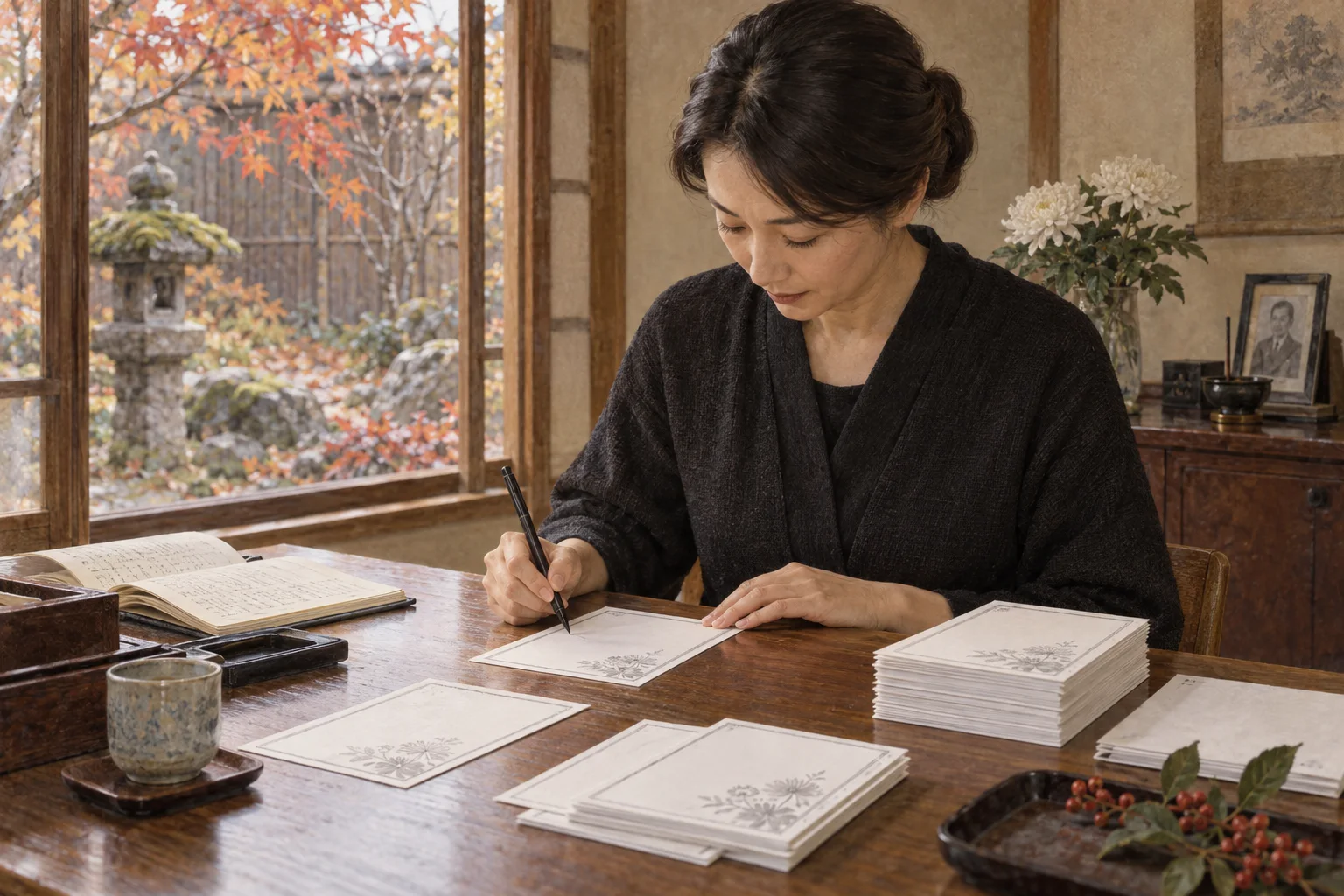
In one line
The shortest answer that works
A mochu hagaki is a postcard sent in late autumn to say a family member died this year, so please don't send New Year cards.
喪中はがきとは、今年身内が亡くなったので年賀状は控えます、と晩秋に知らせるはがきです。
In 30 seconds
The standard explanation
When someone in the household has died during the year, the family does not send New Year greetings. To let people know, they mail a plain postcard in November or early December stating who died and when, and asking friends to refrain from sending cards. Recipients cross that name off their list. Some reply in mid-January with a mid-winter greeting instead. It is a quiet, practical way to handle grief and etiquette at once.
その年に家族の誰かが亡くなると、その家は新年の挨拶を出しません。それを知らせるために、十一月か十二月初めに、誰がいつ亡くなったかを記し、年賀状を控えてほしいと頼む簡素なはがきを送ります。受け取った人は名簿からその名前を外します。代わりに一月半ばに寒中見舞いを返す人もいます。悲しみと礼儀を同時に扱う、静かで実用的な方法です。
As a short speech
A full paragraph you can read aloud
Japanese New Year cards are cheerful things, so a house in mourning steps out of the exchange, and the mochu hagaki is how it does so. In November, before others start writing their cards, a family that has lost a parent, spouse, child or sibling that year sends a simple postcard, usually printed in gray or dark ink with a restrained design, saying that because of the death of a named relative in a certain month, they will refrain from New Year greetings.
There is no request for sympathy and usually no other news; the card is a notice, not a letter. People who receive it take that address off their card list and may feel a small pang, because it is often how they learn of the death.
Some send a mid-winter greeting after the holidays, expressing condolences and hope for the year. The custom reflects the old idea that death brings a period of ritual impurity that should not touch a celebration. In practice it is also efficient. I think it is one of the more considerate pieces of Japanese etiquette.
日本の年賀状は明るいものなので、喪中の家は年賀のやりとりから一歩退きます。それをするのが喪中はがきです。十一月、ほかの人が年賀状を書き始める前に、その年に親、配偶者、子、きょうだいを亡くした家は、ふつう灰色か濃い色の墨で控えめな図柄を刷った簡素なはがきを送り、何月に誰が亡くなったため新年の挨拶を控えると伝えます。
同情を求める言葉も、ほかの近況もふつうありません。手紙ではなく通知だからです。受け取った人はその宛先を名簿から外し、小さな痛みを覚えることも多いです。そのはがきで死を知ることが多いからです。
休みが明けてから寒中見舞いを送り、お悔やみと新しい年への願いを伝える人もいます。この習慣は、死は祝いに触れてはならない忌みの期間をもたらすという古い考えを映しています。実際には効率的でもあります。日本の礼儀作法の中でも思いやりのあるものの一つだと私は思います。
Questions people actually ask
And how to answer them.
Who counts as close enough to trigger a mourning notice?
Usually parents, parents-in-law, spouse, children and siblings, and often grandparents, especially if they lived with you. For more distant relatives most people send New Year cards as usual. There is no rule, and families decide based on how they feel and on regional custom.
ふつうは親、義理の親、配偶者、子、きょうだいで、祖父母も特に同居していれば含めることが多いです。それより遠い親族なら、ほとんどの人はふだんどおり年賀状を出します。決まりはなく、家族が気持ちと地域の慣習で決めます。
I received one. What should I do?
Do not send that person a New Year card. You may send nothing at all, which is normal, or send a mid-winter greeting after the New Year period ends, around January 7th, with a few words of condolence. If you had not known about the death, a short note or a small offering is a kind gesture, but not required.
その人に年賀状を出さないでください。何も送らなくてもふつうですし、松の内(一月七日ごろまで)が明けてから、お悔やみの言葉を添えた寒中見舞いを送ってもよいです。亡くなったことを知らなかったなら、短い手紙やささやかなお供えは心のこもった行いですが、義務ではありません。
What if I sent a card before the notice arrived?
It happens, and nobody is offended. If you want, send a brief apology with a mid-winter greeting in January. The mourning family understands that the timing is imperfect, and some families now send the notice as early as October to avoid this.
よくあることで、誰も気を悪くしません。望むなら一月に寒中見舞いで短くお詫びを添えてください。喪中の家も時期がずれることは分かっていますし、これを避けるために十月に出す家もあります。
Phrases you can use
- We're in mourning this year, so we won't be sending New Year cards.今年は喪中ですので、年賀状は控えさせていただきます。
- I got a mourning notice from an old friend; her father passed away.昔の友人から喪中はがきが来ました。お父さんが亡くなったそうです。
- Take them off the card list this year.今年はあの家を年賀状の名簿から外してください。
- I'll send a mid-winter greeting in January instead.代わりに一月に寒中見舞いを送ります。
- The card is printed in gray, with no bright colors.はがきは灰色で刷られていて、明るい色はありません。
Words you need
- in mourning喪中の
- New Year card年賀状
- refrain from控える
- mid-winter greeting寒中見舞い
- pass away亡くなる
Watch
From YouTubeBackground (Japanese)
喪中はがきは正式には「年賀欠礼状」といい、年賀状を出せないことを事前に知らせるもので、相手が年賀状を書き始める前の十一月から十二月初めに届くよう出すのが習わしです。文面は「喪中につき年末年始のご挨拶を失礼させていただきます」に続けて、故人の続柄と名前、亡くなった月と享年を記すのが一般的で、近況や祝い事は書きません。喪中とする範囲は二親等までとする考えが広く伝わっていますが、法律や宗教の決まりではなく、家庭や地域の判断です。受け取った側は年賀状を出さず、松の内が明けた後に寒中見舞いを送ることがあります。近年は印刷サービスやネット注文が主流で、年賀状そのものを出す人が減るにつれて喪中はがきも減っていますが、訃報を伝える手段としての役割は残っています。